
C57BL/6-Giprtm2(GIPR)Bcgen Glp1rtm1(GLP1R)Bcgen/Bcgen • 113536

Key Advantages
Validation
Applications
In vivo efficacy, pharmacodynamics, and safety evaluation of dual GIPR/GLP1R agonists, single-target therapies, and related metabolic disease therapeutics.

GIPR/GLP1R double humanized mice (B-hGIPR/hGLP1R) were generated by crossing the single humanized strains B-hGIPR (Catalog #112714) and B-hGLP1R (Catalog #170164). For detailed validation data, please refer to the product information of the respective parent models.

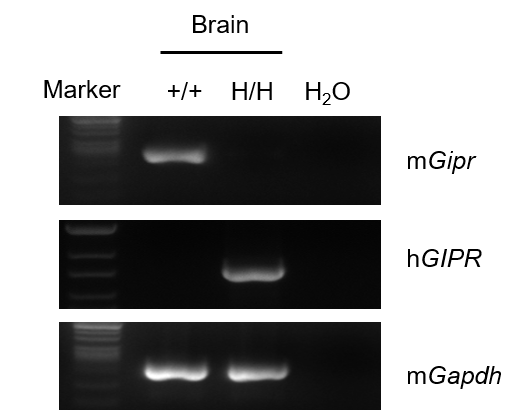
Strain-specific analysis of GIPR gene expression was performed in wild-type C57BL/6JNifc and homozygous GIPR/GLP1R double humanized mice (B-hGIPR/hGLP1R) using RT-PCR. Mouse Gipr mRNA was detectable only in the brain of wild-type C57BL/6JNifc (+/+) mice. In contrast, human GIPR mRNA was exclusively detectable in GIPR/GLP1R double humanized mice (B-hGIPR/hGLP1R, H/H) but not in wild-type controls.
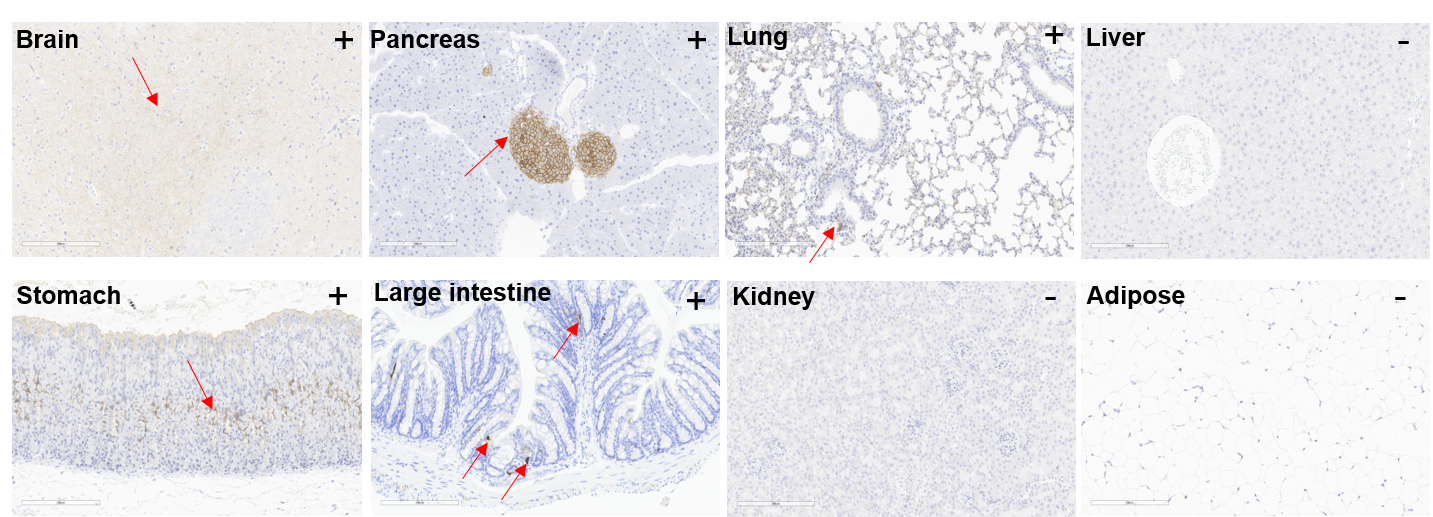
Human GLP1R protein expression in homozygous GIPR/GLP1R humanized mice (B-hGIPR/hGLP1R) was assessed by immunohistochemistry (IHC). Tissue sections were stained with a human-specific anti-GLP1R antibody (Abcam, ab254352). Positive human GLP1R staining was observed in the brain, pancreas, lung, stomach, and large intestine (A, B, C, E, F). In contrast, the liver, kidney, and adipose tissue showed no detectable human GLP1R signal (D, G, H). (Original magnification: ×200)
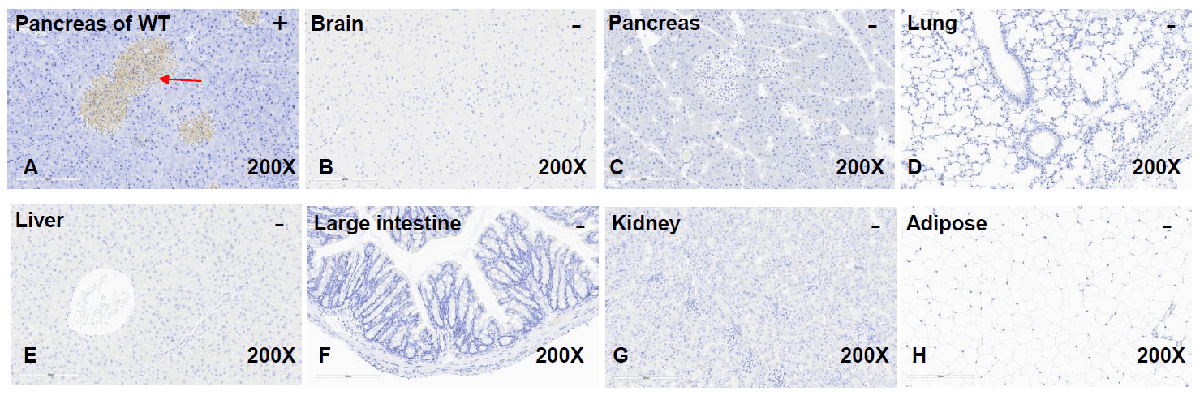
Mouse GLP1R protein expression was assessed in GIPR/GLP1R humanized mice (B-hGIPR/hGLP1R) by immunohistochemistry (IHC). Tissue sections were stained with a mouse-specific anti-GLP1R antibody (Abcam, ab218532). Mouse GLP1R protein was detected in the pancreas of wild-type C57BL/6JNifdc mice. In contrast, brain, pancreas, lung, liver, large intestine, kidney, and adipose tissue from homozygous GIPR/GLP1R humanized mice all showed negative staining for mouse GLP1R, confirming effective disruption of the endogenous mouse gene. (Original magnification: ×200)

Q1: What are B-hGIPR/hGLP1R mice?
B-hGIPR/hGLP1R mice are a double humanized model generated by mating B-hGIPR (Catalog #112714) and B-hGLP1R (Catalog #170164) mice. In these mice, both the gastric inhibitory polypeptide receptor (GIPR) and the glucagon-like peptide-1 receptor (GLP1R) are humanized, enabling the expression of human GIPR and GLP1R proteins.
Q2: Why are these dual humanized mice valuable for metabolic disease research?
GIP and GLP-1 are key incretin hormones that regulate insulin secretion, glucose metabolism, and appetite. This dual humanized model allows for the preclinical evaluation of novel dual- or multi-target agonists targeting both human GIPR and GLP1R, which is a leading strategy in the development of next-generation therapies for diabetes and obesity.
Q3: What is the gene targeting strategy for each receptor?
For GIPR: The full coding region of the mouse Gipr gene was replaced by human GIPR CDS and 3'UTR.
For GLP1R: The full human GLP1R coding sequence was inserted into mouse Glp1r exon 1, disrupting the mouse gene and driving human protein expression via the mouse promoter.
Q4: How is the expression of human genes validated?
RT-PCR analysis confirms human GIPR mRNA is exclusively detectable in homozygous mice. Immunohistochemistry (IHC) validates the expression of human GLP1R protein in key tissues such as the brain, pancreas, lung, stomach, and large intestine.
Q5: What are the main applications of this model?
This model is primarily used for the in vivo efficacy and safety evaluation of dual GIPR/GLP1R agonists and other related therapeutics for metabolic diseases. It enables the study of drug effects on insulin secretion, glucose homeostasis, appetite regulation, and body weight in a physiologically relevant system expressing both human target receptors.