

NA • 322551


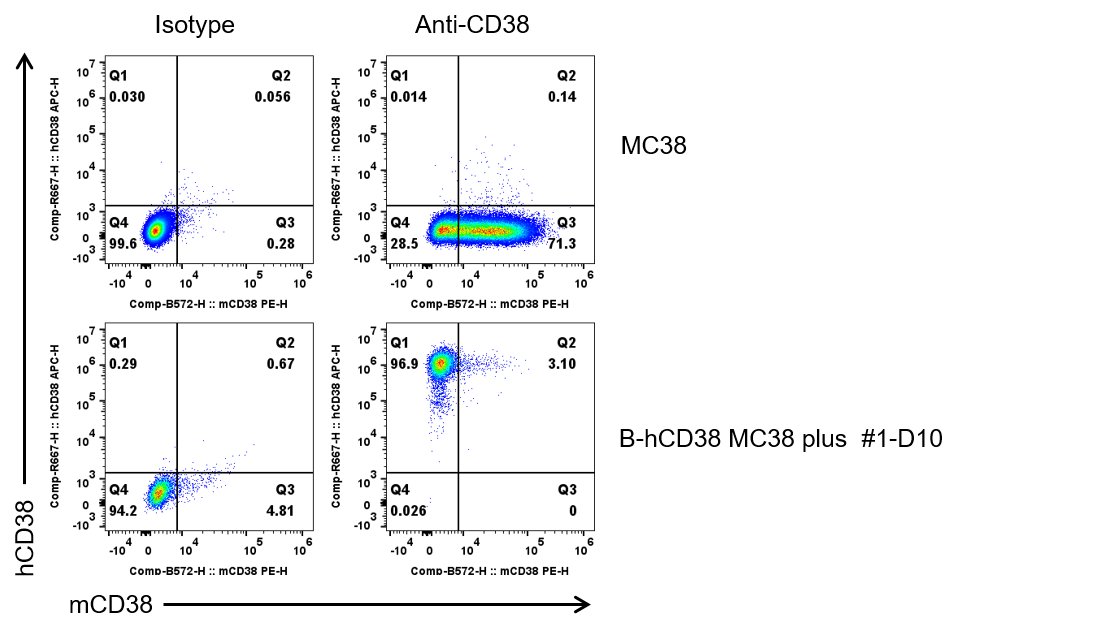
CD38 expression analysis in B-hCD38 MC38 plus cells by flow cytometry. Single cell suspensions from wild-type MC38 and B-hCD38 MC38 plus cells cultures were stained with species-specific anti-mouse CD38 (Biolegend, 102707) and anti-human CD38 (Biolegend, 356606). Human CD38 was detected on the surface of B-hCD38 MC38 plus cells but not on wild-type MC38 cells. The 1-D10 clone of B-hCD38 MC38 plus cells was used for in vivo experiments.


Subcutaneous homograft tumor growth of B-hCD38 MC38 plus cells. B-hCD38 MC38 plus cells (5x10⁵) and wild-type MC38 cells (5x10⁵) were subcutaneously implanted into C57BL/6JNifdc mice (female, 7-week-old, n=6). Tumor volume and body weight were measured twice a week. (A) Average tumor volume ± SEM. (B) Body weight (Mean± SEM). Volume was expressed in mm3 using the formula: V=0.5 × long diameter × short diameter2. As shown in panel A, B-hCD38 MC38 plus cells were able to establish tumors in vivo and can be used for efficacy studies.
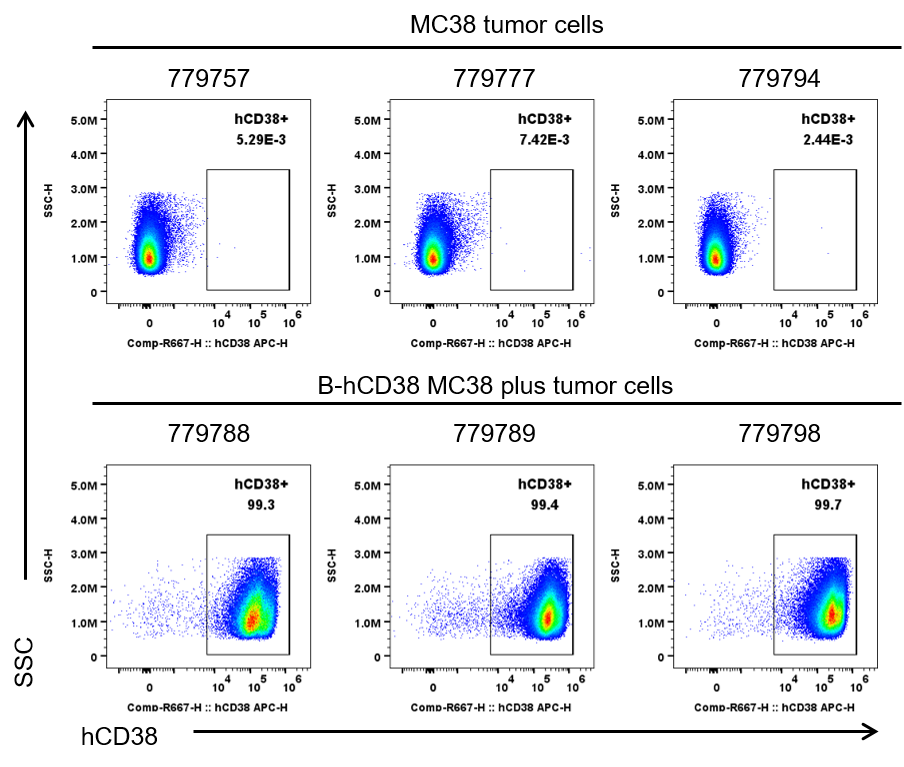
B-hCD38 MC38 plus cells were subcutaneously transplanted into C57BL/6JNifdc mice (male, 7-week-old, n=6), and on 28 days post inoculation, tumor cells were harvested and assessed for human CD38 expression with anti-human CD38 (Biolegend, 356606) antibody by flow cytometry. As shown, human CD38 was highly expressed on the surface of tumor cells. Therefore, B-hCD38 MC38 plus cells can be used for in vivo efficacy studies of novel CD38 therapeutics.