Frequently Asked Questions (FAQs) About Monoclonal Antibody Platform
1. What are monoclonal antibodies, and how can they support drug development?
Monoclonal antibodies (mAbs) are antibodies derived from a single clone that recognize a specific epitope on a target antigen. As therapeutics, they can block signaling, neutralize disease-related molecules, or recruit immune responses. Beyond conventional applications, they can also serve as building blocks for antibody-drug conjugates (ADCs), antibody-oligonucleotide conjugates (AOCs), antibody-peptide conjugates (APCs) and bispecific antibodies. Their variable regions can be engineered into single-chain variable fragments (scFvs) that serve as antigen-recognition domains in CAR-T therapies.
2. What types of targets can Biocytogen’s monoclonal antibody platform support?
Biocytogen’s
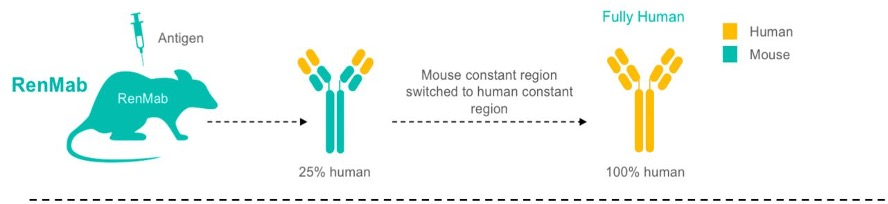
RenMab® platform generates fully human antibodies against a broad range of therapeutic targets, including
GPCRs, ion channels, and tumor microenvironment-associated antigens. For highly conserved targets, RenMab® target gene knockout mice (RenMab® KO) can overcome immune tolerance and broaden epitope coverage.
3. What factors should guide therapeutic monoclonal antibody candidate selection?
Selecting therapeutic mAb candidates requires evaluating target relevance, binding affinity and specificity, functional activity, preclinical efficacy, pharmacokinetics, safety, and immunogenicity risk. Developability, including stability, solubility, aggregation propensity, and manufacturability, is also essential.
Partners can request asset-specific data packages from Biocytogen to assess available evidence and select candidates aligned with their therapeutic goals and development requirements.
4. Can monoclonal antibodies be developed into other therapeutic formats?
Yes. RenMab®-derived monoclonal antibody binders can serve as building blocks for other therapeutic formats, including antibody-drug conjugates (ADCs), antibody-oligonucleotide conjugates (AOCs), antibody-peptide conjugates (APCs), bispecific antibodies and scFv, the key recognition elements of CAR-T. Biocytogen also provides off-the-shelf antibody binders and other discovery platforms to support different molecular design:
RenLite® generates fully human common light chain antibodies for
bispecific antibodies and
BsADCs, while
RenNano® generates fully human HCAbs and
VHHs.
5. What collaboration options does Biocytogen offer for monoclonal antibody development?
Biocytogen supports flexible collaboration opportunities for monoclonal antibody assets from early evaluation to clinical development. Partners can review available assets and evaluate selected candidates through material transfer agreements (MTAs). Following successful evaluation, assets can be licensed through collaboration agreements with upfront and milestone payments to advance selected assets.