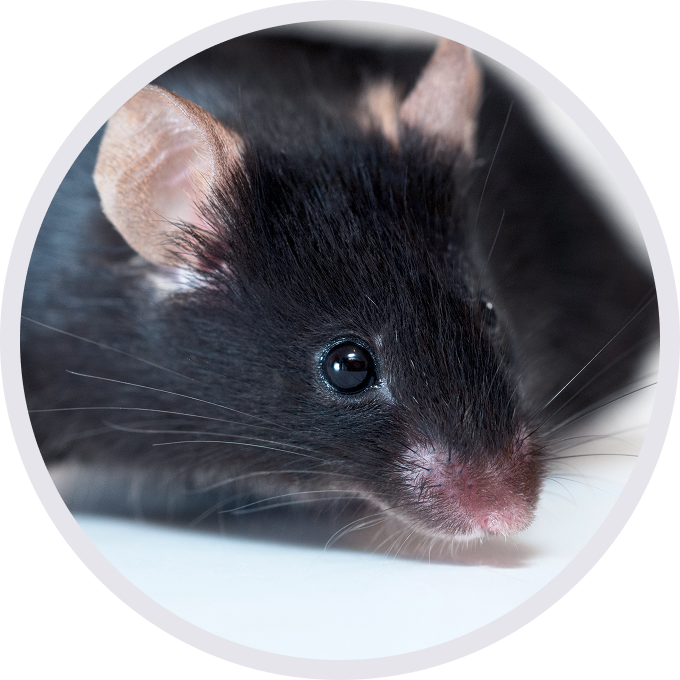
C57BL/6-Ntrk1tm1(NTRK1)Bcgen Ngftm1(NGF)Bcgen/Bcgen • 110820


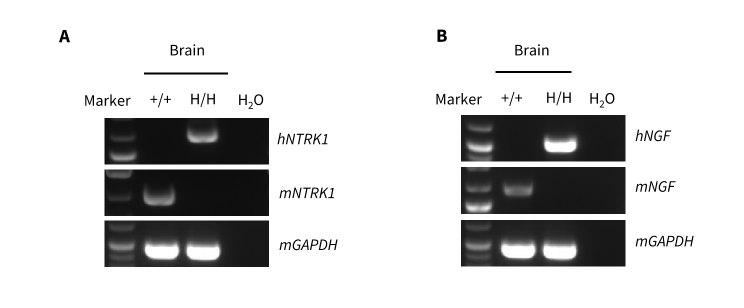
Strain specific analysis of NTRK1 and NGF mRNA expression in wild-type C57BL/6 mice and B-hNTRK1/hNGF mice by RT-PCR. Brain RNA were isolated fromwild-type C57BL/6 mice (+/+) and homozygous B-hNTRK1/hNGF mice (H/H; H/H), then cDNA libraries were synthesized by reverse transcription, followed by PCRwith mouse or human NTRK1 (A) and NGF (B) primers. Mouse Ntrk1 and Ngf mRNA were detectable only in wild-type C57BL/6 mice.
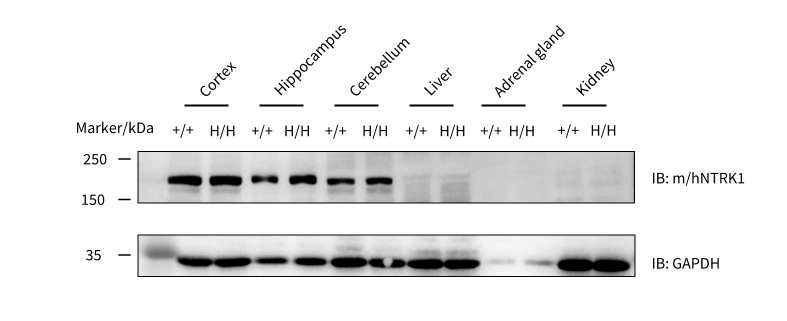
Western blot analysis of NTRK1 protein expression in homozygous B-hNTRK1/hNGF mice. Various tissue lysates were collected from wild-type C57BL/6 mice (+/+) and homozygous B-hNTRK1/hNGF mice (H/H), and then analyzed by western blot anti-m/hNTRK1 antibody. 80 μg total proteins were loaded for western blotting analysis.
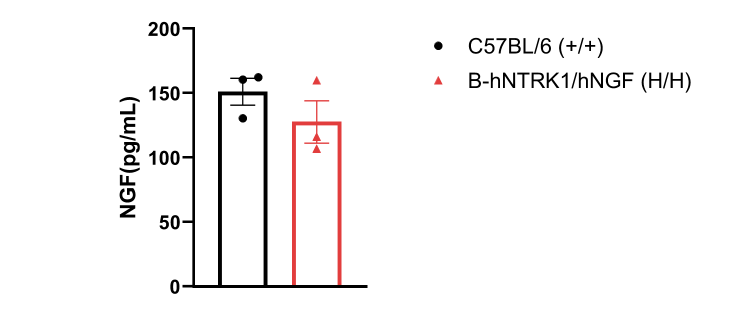
NGF expression analysis in homozygous B-hNTRK1/hNGF mice by ELISA. Plasma were isolated from wild-type C57BL/6 mice (+/+) and homozygous B-hNTRK1/hNGF mice (H/H) (n=3, female, 6-week-old), and analyzed by ELISA with NGF ELISA kit.

Experimental schedule for the in vivo efficacy of Tanezumab in B-hNTRK1/hNGF mice. Mice were acclimated from day 1 to 3. CFA was administered on day 4 to induce inflammatory pain. The baseline von Frey test for grouping was performed 2 hours prior to drug administration on day 5. Tanezumab was administered by intraperitoneal (i.p.) injection on day 5. Subsequent von Frey tests were performed on days 6, 7, 8, 11, and 14 to evaluate mechanical allodynia. CFA, Complete Freund's Adjuvant.
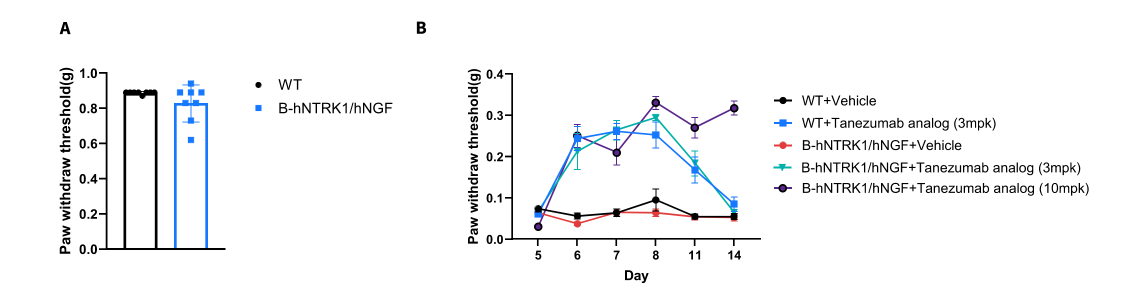
Tanezumab increased paw withdrawal thresholds in both wild-type and B-hNTRK1/hNGF mice compared with vehicle controls. (A) Baseline paw withdraw thresholds confirmed comparable initial values between Wild-type (WT) and B-hNTRK1/hNGF mice. (B) Following CFA administration, Tanezumab analog treatment significantly increased thresholds in both WT and B-hNTRK1/hNGF mice compared to the vehicle-treated group, with therapeutic efficacy observed from day 6 through 11, peaking at day 8.