
B-hMRGPRX2 mice plus
C57BL/6JNifdc-Mrgprb2tm2( (MRGPRX2)Bcgen/Bcgen • 113996

B-hMRGPRX2 mice plus

Catalog Number
113996
Strain Name
C57BL/6JNifdc-Mrgprb2tm2( (MRGPRX2)Bcgen/Bcgen
Strain Background
C57BL/6JNifdc
NCBI gene ID
117194 (Human)
Aliases
MGRG3; MRGX2

在此页面上

  • Description
  • Targeting strategy
  • Phenotypic analysis

海报

查看全部

    发表文章

      Description

      MRGPRX2: Mast cell-specific marker

      •  Gene Information: MRGPRX2 (Mas-related G-protein coupled receptor member X2) is a protein-coding gene located on chromosome 11p15.1. MRGPRX2 belongs to the G-protein coupled receptor (GPCR) family and functions as a pattern and cationic ligand recognition receptor.
      •  Protein Expression: MRGPRX2 is predominantly expressed on tissue-resident mast cells (especially in the skin and mucosa). Acting as a receptor for endogenous cationic peptides (such as Substance P and LL-37), it drives IgE-independent mast cell degranulation.
      •  Signaling Pathway: Upon binding to its cationic ligands, activation of downstream phospholipase C (PLC) and PI3K/AKT pathways leads to inositol trisphosphate (IP3) production and rapid intracellular calcium (Ca2+ )influx. This triggers rapid mast cell degranulation, releasing preformed mediators like histamine and tryptase, along with pro-inflammatory cytokines, driving neurogenic inflammation and pseudoallergic reactions. 
      • Therapeutic Inhibition: As a key receptor driving IgE-independent pseudoallergy, drug-induced hypersensitivity, and neurogenic inflammation, small-molecule antagonists or monoclonal antibodies targeting MRGPRX2 represent promising therapeutic avenues for conditions such as chronic urticaria, atopic dermatitis, and chronic neuropathic itch or pain.
      Targeting strategy

      MRGPRX2

      •  The coding region and 3’UTR of mouse Mrgprb2 gene that encode extracellular domain, transmembrane domain and cytoplasmic region are replaced by human MRGPRX2 counterparts in B-hMRGPRX2 mice plus.
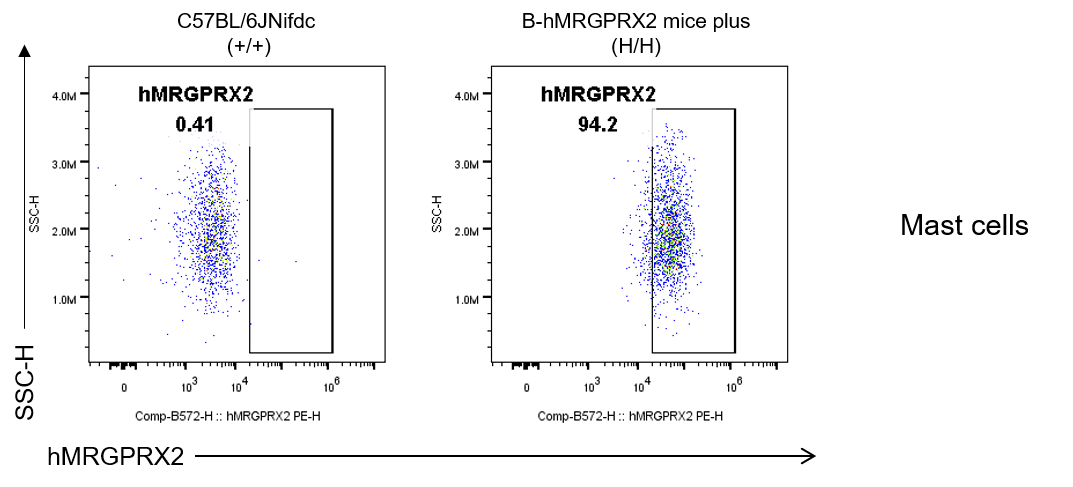
      Human MRGPRX2 Protein Expression Analysis in Mast Cells

      MRGPRX2 expression analysis in homozygous MRGPRX2 humanized mice by flow cytometry. Peritoneal lavage fluid cells were collected from wild-type C57BL/6JNifdc mice (+/+) and homozygous B-hMRGPRX2 mice plus (H/H), and analyzed by flow cytometry with anti-human MRGPRX2 antibody (BioLegend, 359004). hMRGPRX2 was detectable in peritoneal lavage fluid mast cells in homozygous B-hMRGPRX2 mice plus, but not in wild-type mice.
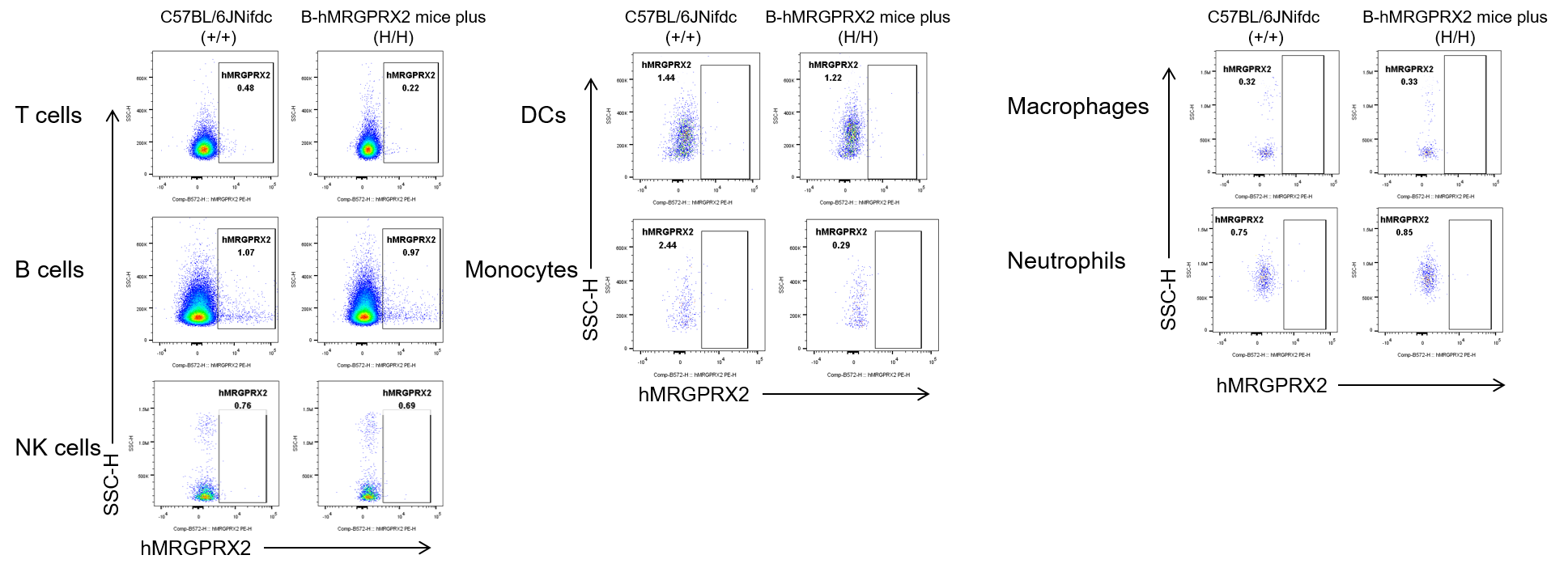
      Human MRGPRX2 Protein Expression Analysis in Spleen

      MRGPRX2 expression analysis in homozygous MRGPRX2 humanized mice by flow cytometry.
      Splenocytes were collected from wild-type C57BL/6JNifdc mice (+/+) and homozygous B-hMRGPRX2 mice plus (H/H), and analyzed by flow cytometry with anti-human MRGPRX2 antibody (BioLegend, 359004). Human MRGPRX2 was not detectable on T cells, B cells, NK cells, DCs, monocytes, macrophages, and neutrophils of spleen in C57BL/6JNifdc mice and homozygous B-hMRGPRX2 mice plus.
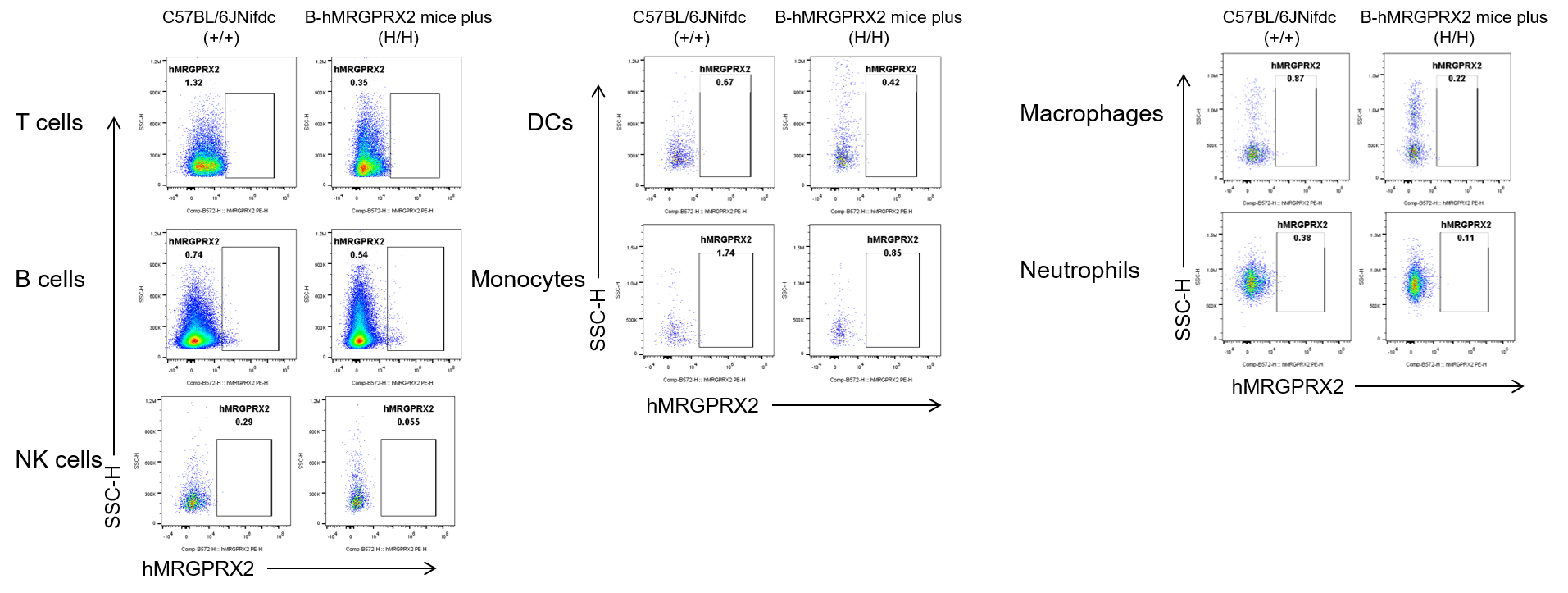
      Human MRGPRX2 Expression Analysis in Blood

      Human MRGPRX2 expression analysis in homozygous MRGPRX2 humanized mice by flow cytometry.
      Blood cells were collected from wild-type C57BL/6JNifdc mice (+/+) and homozygous B-hMRGPRX2 mice plus (H/H), and analyzed by flow cytometry with anti-human MRGPRX2 antibody (BioLegend, 359004). Human MRGPRX2 was not detectable on T cells, B cells, NK cells, DCs, monocytes, macrophages, and neutrophils of blood in C57BL/6JNifdc mice and homozygous B-hMRGPRX2 mice plus.
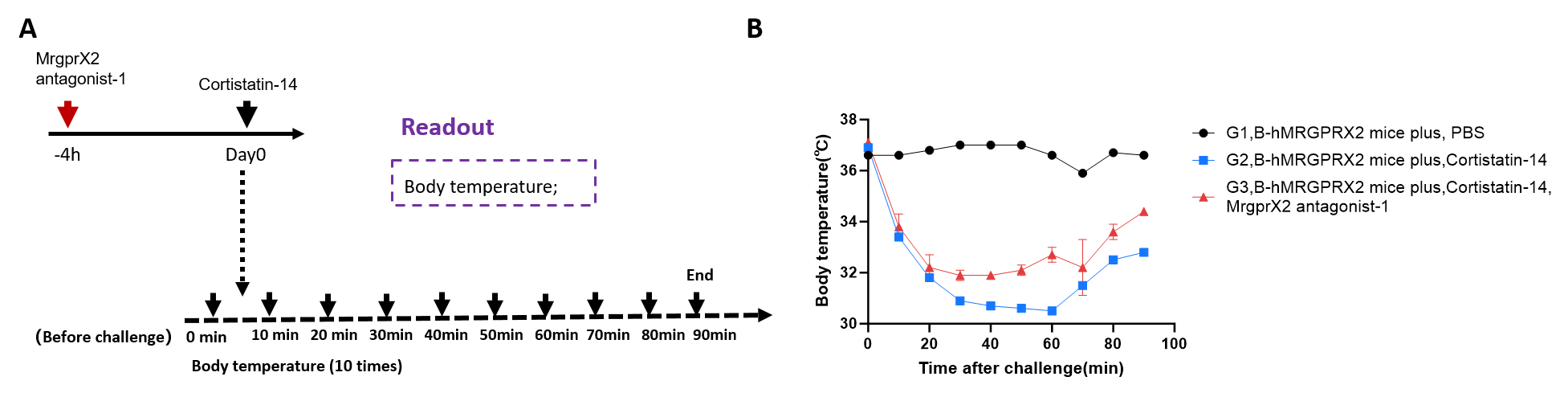
      MRGPRX2 Antagonist-1 Alleviated Cortistatin-14 Induced Systemic Anaphylaxis-Like Reaction in MRGPRX2 Humanized Mice

      Effects of MRGPRX2 antagonist-1 on Cortistatin-14 induced systemic anaphylaxis-like reaction in MRGPRX2 humanized mice.
      B-hMRGPRX2 mice plus (H/H) were challenged with Cortistatin-14 on day 0. MrgprX2 antagonist-1 (5 mpk, commercially purchased) was injected 4 h before challenge on day 0. Body temperature was recorded from 0 to 90 minutes after the challenge of 1 mg/kg Cortistatin-14. MrgprX2 antagonist-1 produced an increasing trend in the Cortistatin-14 induced systemic anaphylaxis-like reaction model and showed an inhibitory effect on the decrease in body temperature in B-hMRGPRX2 mice plus.

      * When publishing results obtained using this animal model, please acknowledge the source as follows: The animal model [B-hMRGPRX2 mice plus] (Cat# 113996) was purchased from Biocytogen.