Description
- Gene Information: PD‑1 is encoded by the PDCD1 gene on chromosome 2q37.3, while PD‑L1 is encoded by CD274 on chromosome 9p24.1. Both are type I transmembrane proteins; PD‑1 belongs to the immunoglobulin superfamily and functions as an inhibitory receptor, whereas PD‑L1 is a member of the B7 family of co‑stimulatory molecules.
- Protein Expression: PD-1 is primarily expressed on activated T cells, B cells, and NK cells, whereas PD-L1 is expressed on antigen-presenting cells and many tumor cells, with expression often induced by IFN-γ.
- Signaling Pathway: Binding of PD-L1 to PD-1 recruits SHP2 phosphatase and suppresses TCR/CD28-mediated PI3K–AKT signaling, resulting in reduced T-cell proliferation, cytokine production, and cytotoxic activity.
- Therapeutic Inhibition: Anti-PD-1 and anti-PD-L1 antibodies block this inhibitory pathway, restoring T-cell function and enhancing anti-tumor immune responses.
VEGFA: a master regulator of angiogenesis
- Gene Information: VEGFA is a protein‑coding gene located on chromosome 6p21.1. It encodes a potent angiogenic growth factor that belongs to the PDGF/VEGF family, with multiple isoforms generated by alternative splicing.
- Protein Expression: VEGFA is secreted by tumour cells, cancer‑associated fibroblasts, tumour‑infiltrating macrophages, and endothelial cells themselves. Its expression is strongly upregulated by hypoxia, oncogenic mutations, and inflammatory mediators such as IL‑6 and TGF‑β, creating a pro‑angiogenic gradient within the tumour microenvironment.
- Signaling Pathway: VEGFA binds with high affinity to receptor tyrosine kinases VEGFR‑1 and VEGFR‑2 on endothelial cells. This drives endothelial cell proliferation, migration, tube formation, vascular permeability, and survival. Additionally, VEGFA promotes the recruitment of immunosuppressive cells and upregulates PD‑L1 on endothelial and tumour cells, directly linking angiogenesis to immune evasion.
- Therapeutic Inhibition: Anti‑VEGFA monoclonal antibodies and small‑molecule multikinase inhibitors targeting VEGFRs block ligand‑receptor binding or downstream kinase activity.
Targeting strategy
PD-1
- A chimeric CDS that encodes human PDCD1 extracellular domain, mouse Pdcd1 transmembrane and cytoplasmic domain, followed by WPRE-pA is inserted right after mouse Pdcd1 ATG to replace the exon 1 of mouse Pdcd1 gene.
- The chimeric PDCD1 protein expression will be driven by endogenous mouse Pdcd1 promoter, while mouse Pdcd1 gene transcription and translation will be disrupted.
PD-L1
- The exon 3 of mouse Cd274 gene that encodes the IgV domain was replaced by human CD274 exon 3. Sequences of other regions still belonged to mice.
VEGFA
- The exons 1-8 of mouse Vegfa gene that encode the full-length protein were replaced by human VEGFA exons 1-8 in B-hPD-1 plus/hPD-L1/hVEGFA mice.
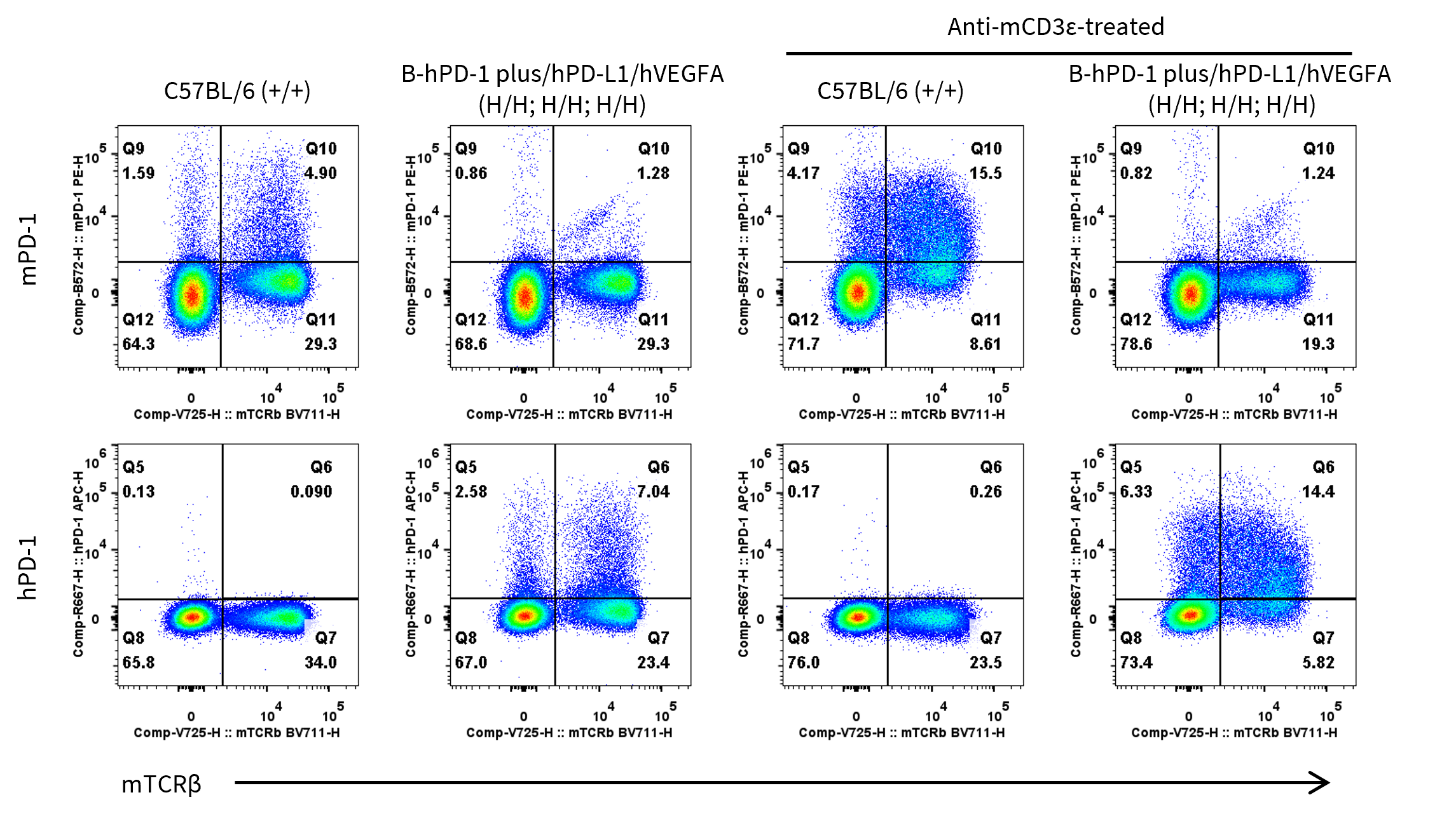
PD-1 Protein Expression Analysis in Spleen
- Mouse PD-1 was detected exclusively in wild-type C57BL/6 mice
- Human PD-1 was detected in homozygous B-hPD-1 plus/hPD-L1/hVEGFA mice, but not in wild-type mice.
Strain specific PD-1 expression analysis in wild-type C57BL/6 and homozygous B-hPD-1 plus/hPD-L1/hVEGFA mice by flow cytometry. Splenocytes were collected from wild-type C57BL/6 mice (+/+) and homozygous B-hPD-1 plus/hPD-L1/hVEGFA mice (H/H) after stimulated with anti-mouse CD3ε antibody (7.5 μg, i.p.) in vivo for 24 hrs (female, 6-week-old, n=1) or not. Protein expression was analyzed with anti-mouse PD-1 antibody (Biolegend, 109104) and anti-human PD-1 antibody (Biolegend, 329908) by flow cytometry.
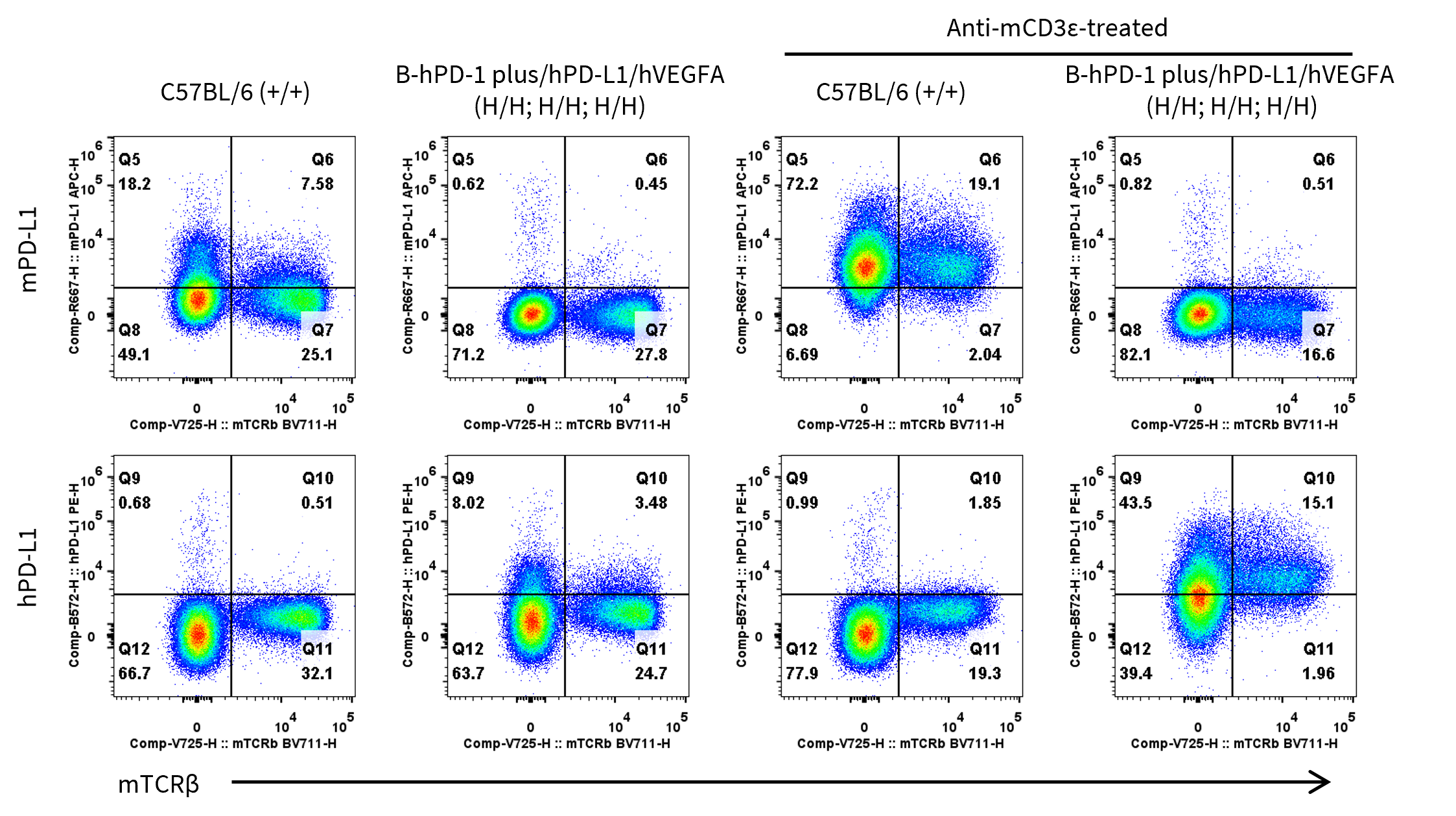
PD-L1 Protein Expression Analysis in Spleen
- Mouse PD-L1 was detected exclusively in wild-type C57BL/6 mice
- Human PD-L1 was detected in homozygous B-hPD-1 plus/hPD-L1/hVEGFA mice, but not in wild-type mice.
Strain specific PD-L1 expression analysis in wild-type C57BL/6 and homozygous B-hPD-1 plus/hPD-L1/hVEGFA mice by flow cytometry. Splenocytes were collected from wild-type C57BL/6 mice (+/+) and homozygous B-hPD-1 plus/hPD-L1/hVEGFA mice (H/H) after stimulated with anti-mouse CD3ε antibody (7.5 μg, i.p.) in vivo for 24 hrs (female, 6-week-old, n=1) or not. Protein expression was analyzed with anti-mouse PD-L1 antibody (Biolegend, 124312) and anti-human PD-L1 antibody (Biolegend, 329706) by flow cytometry.
VEGFA Protein Expression Analysis in Lung
- Mouse VEGFA was detected exclusively in wild-type C57BL/6 mice
- Human VEGFA was detected in homozygous B-hPD-1 plus/hPD-L1/hVEGFA mice, but not in wild-type mice.
Strain specific VEGFA expression analysis in wild-type C57BL/6 mice and homozygous B-hPD-1 plus/hPD-L1/hVEGFA mice by ELISA. Lung homogenates were collected from wild-type C57BL/6 mice (+/+) (female, n=3, 6-week-old) and homozygous B-hPD-1/hPD-L1 plus/hVEGFA mice (H/H; H/H; H/H) (female, n=3, 6-week-old). Expression level of mouse and human VEGFA were analyzed by ELISA (anti-mouse VEGFA antibody: R&D, MMV00; anti-human VEGFA antibody: R&D, DVE00).
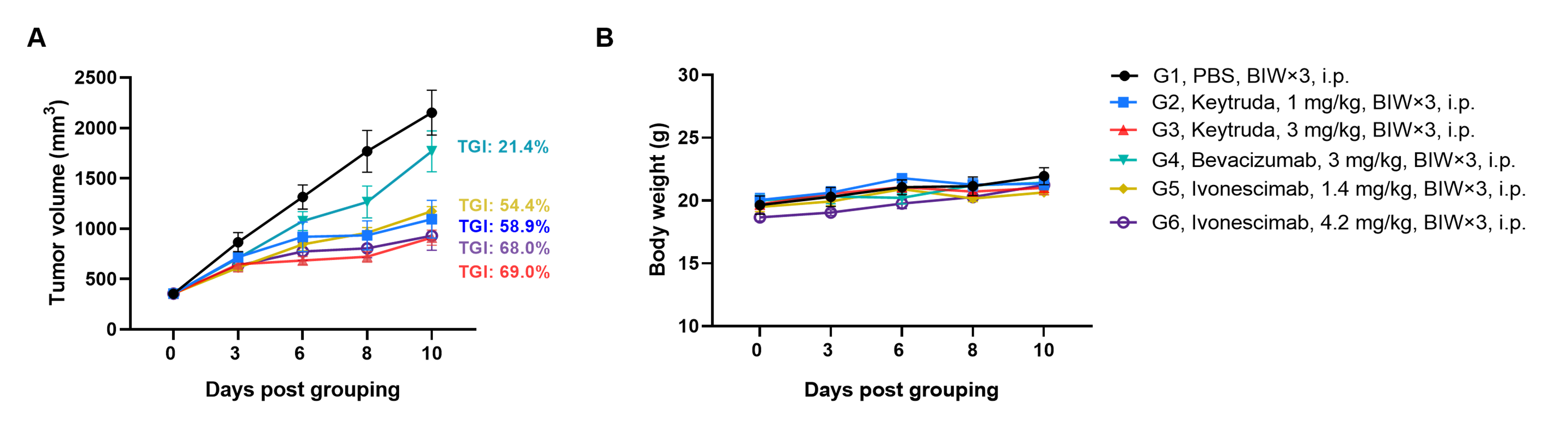
Efficacy Evaluation of Ivonescimab in the Treatment of the Subcutaneous B-hVEGFA/hPD-L1 plus MC38 Model
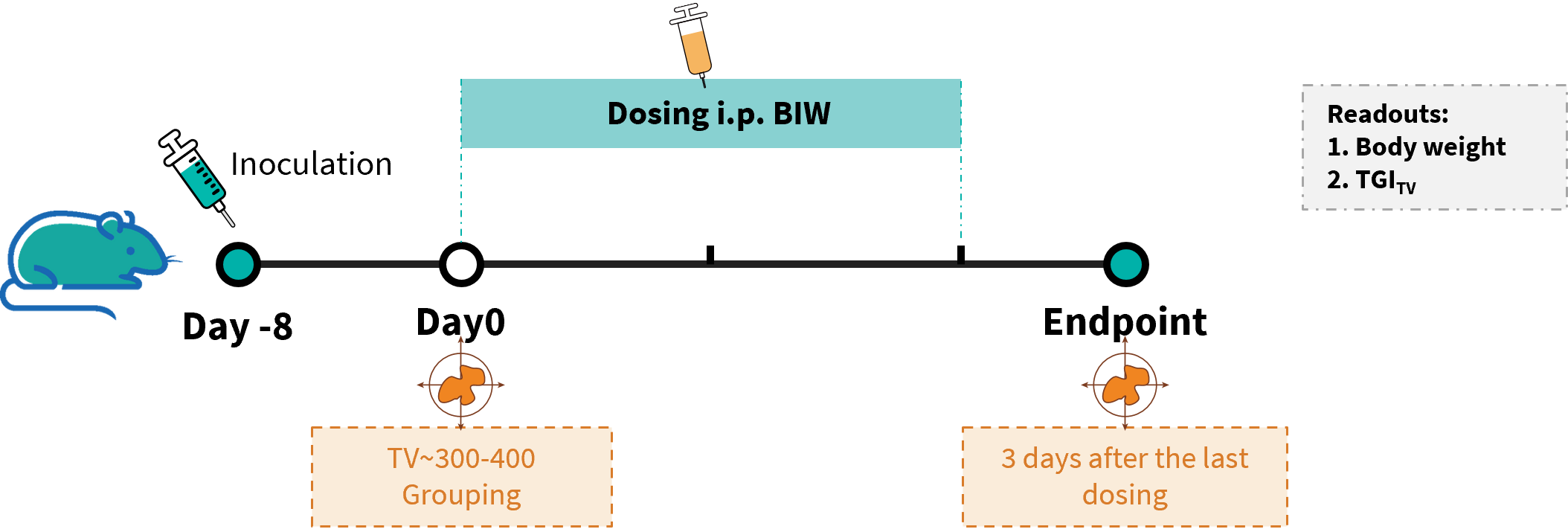
Establishment of a B-hVEGFA/hPD-L1 plus MC38 model and in vivo efficacy study of Ivonescimab antibody. B-hVEGFA/hPD-L1 plus MC38 cells were implanted subcutaneously into homozygous B-hPD-1 plus/hPD-L1/hVEGFA mice (female, 9 weeks old, n=6). When the average tumor volume reached approximately 300-400 mm³, mice were randomized and subsequently administered with anti-PD-1 & anti-VEGFA antibody via intraperitoneal injection.
Antitumor activity of Ivonescimab (also known as AK112) in B-hPD-1 plus/hPD-L1/hVEGFA mice. (A) Tumor growth curves. (B) Body weight changes during treatment. As shown in panel A, Ivonescimab was efficacious in controlling tumor growth in B-hPD-1 plus/hPD-L1/hVEGFA mice. Values are expressed as mean ± SEM. The overage of this tumor model is 61%.
* When publishing results obtained using this animal model, please acknowledge the source as follows: The animal model [B-hPD-1 plus/hPD-L1/hVEGFA mice] (Cat# 114019) was purchased from Biocytogen.