Description
- SLC16A11: A proton-coupled monocarboxylate transporter linked to Type 2 Diabetes (T2D) risk and metabolic regulation.
- Gene Information: The SLC16A11 gene is located on chromosome 17 and encodes a proton-linked monocarboxylate transporter. Enables pyruvate transmembrane transporter activity. Involved in lipid metabolic process. Located in endoplasmic reticulum membrane and plasma membrane.
- Protein Expression: A reduction in SLC16A11 levels or the disruption of its normal function directly induces metabolic changes that are strongly associated with an elevated risk of developing Type 2 Diabetes.
- Signaling Pathway: SLC16A11 plays a vital role in glucose metabolism and insulin sensitivity. Its functional disruption in the liver alters fatty acid and lipid metabolism, resulting in the abnormal accumulation of lipid metabolites, including acylcarnitine, diacylglycerols (DAGs), and triacylglycerols. Because these specific metabolites are well-established risk factors for type 2 diabetes, the reduction of SLC16A11 function directly contributes to metabolic changes that elevate T2D susceptibility.
- Therapeutic Intervention: T2D therapies should upregulate SLC16A11 activity to counteract the metabolic risks caused by its reduced function.
Targeting strategy
SLC16A11
- Exons 2–5 of the mouse Slc16a11 gene that encode the whole molecule (ATG to STOP codon), including 3’UTR were replaced by human counterparts in B-hSLC16A11 mice.
- The promoter and 5’UTR region of the mouse gene are retained. The human SLC16A11 expression to be driven by the endogenous mouse Slc16a11 promoter, while mouse Slc16a11 transcription and translation are abolished.
mRNA Expression Analysis
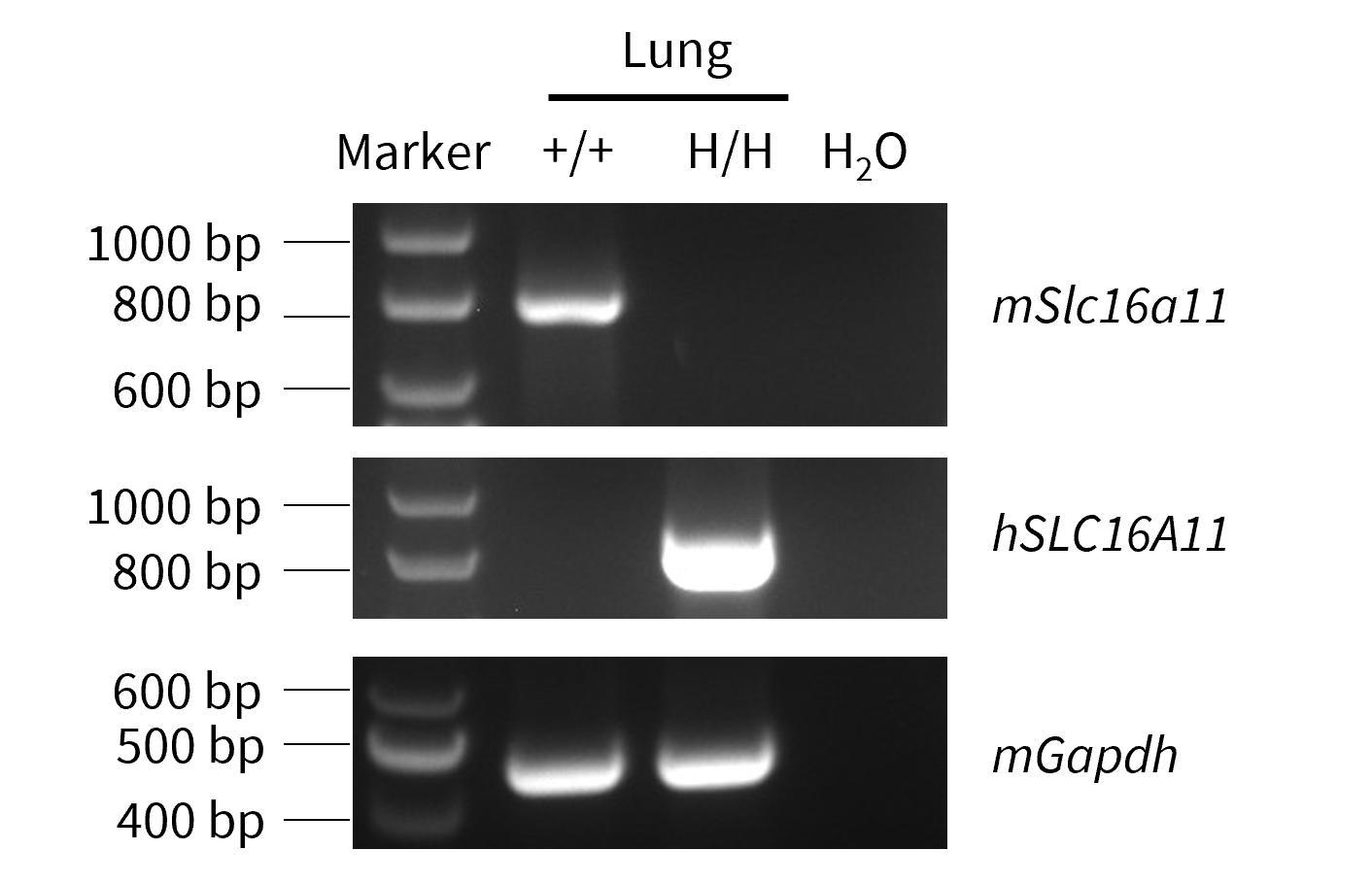
- Mouse Slc16a11 mRNA was detectable in the lung of wild-type mice, but not in homozygous B-hSLC16A11 mice.
- Human SLC16A11 mRNA was exclusively detectable in the lung of homozygous B-hSLC16A11 mice.
Strain specific analysis of SLC16A11 mRNA expression in C57BL/6JNifdc mice and homozygous B-hSLC16A11 mice by RT-PCR. Lung RNA were isolated from C57BL/6JNifdc mice (+/+) and homozygous B-hSLC16A11 mice (H/H), and then cDNA libraries were synthesized by reverse transcription, followed by PCR with mouse or human SLC16A11 primers.
Protein Expression Analysis
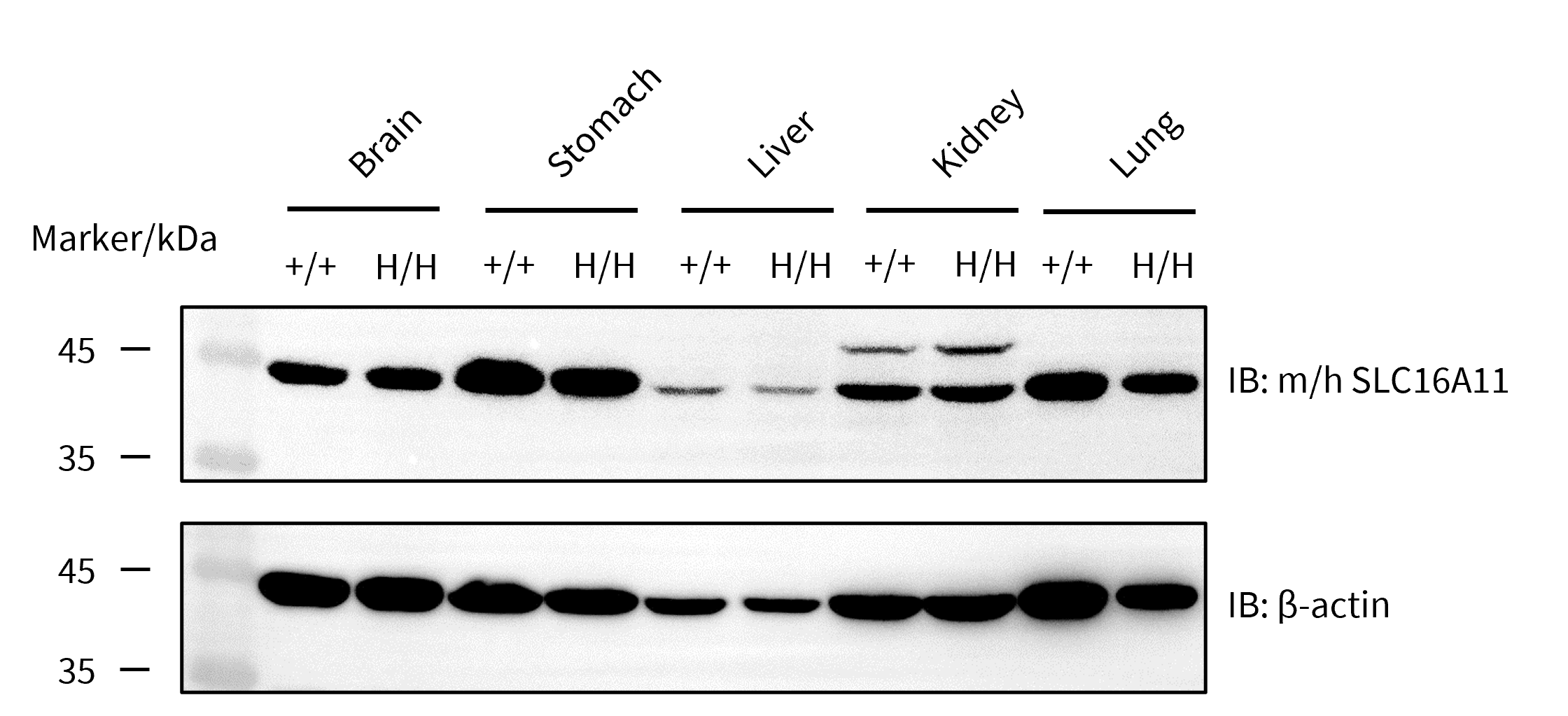
- Human SLC16A11 protein was detected in the brain, stomach, liver, kidney, and lungs of homozygous B-hSLC16A11, since the antibody cross-reacted with mouse and human SLC16A11.
Western blot analysis of SLC16A11 protein expression in homozygous B-hSLC16A11 mice. Various tissue lysates were collected from C57BL/6JNifdc mice (+/+) and homozygous B-hSLC16A11 mice(H/H), and then analyzed by western blot with human/mouse cross-reactive anti-hSLC16A11 monoclonal antibody(Proteintech, 83239-5-RR). 40 μg total proteins were loaded for western blotting analysis.
* When publishing results obtained using this animal model, please acknowledge the source as follows: The animal model [B-hSLC16A11 mice] (Cat# 113946) was purchased from Biocytogen.