C57BL/6-Igs2tm1(APOL1*S324G*I384M)Bcgen /Bcgen • 113069

APOL1: A key effector in kidney disease and its therapeutic intervention
•Gene Information: Apolipoprotein L1 (APOL1, encoded by APOL1) is a protein-coding gene located on chromosome 22q12.3. It encodes a secreted plasma protein that is a member of the apolipoprotein L family.
•Protein Expression: APOL1 is predominantly produced by hepatic hepatocytes and secreted into blood plasma as an HDL component under basal status; its expression rises with inflammation, and risk variants (G1, G2) exert cytotoxic effects during kidney injury.
•Signaling Pathway: Normal APOL1 forms membrane pores to lyse trypanosomes as an innate immune effector; in renal podocytes, APOL1 risk variants disrupt ion balance, trigger cell damage, and drive glomerular sclerosis via inflammatory stress pathways.
•Therapeutic Inhibition: APOL1-targeted inhibitors and nucleic acid drugs block APOL1 pore activity or protein synthesis to restrain risk variant-mediated kidney disease, with better safety than broad immunosuppressive therapies.

•The full coding sequences of human APOL1 gene (variant G1 alleles), including the promoter, 5’UTR and 3’UTR regions are inserted into mouse Hipp11 (H11) locus in B-hAPOL1-G1 mice.

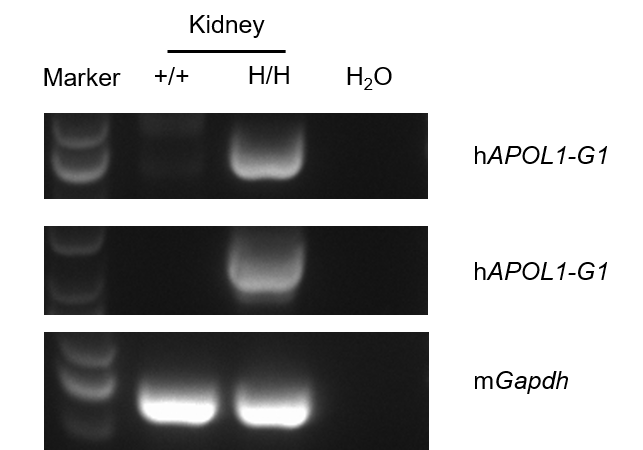
Strain specific analysis of APOL1-G1 mRNA expression in wild-type C57BL/6JNifdc and B-hAPOL1-G1 mice by RT-PCR. Kidney RNA were isolated from wild-type C57BL/6JNifdc (+/+) and homozygous B-hAPOL1-G1 mice (H/H), then cDNA libraries were synthesized by reverse transcription, followed by PCR with human APOL1-G1 primers.

Strain specific analysis of APOL1-G1 gene expression in wild-type C57BL/6JNifdc mice and B-hAPOL1-G1 mice by RT-qPCR. Kidney RNA were isolated from wild-type C57BL/6JNifdc mice (+/+) (female and male, 7 week-old, n=3) and homozygous B-hAPOL1-G1 mice (H/H) (female and male, 7 week-old, n=3). Values are expressed as mean ± SEM. ND: Not Detectable.
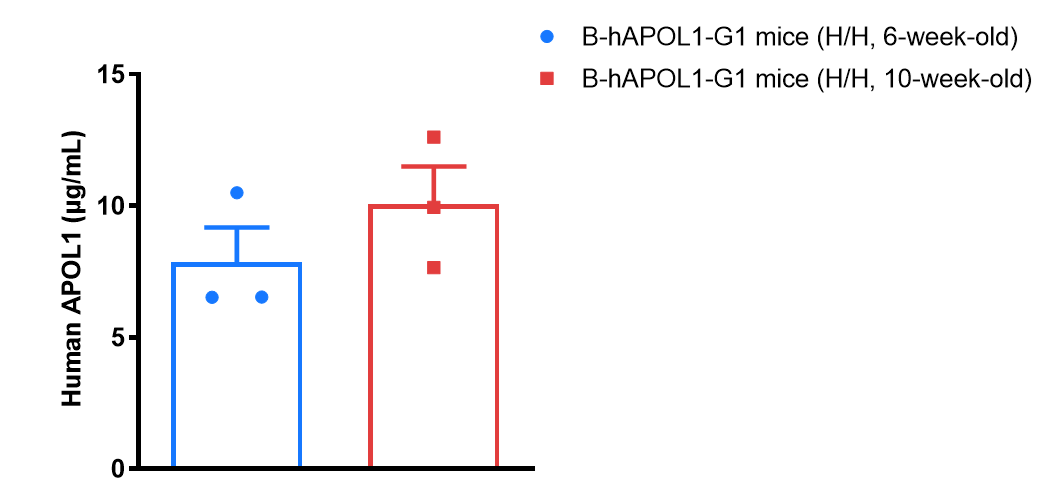
Strain specific APOL1 expression analysis in homozygous humanized B-hAPOL1-G1 mice by ELISA. Serum was collected from homozygous B-hAPOL1-G1 mice (H/H) (female, n=3, 6-week-old and 10-week-old). Expression level of human APOL1-G1 were analyzed by ELISA (human APOL1-G1 ELISA kit: Proteintech, KE00047). Values are expressed as mean ± SEM.
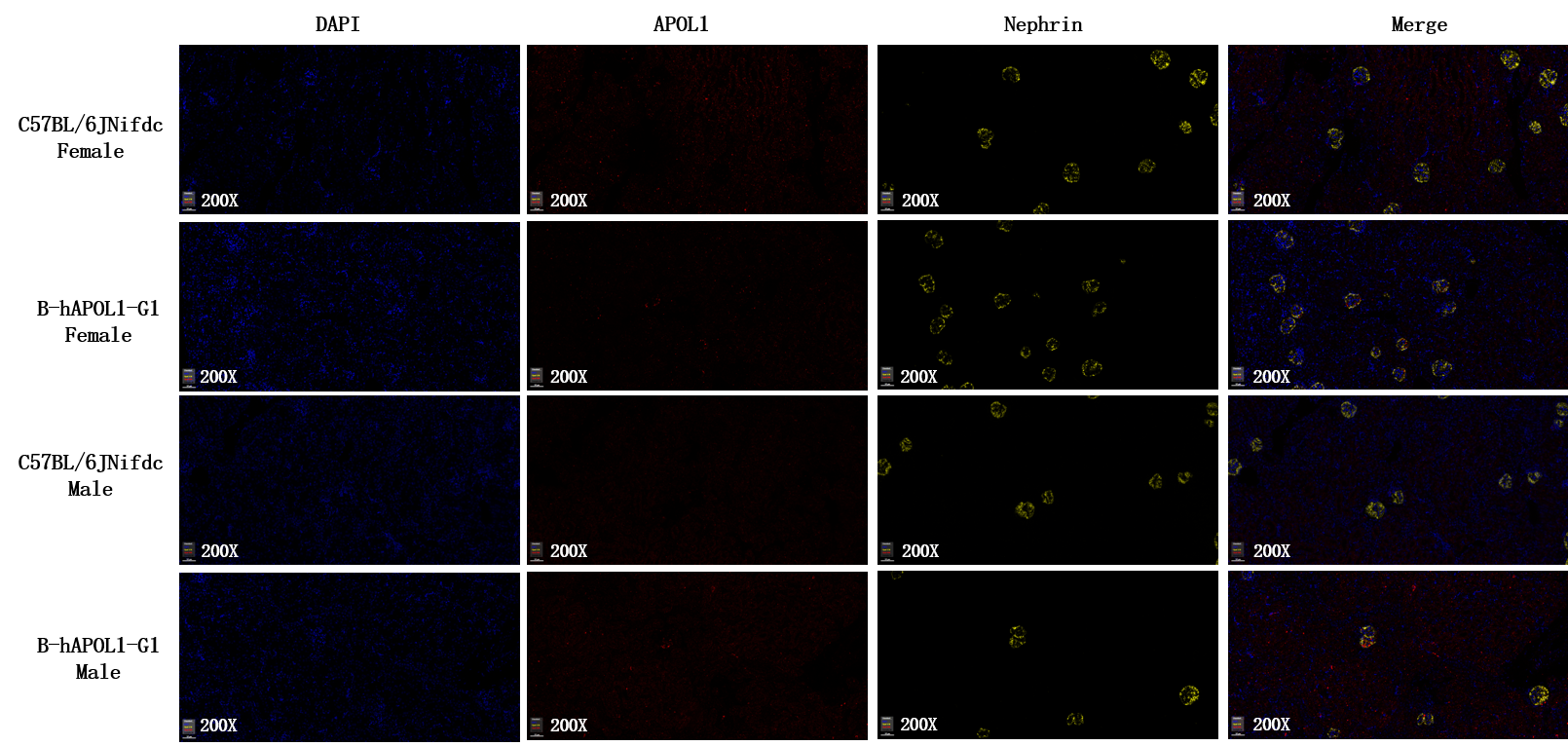
Strain specific APOL1 expression analysis in homozygous humanized B-hAPOL1-G1 mice by TSA. Kidney was collected from wild-type C57BL/6JNifdc mice (+/+) (6-week-old) and homozygous B-hAPOL1-G1 mice (H/H) (6-week-old). Expression level of human APOL1-G1 were analyzed by TSA with anti-human APOL1-G1 antibody (Abcam, ab252218) and anti-Nephrin antibody (Abcam, ab216341).

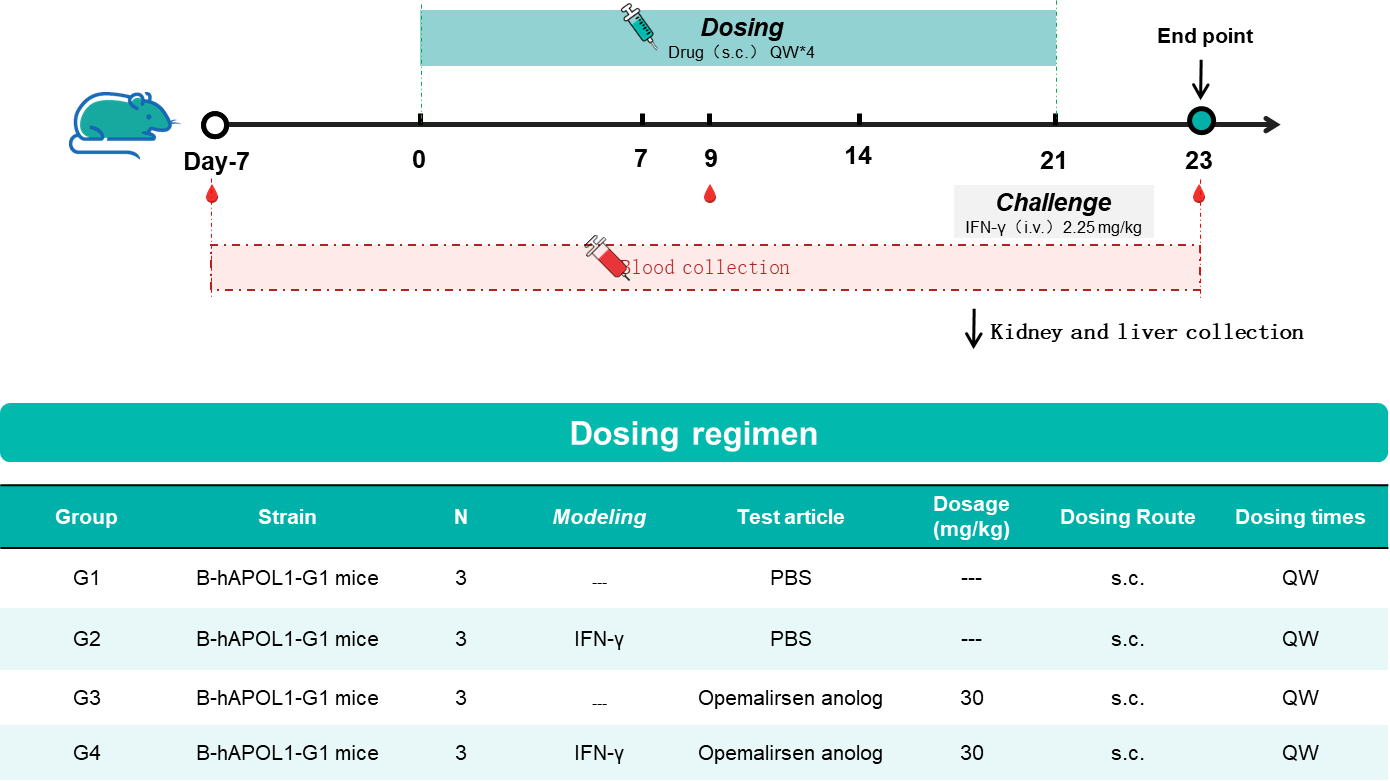
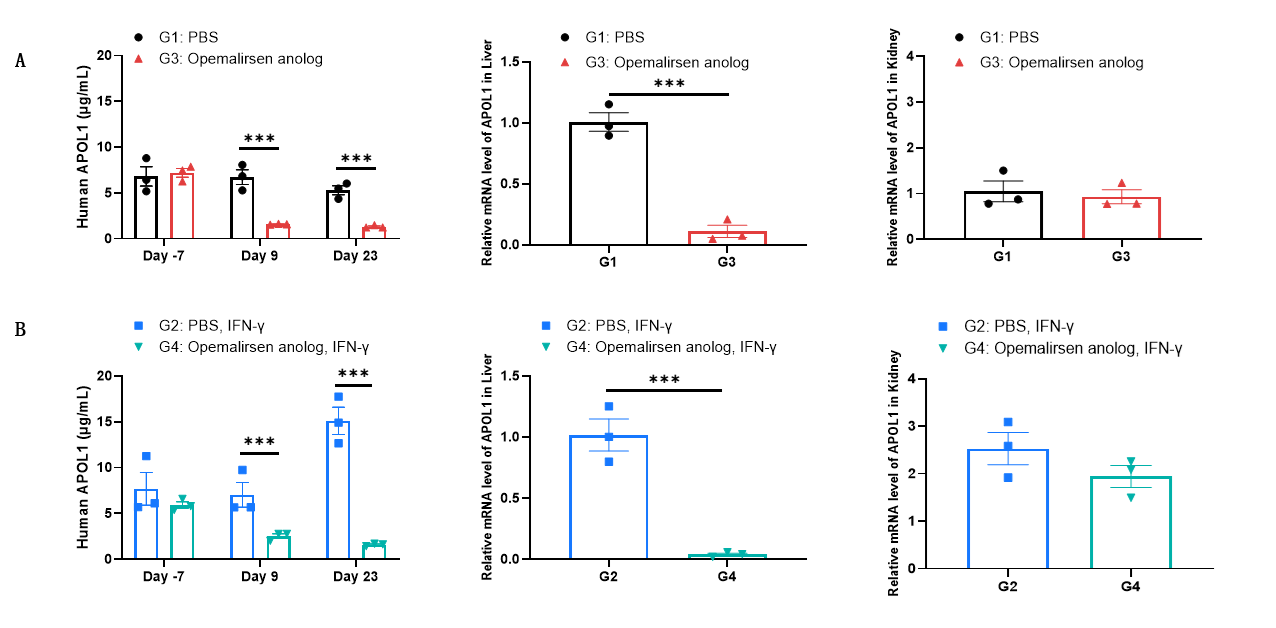
The inhibitory efficiency of the APOL1 targeted nucleic acid drugs in homozygous B-hAPOL1-G1 mice. B-hAPOL1-G1 mice were randomly divided into four groups (8-week-old, female). The human APOL1-targeted nucleic acid drug Opemalirsen anolog (MCE, HY-177653A) and PBS were administered to the mice individually. The nucleic acid drug was administered in the form of PBS aqueous solution. After the final dose administration, IFN-γ (B) or PBS (A) were administered via intravenous injection for stimulation or not. Mice were sacrificed 48 hours after stimulation. The expression levels of APOL1 protein in serum on days 9 and 23 were compared with those before administration. Opemalirsen anolog treatment significantly reduced APOL1 expression. Interferon stimulation elevated APOL1-G1 levels, while the treatment exerted comparable inhibitory effects on APOL1-G1 expression under stimulated conditions. Values are expressed as mean ± SEM. Significance was determined by t-test, *P<0.05, **P<0.01, ***P<0.001.