在此页面上

Built on the RenMab® platform, BCG008 is a fully human IgG1κ monoclonal antibody targeting SIGLEC-15. RenMab® mice carry in situ replacement of complete human antibody heavy and light chain variable regions, enabling fully human monoclonal antibody discovery with high diversity, high affinity, and low immunogenicity risk.
BCG008 is being developed as a SIGLEC-15 blocking antibody for solid tumors, with potential for both monotherapy and combination with other immune checkpoint inhibitors, including anti-PD-L1 antibodies.

The preclinical data package supporting BCG008 demonstrates high-affinity SIGLEC-15 binding, a distinct epitope profile, and dose-dependent reversal of SIGLEC-15-mediated CD4+ and CD8+ T-cell suppression. BCG008 also showed differentiated monotherapy and combination antitumor efficacy, an extended half-life relative to the benchmark antibody, and favorable preclinical tolerability, supporting its continued development as a SIGLEC-15-targeting immunotherapy.
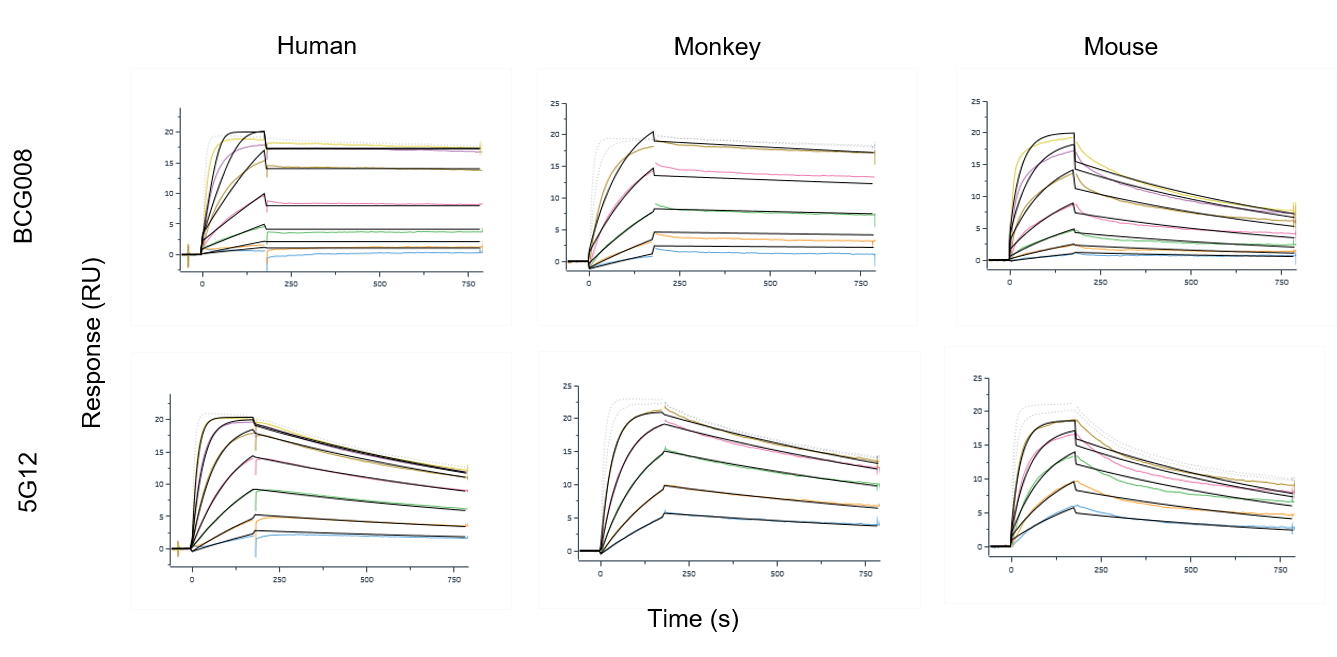
Figure 1. Surface plasmon resonance (SPR) affinity analysis of BCG008 to SIGLEC-15. BCG008 showed high affinity for human, cynomolgus monkey, and mouse SIGLEC-15 at the 10⁻⁹ M level, supporting robust target engagement across species.
In addition, competitive ELISA analysis indicated that BCG008 recognizes a different SIGLEC-15 epitope from the reference antibody 5G12. The increased signal observed during co-incubation suggested that BCG008 and 5G12 bind non-overlapping epitopes and do not compete for SIGLEC-15 binding.
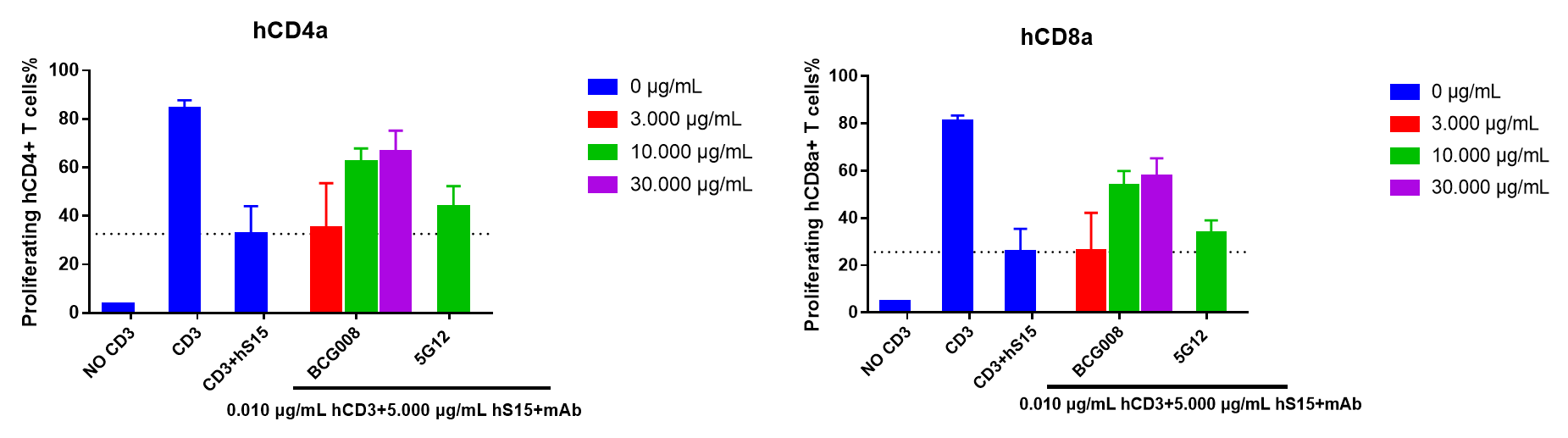
Figure 2. Functional analysis of BCG008 in SIGLEC-15-mediated T-cell suppression assays. Human SIGLEC-15 inhibited CD4+ and CD8+ T-cell proliferation under CD3 stimulation, whereas BCG008 reversed this suppression in a dose-dependent manner. These findings support the ability of BCG008 to restore effector T-cell responses impaired by SIGLEC-15.
(Note: Error bars represent SD.)
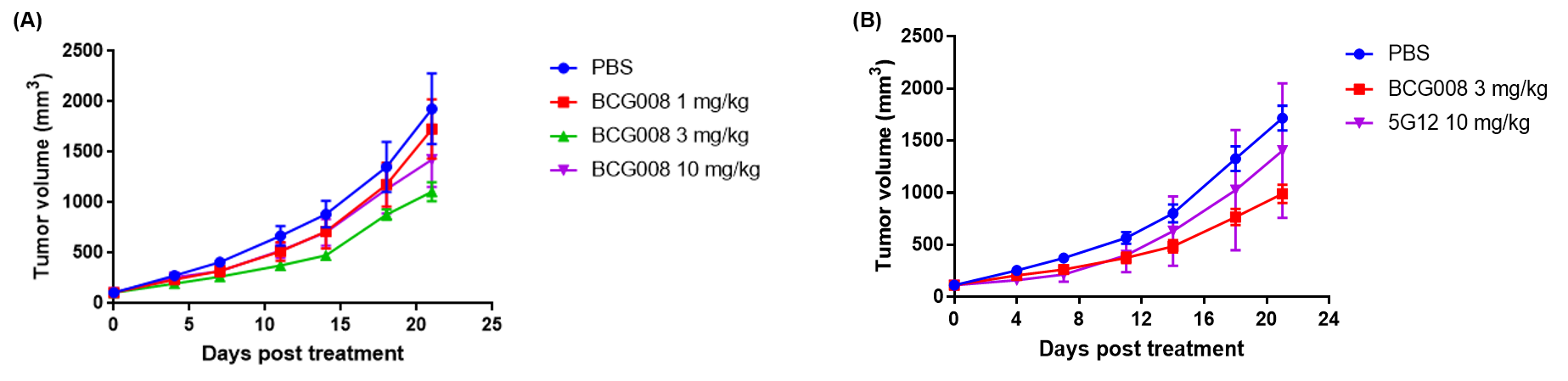
Figure 3. Antitumor efficacy of BCG008 monotherapy in humanized B-hSIGLEC-15 mice bearing subcutaneous MC38 tumors. (A) Twice-weekly treatment with BCG008 inhibited tumor growth in a dose-dependent manner. (B) BCG008 produced stronger tumor growth inhibition than the reference antibody 5G12, supporting differentiated single-agent antitumor activity.
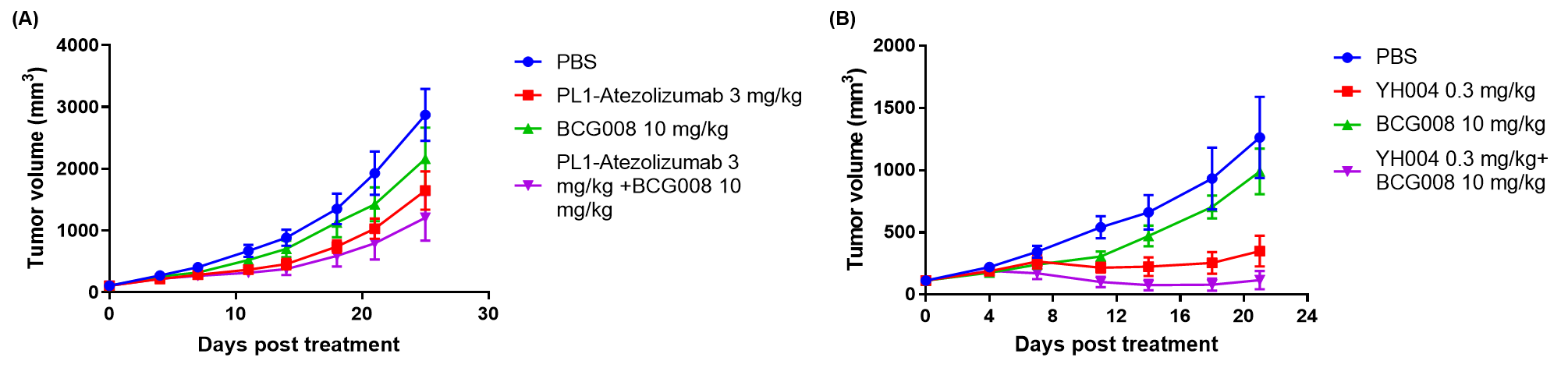
Figure 4. Combination efficacy of BCG008 in humanized mouse tumor models. (A) In SIGLEC-15 humanized mice bearing MC38 tumors, BCG008 at 10 mg/kg combined with anti-PD-L1 at 3 mg/kg produced greater tumor growth inhibition than either treatment alone. (B) In 4-1BB humanized mice bearing MC38 tumors, BCG008 at 10 mg/kg combined with YH004, an anti-4-1BB antibody, at 0.3 mg/kg enhanced antitumor efficacy, supporting the potential of BCG008 in immunotherapy combinations.
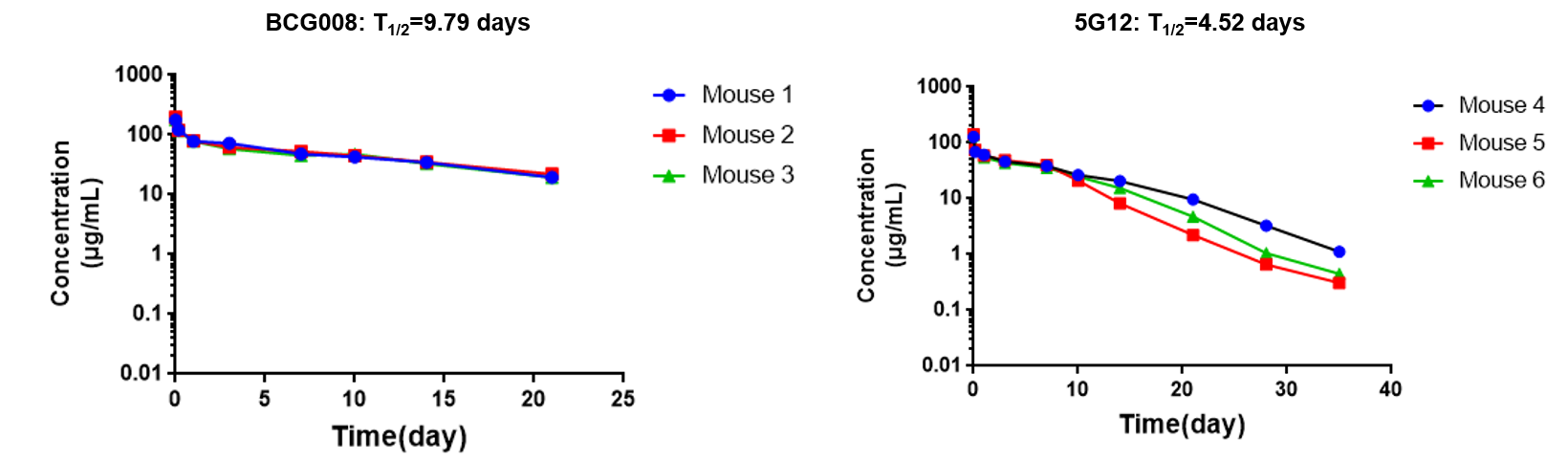
Figure 5. Pharmacokinetic (PK) analysis of BCG008. Following a single 10 mg/kg intravenous dose in SIGLEC-15 humanized mice, BCG008 showed prolonged systemic exposure, with a terminal half-life of 9.79 days compared with 4.52 days for the benchmark antibody 5G12, supporting an extended in vivo persistence profile.
In addition, BCG008 was evaluated at 30 mg/kg in SIGLEC-15 humanized mice and showed no meaningful body weight changes relative to PBS controls. ALT, AST, and complete blood count measurements revealed no evident hepatotoxicity or off-target immune effects, supporting a favorable preclinical tolerability profile.

Biocytogen welcomes partnership discussions to further evaluate this SIGLEC-15 blocking antibody asset.

SIGLEC-15 is an immune suppressor upregulated on tumor cells and tumor-infiltrating myeloid cells, where it selectively suppresses antigen-specific T-cell responses. Its limited expression in normal tissues paired with broad upregulation across multiple malignancies establishes SIGLEC-15 as a tumor-specific immunotherapy target, particularly for overcoming resistance to conventional immune checkpoint blockade.
BCG008 recognizes a distinct SIGLEC-15 epitope compared with the reference antibody 5G12, as demonstrated by competitive ELISA epitope binning. It also showed higher binding affinity and stronger antitumor activity than 5G12 in the tested humanized syngeneic tumor model, validating its differentiated pharmacological and therapeutic profile.
Yes. In humanized mouse models, BCG008 combined with an anti-PD-L1 antibody produced greater tumor growth inhibition than either monotherapy. Enhanced antitumor activity was also observed in combination with YH004, an anti-4-1BB monoclonal antibody, supporting exploration of BCG008 across multiple immuno-oncology combination strategies.
Following a single intravenous dose in B-hSIGLEC-15 mice, BCG008 showed more sustained systemic exposure than the 5G12 benchmark. Tolerability studies showed that high-dose administration (30 mg/kg) induced no adverse impacts on body weight, hematological parameters, or hepatic enzymes, supporting a favorable preliminary PK and safety profile for continued development.