在此页面上

Built on the RenMab® antibody platform, BCG003 is a fully human IgG1κ monoclonal antibody targeting TNFR2. RenMab® mice carry in situ replacement of complete human antibody heavy and light chain variable regions, enabling fully human monoclonal antibody discovery with high diversity, high affinity, and low immunogenicity risk.

The preclinical data package supporting BCG003 (BC011) includes differentiated TNFR2 epitope binding, non-TNFα-blocking activity, FcγRIIB-dependent TNFR2 agonism, ADCC-mediated immune modulation, direct CD8+ T-cell activation, reversal of Treg-mediated suppression, antitumor efficacy as monotherapy and in combination with PD-L1 blockade, and supportive mouse PK and tolerability data. Together, these findings support the development of BCG003 as a differentiated fully human TNFR2 agonistic antibody for solid tumor immunotherapy.
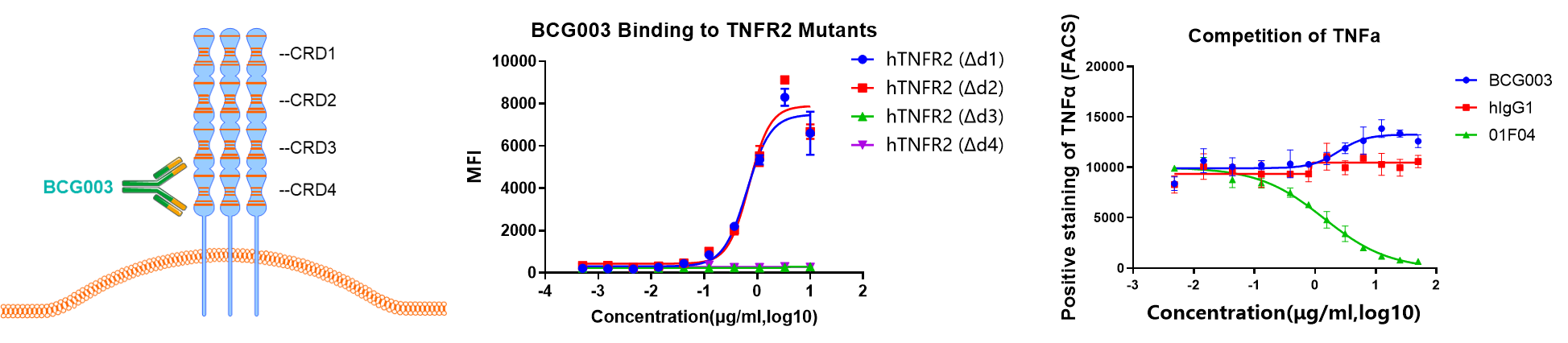
(Note: All transiently expressed constructs were human TNFR2 (hTNFR2) mutants carrying specific extracellular domain deletions (Δd1–Δd4) and an HA tag, expressed in CHO-S cells.)
Figure 1. Epitope characterization and functional binding analysis of BCG003 on TNFR2. BCG003 recognizes the CRD3 and CRD4 domains of TNFR2, distinguishing it from conventional antibodies directed toward the ligand-proximal CRD1/CRD2 regions. By targeting a membrane-proximal epitope outside the TNFα-binding interface, BCG003 is designed to minimize interference with endogenous TNFα–TNFR2 interactions. Competition analysis confirmed that BCG003 does not block TNFα binding, supporting preservation of ligand-dependent TNFR2 signaling and the host’s endogenous immune regulatory and antitumor surveillance mechanisms.
In addition, BCG003 demonstrated comparable binding to human and cynomolgus monkey TNFR2 and showed no detectable binding to other TNFR family members, supporting target specificity and translational cross-reactivity.
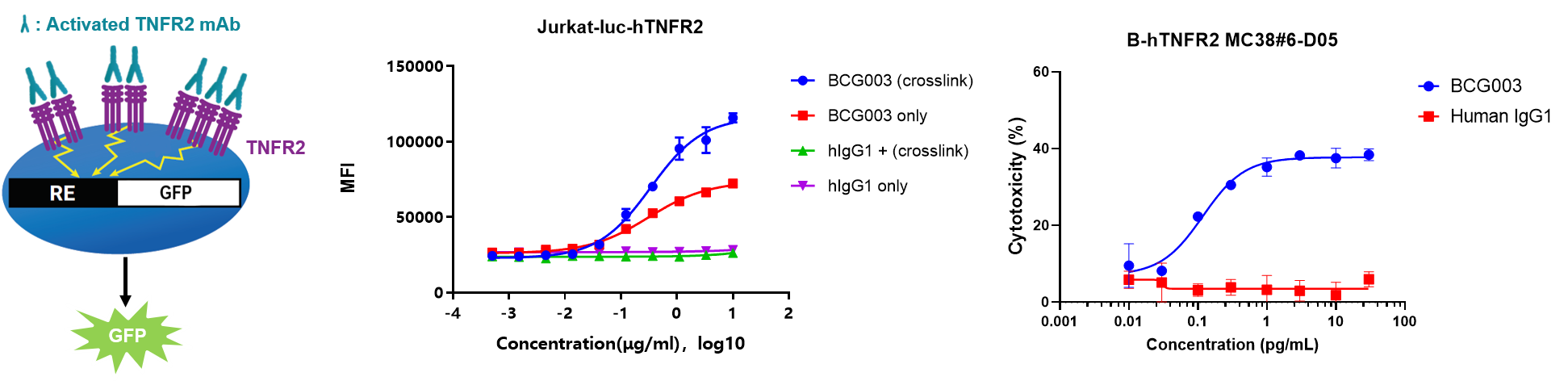
Figure 2. Mechanistic analysis of BCG003 TNFR2 agonism and ADCC activity. In a TNFR2 reporter assay using CHO-K1-FcγRIIB crosslinking cells, BCG003 activated downstream signaling, with enhanced agonistic activity observed under FcγRIIB-mediated crosslinking conditions. In parallel, BCG003 demonstrated strong ADCC activity against B-hTNFR2 MC38#6-D05 target cells in the presence of FcR-TANK effector cells, supporting Fc-dependent recognition and cytotoxic elimination of TNFR2-expressing cells. Together, these findings support a dual mechanism that combines TNFR2 agonism with ADCC-mediated depletion of immunosuppressive TNFR2-high cells.
In addition, BCG003 retained an hIgG1-like Fc receptor binding profile and showed no detectable C1q binding or CDC activity.
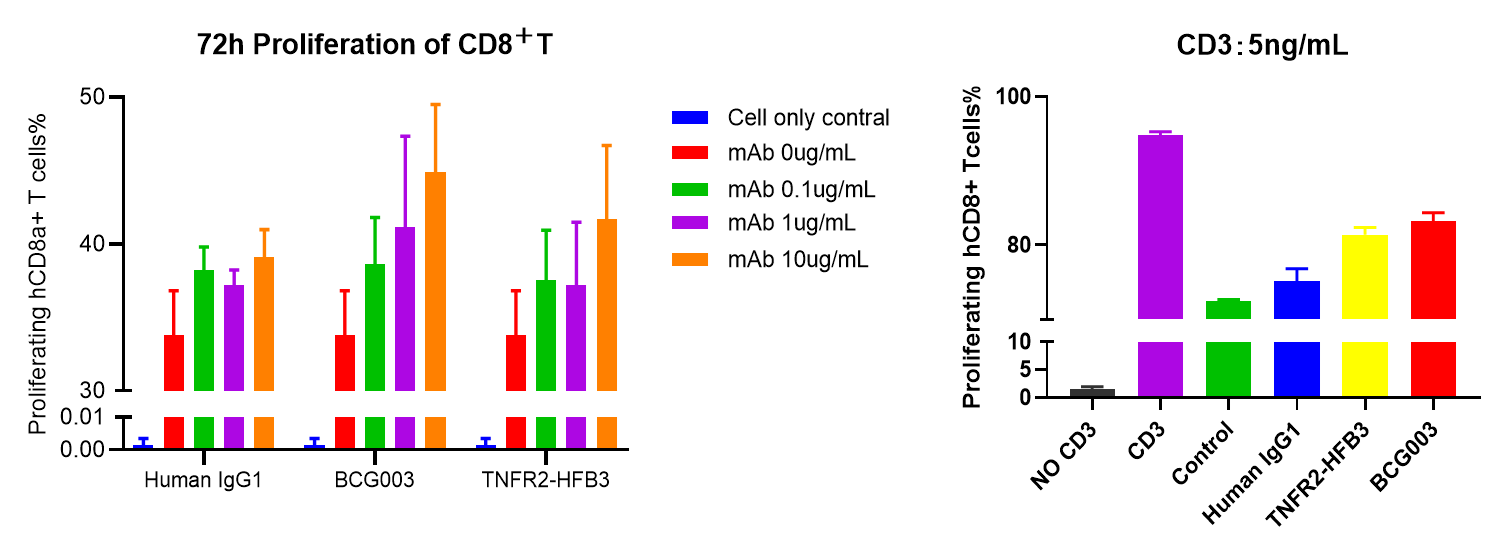
Figure 3. Functional analysis of BCG003 in human CD8+ T-cell assays. Under T-cell receptor stimulation, BCG003 enhanced CD8+ T-cell proliferation and activation, supporting its ability to augment effector T-cell responses through TNFR2 agonism. In a Treg coculture assay, BCG003 partially restored CD8+ T-cell proliferation suppressed by regulatory T cells, indicating that BCG003 can improve effector T-cell function under immunosuppressive conditions. Together, these results provide functional evidence that BCG003 not only activates TNFR2 signaling but also helps counteract Treg-mediated suppression of CD8+ T-cell responses.
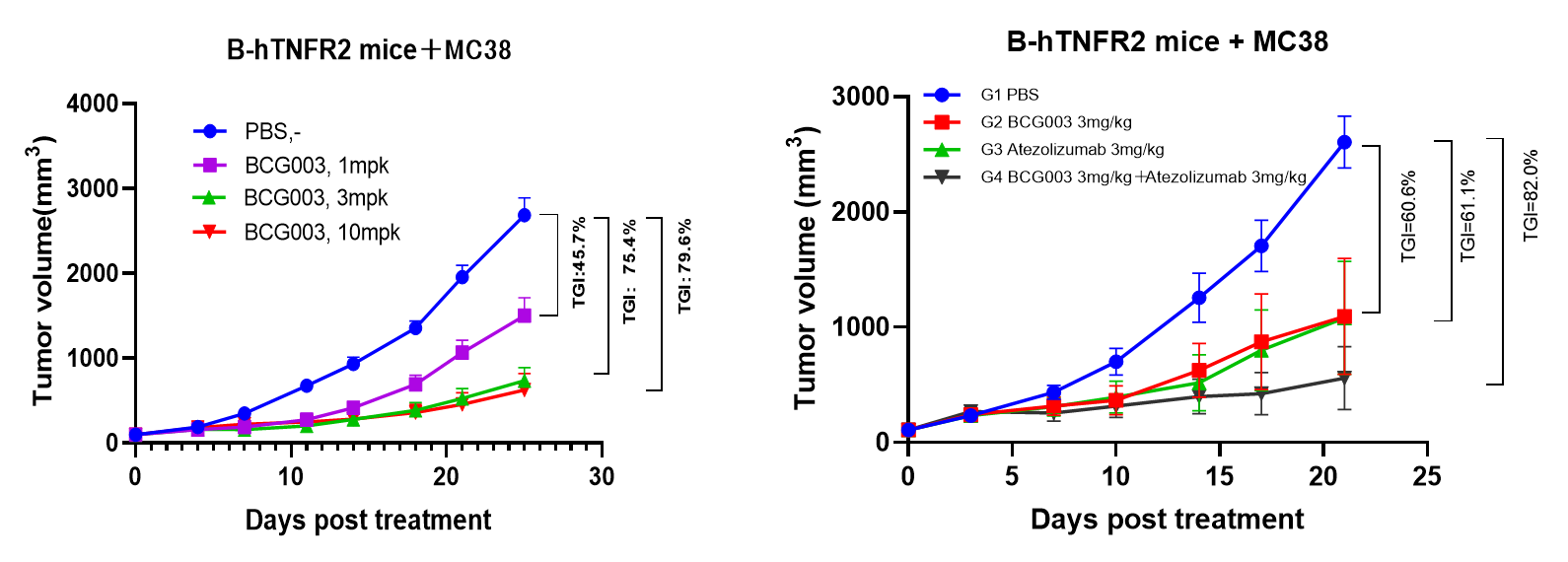
Figure 4A. Antitumor efficacy analysis of BCG003 in syngeneic tumor models. BCG003 monotherapy inhibited tumor growth in a dose-dependent manner, supporting its single-agent antitumor activity. Combination treatment with PD-(L)1 blockade resulted in greater tumor growth inhibition than either monotherapy alone, supporting the potential of BCG003 as a combination partner for immune checkpoint blockade.
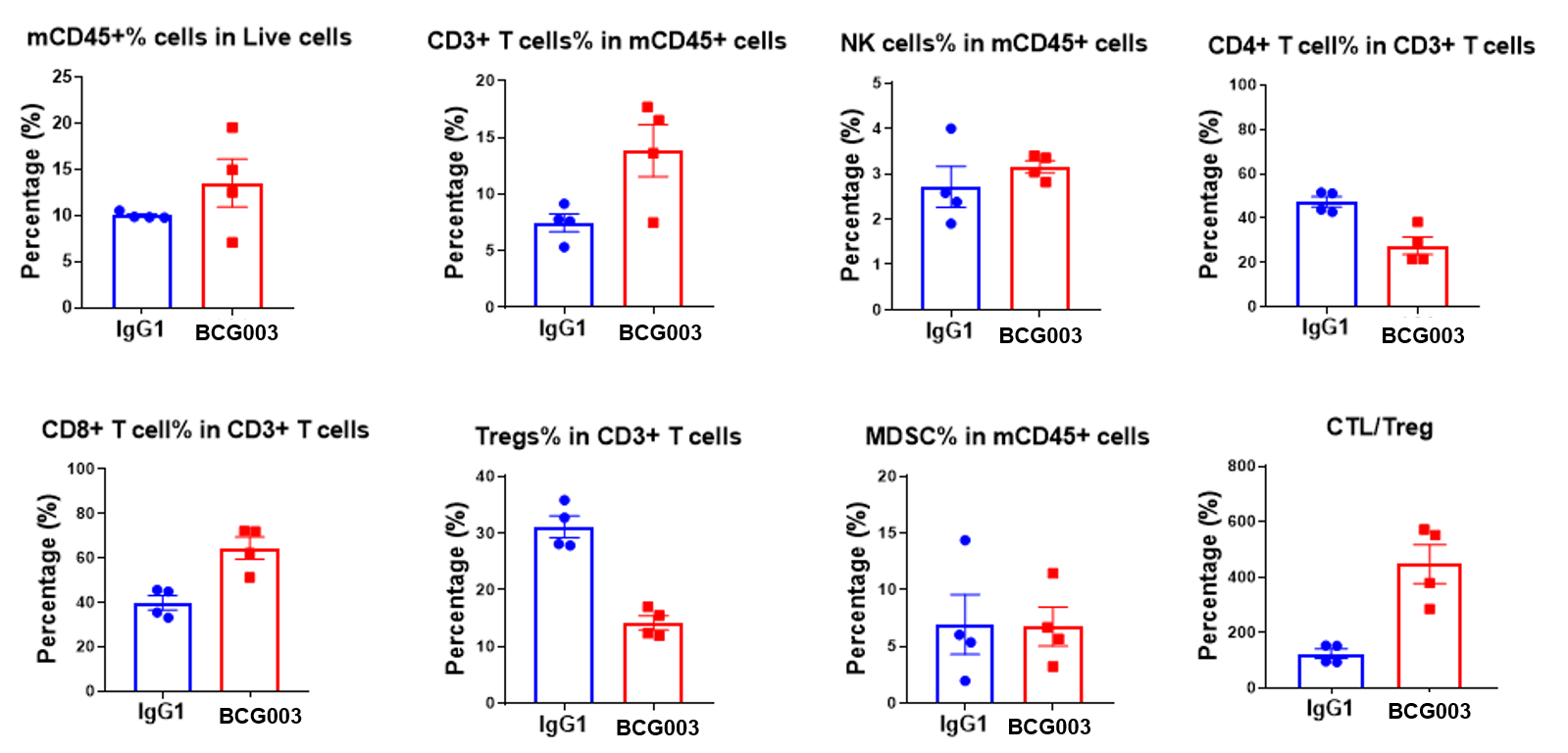
Figure 4B. Tumor-infiltrating lymphocyte analysis following BCG003 treatment. BCG003 increased the CTL/Treg ratio within the tumor microenvironment, indicating a shift toward greater antitumor immune activity and providing in vivo pharmacodynamic evidence consistent with its dual mechanism of action.
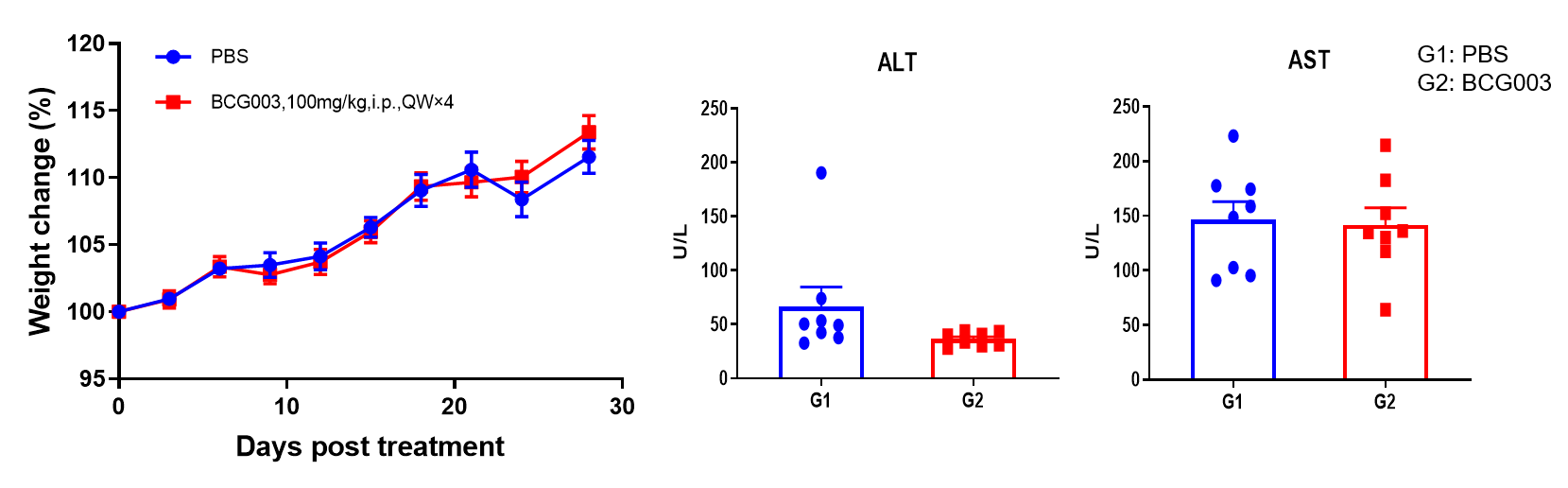
Figure 5. High-dose tolerability analysis of BCG003 in B-hTNFR2 mice. Repeated administration of BCG003 at 100 mg/kg did not result in meaningful body weight loss or evident hepatotoxicity, supporting a favorable preclinical tolerability profile.
In addition, BCG003 showed measurable systemic exposure in TNFR2 mice and favorable pharmacokinetic characteristics in cynomolgus monkeys, providing further translational support for continued development.

Biocytogen welcomes partnership discussions to further evaluate this TNFR2 agonist antibody asset.

Unlike conventional TNFR2 antibodies that primarily engage the CRD1/CRD2 region, BCG003 binds a differentiated epitope within CRD3/CRD4, preserving endogenous TNFα engagement and supporting a non-blocking agonist profile. BCG003 also combines TNFR2 agonism with ADCC-mediated depletion of TNFR2-high immunosuppressive cells, providing a dual immune-modulatory mechanism.
BCG003 enhances antitumor immunity through two complementary mechanisms: TNFR2 agonism directly promotes CD8+ T-cell proliferation and activation, while Fc-mediated ADCC depletes TNFR2-high regulatory T cells and reduces Treg-driven immune suppression. In preclinical studies, BCG003 enhanced CD8+ T-cell responses, partially restored T-cell proliferation in Treg coculture assays, and increased the intratumoral CTL/Treg ratio, supporting a mechanism that simultaneously strengthens effector T-cell function and relieves immunosuppression.
Yes. BCG003 has demonstrated enhanced antitumor efficacy when combined with PD-1 and PD-L1 inhibitors in multiple syngeneic tumor models, including MC38 (colorectal) and B16F10-hPDL1 (melanoma). The combination benefit is supported by mechanistic data showing BCG003 increases the CTL/Treg ratio in TILs while directly stimulating CD8+ T cell function. A Phase I clinical study is planned to evaluate BCG003 with exploratory combination arms with PD-(L)1 inhibitors ± chemotherapy in advanced solid tumors.
BCG003 has been evaluated in TNFR2 humanized mice (B-hTNFR2) at doses up to 100 mg/kg (QW×4) with no observed toxicity. In cynomolgus monkeys, a repeat-dose GLP toxicology study demonstrated general tolerability across doses of 20–120 mg/kg (QW×5), with no significant effects on CNS, cardiovascular, or respiratory function. The favorable PK profile — with dose-proportional exposure, antibody-like clearance, and cross-reactivity to monkey TNFR2 — combined with CMC-ready stable cell lines (yield >6 g/L) and favorable physicochemical stability, supports the clinical developability of this TNFR2 agonist antibody.
BCG003 (BC011) is being co-developed by Biocytogen and Dragon Boat Biopharmaceutical. A PCT patent application (PCT/CN2022/140958) has been filed, with national-stage filings across major markets. The IND application was accepted by the CDE on June 11, 2024 (CXSL2400375), and a Phase I dose-escalation and expansion study in patients with advanced solid tumors is planned. Ex-China rights are available for licensing and co-development.