C57BL/6N-Agertm2(AGER)Bcgen/Bcgen • 113157

RAGE: A key pattern recognition receptor in tissue injury and its therapeutic intervention

RAGE

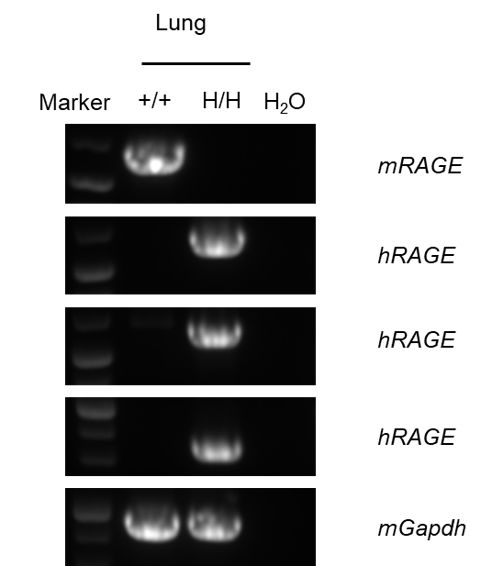
Strain specific analysis of RAGE mRNA expression in wild-type C57BL/6 mice and B-hRAGE mice plus by RT-PCR. Lung RNA were isolated from wild-type C57BL/6 mice (+/+) and homozygous B-hRAGE mice plus (H/H), then cDNA libraries were synthesized by reverse transcription, followed by PCR with mouse or human RAGE primers. Mouse RAGE mRNA was detectable only in wild-type C57BL/6 mice. Human RAGE mRNA was detectable only in homozygous B-hRAGE mice plus but not in wild-type mice.
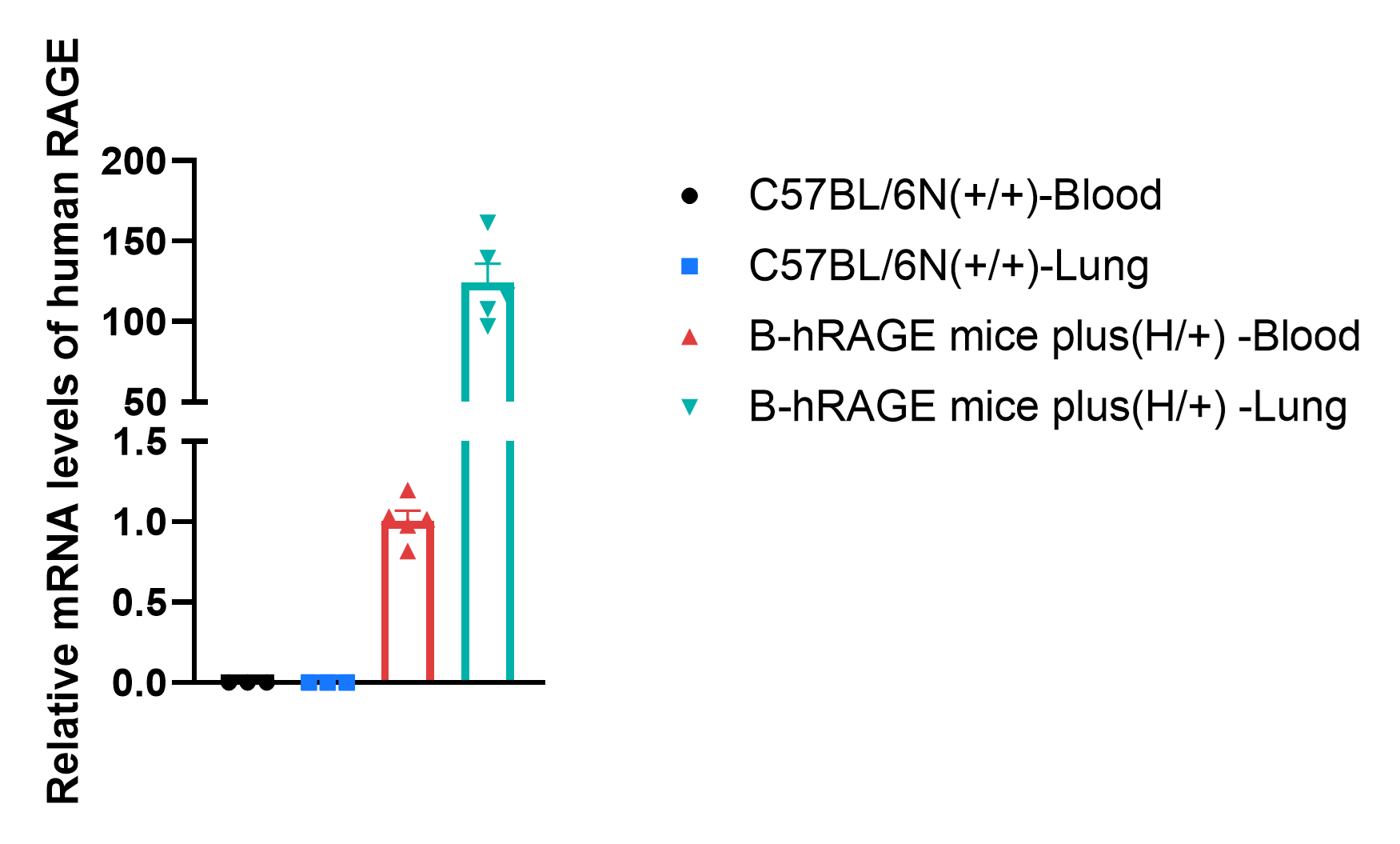
Strain specific analysis of RAGE expression in wild-type C57BL/6N mice and heterozygous humanized B-hRAGE mice plus by RT-qPCR. Lung and blood RNA were isolated from wild-type C57BL/6N mice (+/+) (n=3, 9-week-old) and B-hRAGE mice plus (n=5, 9-week-old), then cDNA libraries were synthesized by reverse transcription, followed by real-time quantitative PCR with RAGE primers. The mRNA levels of RAGE were in detectable in B-hRAGE mice plus with Applied Biosystems SYBR, but not wild-type C57BL/6N mice. The mRNA levels of RAGE in lung from B-hRAGE mice plus were higher than those in blood from B-hRAGE mice plus.
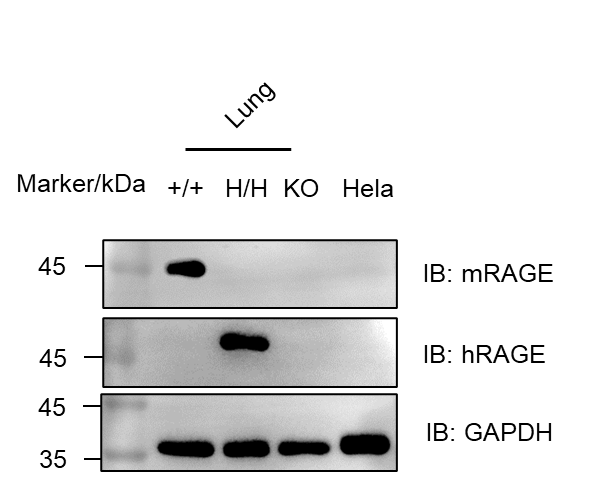
Western blot analysis of RAGE protein expression in homozygous B-hRAGE mice plus. Lung tissue lysates were collected from wild-type C57BL/6N mice (+/+) and homozygous B-hRAGE mice plus (H/H), and then analyzed by western blot with species-specific anti-RAGE antibody (Mouse/Rat RAGE Antibody, R&D, MAB1179-SP; Human RAGE Antibody, R&D, MAB11451-SP). 40 μg total proteins were loaded for western blotting analysis. RAGE was detected in lung.

Strain-specific RAGE expression analysis in wild-type C57BL/6N mice and homozygous B-hRAGE plus mice by ELISA. Serum, BALF, and lung tissues were collected from wild-type C57BL/6N mice (+/+) and homozygous B-hRAGE plus mice (H/H) (female, 8-week-old, n = 3). The expression levels of human RAGE were analyzed by ELISA (human RAGE ELISA kit: R&D, DRG00). Human RAGE was exclusively detectable in homozygous B-hRAGE plus mice but not in wild-type C57BL/6N mice. Values are expressed as mean ± SEM.

Strain-specific RAGE expression analysis in wild-type C57BL/6N mice and homozygous B-hRAGE plus mice by ELISA. Serum, BALF, and lung tissues were collected from wild-type C57BL/6N mice (+/+) and homozygous B-hRAGE plus mice (H/H) (female, 15-week-old, n = 3). The expression levels of human RAGE were analyzed by ELISA (human RAGE ELISA kit: R&D, DRG00). Human RAGE was exclusively detectable in homozygous B-hRAGE plus mice but not in wild-type C57BL/6N mice. Values are expressed as mean ± SEM.

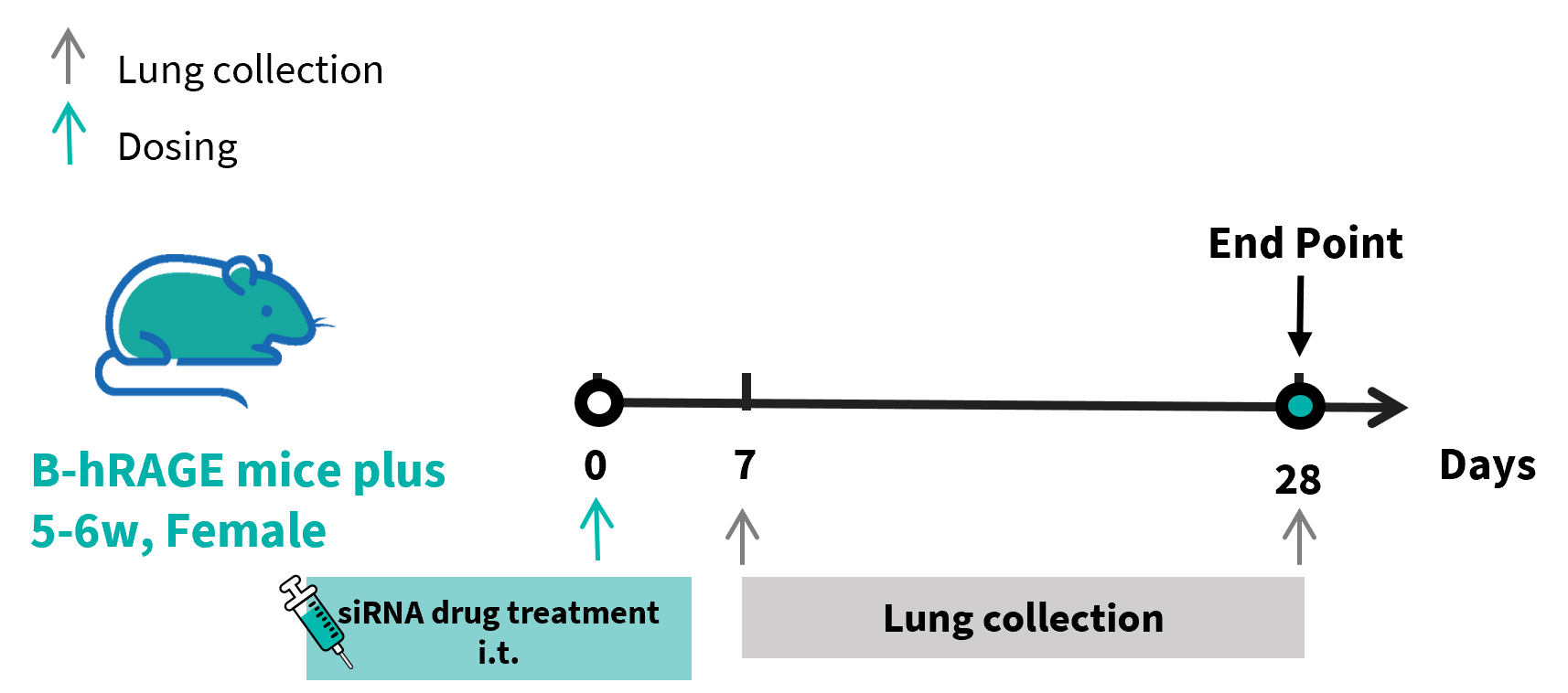
The inhibitory efficiency of the RAGE targeted nucleic acid drugs in homozygous B-hRAGE mice plus. B-hRAGE mice plus were randomly divided into 6 groups (5-6 weeks old, female). The human RAGE-targeted nucleic acid drug (provided by a client) and PBS were administered to the mice individually. The nucleic acid drug was administered in the form of PBS aqueous solution. The mice were sacrificed on day 7 and day 28.
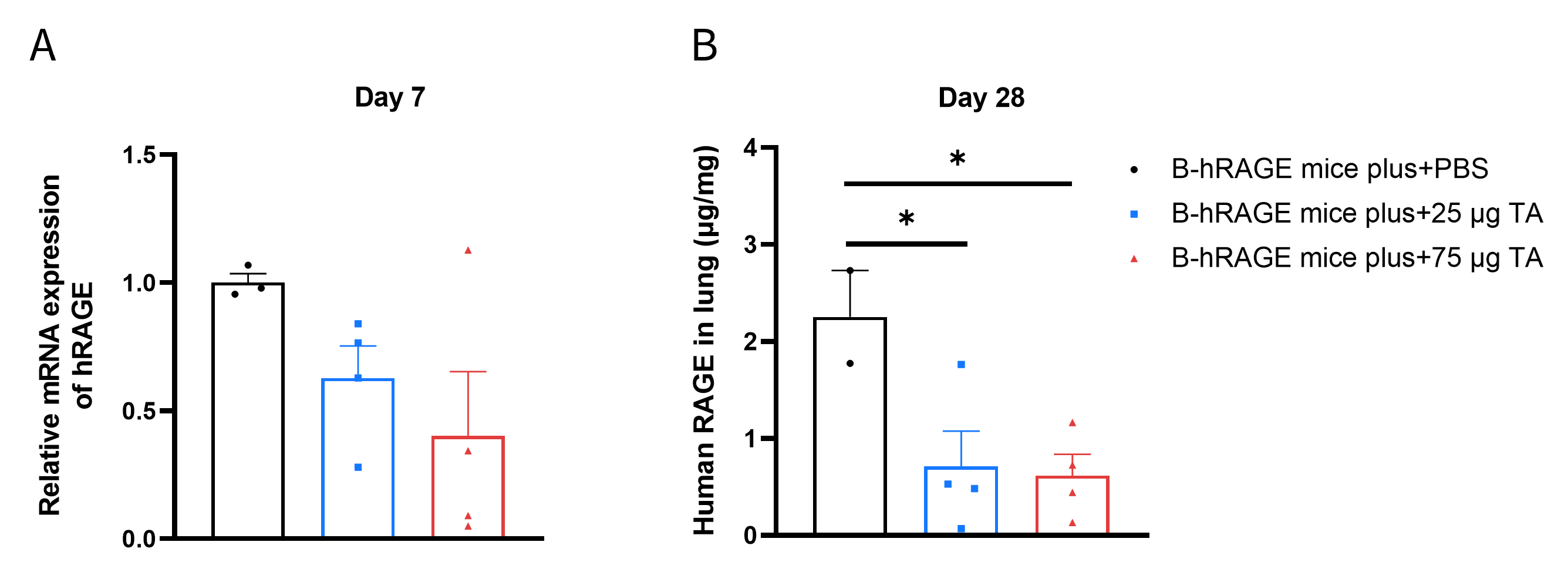
The inhibitory efficiency of the RAGE targeted nucleic acid drugs in homozygous B-hRAGE mice plus. (A) The changes in RAGE mRNA expression levels in lung tissue on day 7 after administration, compared to the levels before administration. (B) The changes in RAGE protein expression in lung tissue on day 28 after administration. Values are expressed as mean ± SEM. Analyzed by one way-ANOVA, *P<0.05.