
C57BL/6-Tlr8tm1(TLR8)Bcgen/Bcgen • 110104

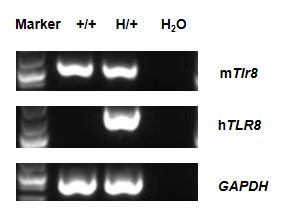
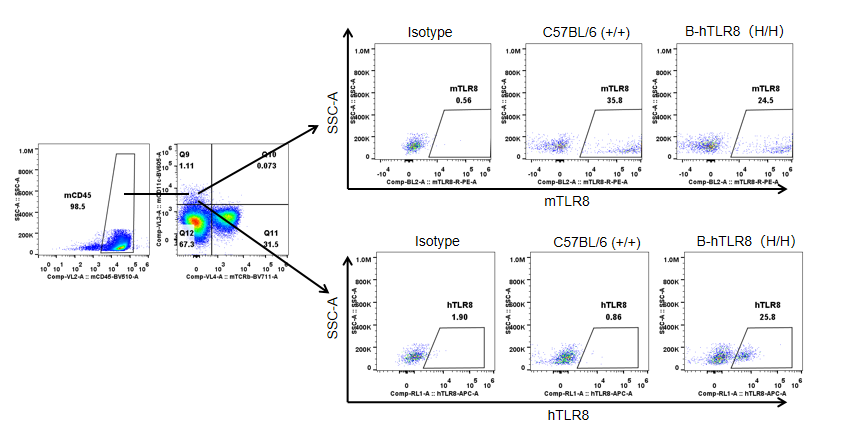
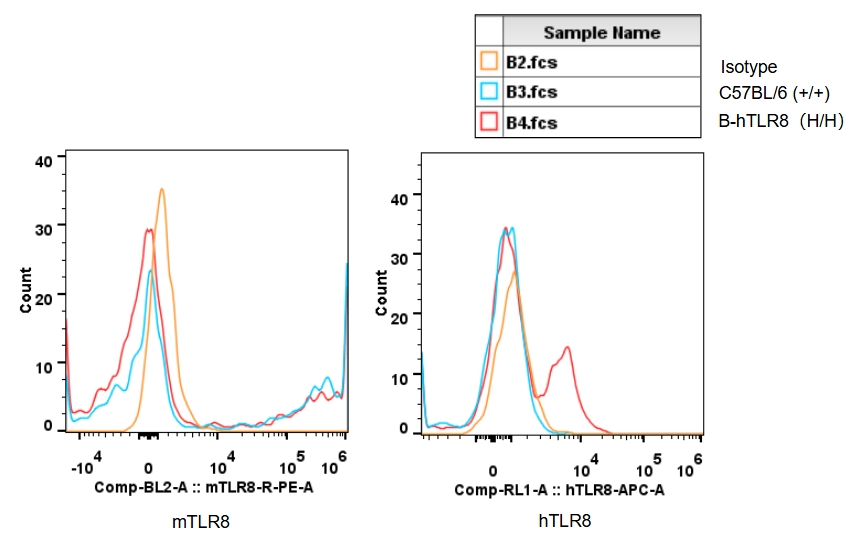
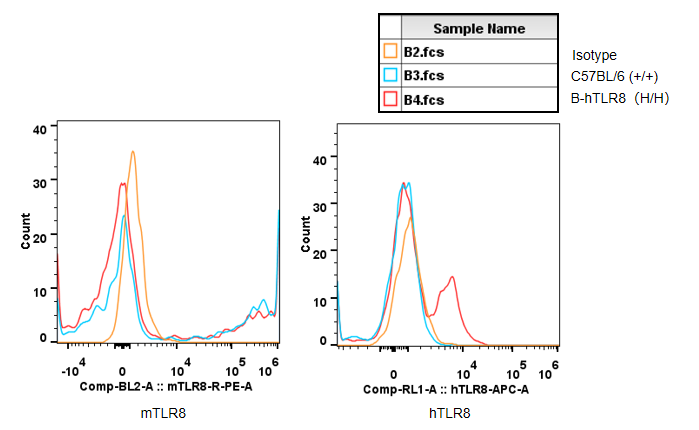
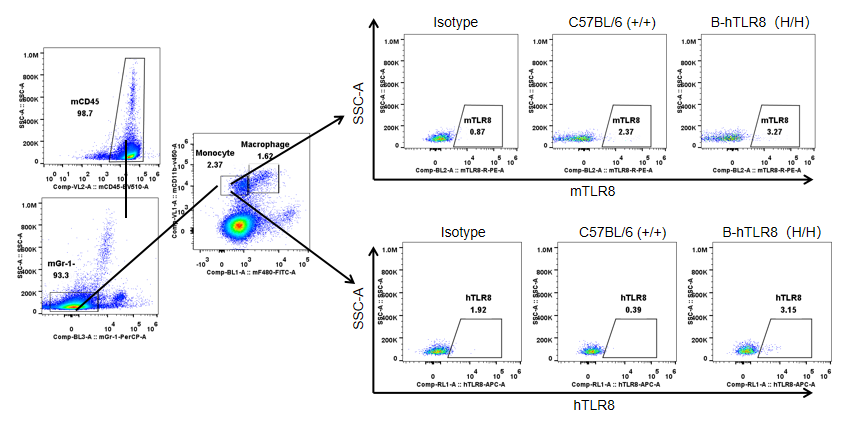
Strain specific TLR8 expression analysis in homozygous B-hTLR8 mice by flow cytometry. Splenocytes were collected from WT and homozygous B-hTLR8 (H/H) mice, and analyzed by flow cytometry with species-specific anti-TLR8 antibody. Mouse TLR8 was detectable in WT mice and homozygous B-hTLR8 due to the anti-mouse TLR8 antibody cross-reacts with human TLR8. Human TLR8 was exclusively detectable in homozygous B-hTLR8 but not WT mice.
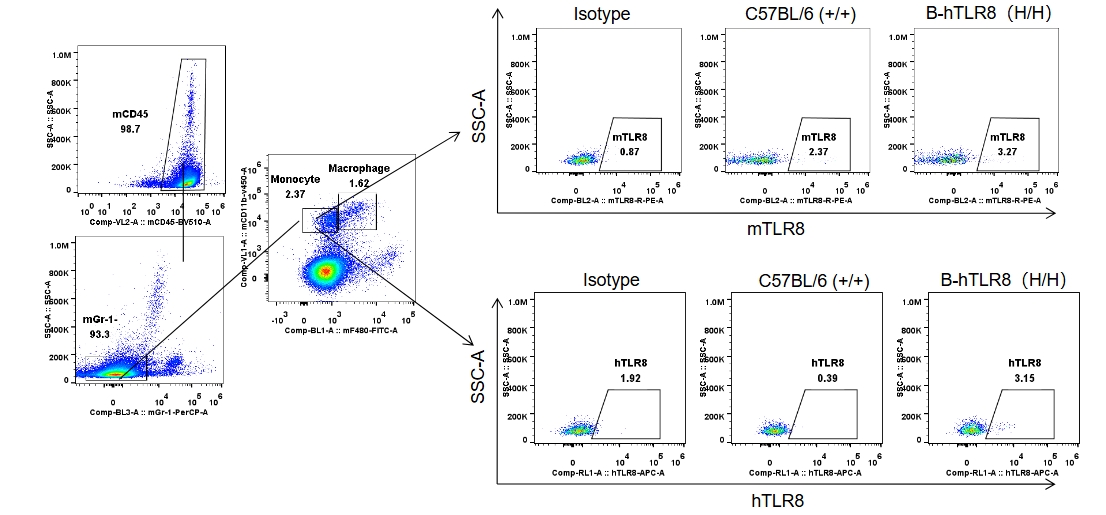
Strain specific TLR8 expression analysis in homozygous B-hTLR8 mice by flow cytometry. Splenocytes were collected from WT and homozygous B-hTLR8 (H/H) mice, and analyzed by flow cytometry with species-specific anti-TLR8 antibody. Mouse TLR8 was detectable in WT mice and homozygous B-hTLR8 due to the anti-mouse TLR8 antibody cross-reacts with human TLR8. Human TLR8 was exclusively detectable in homozygous B-hTLR8 but not WT mice.
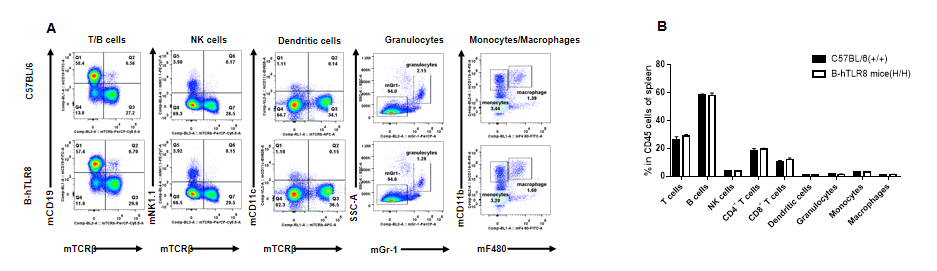
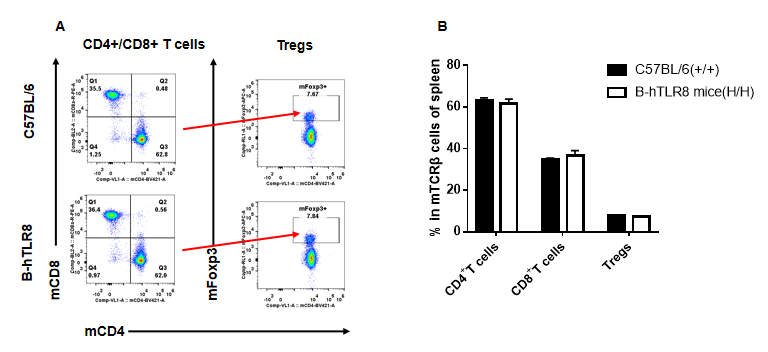
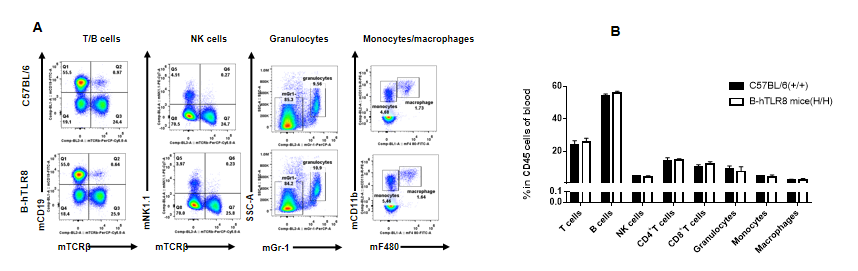
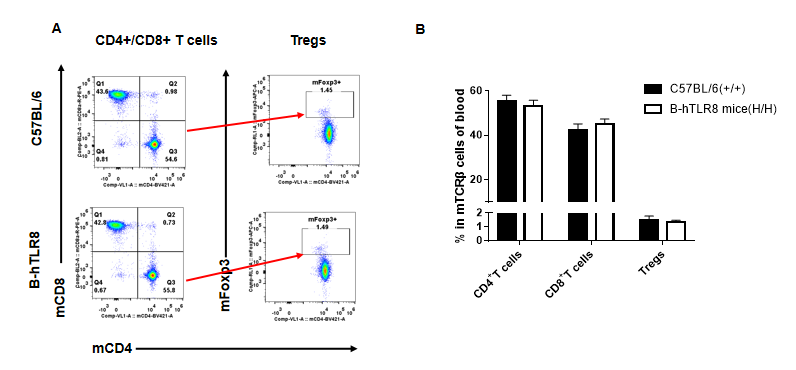
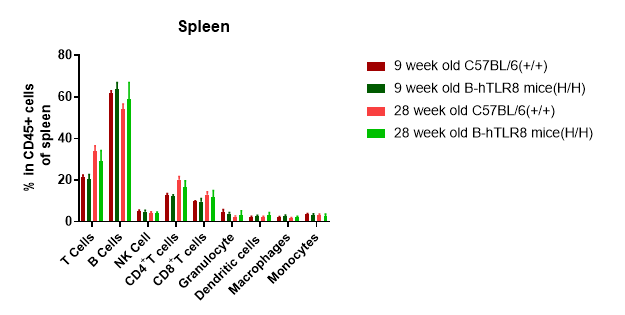
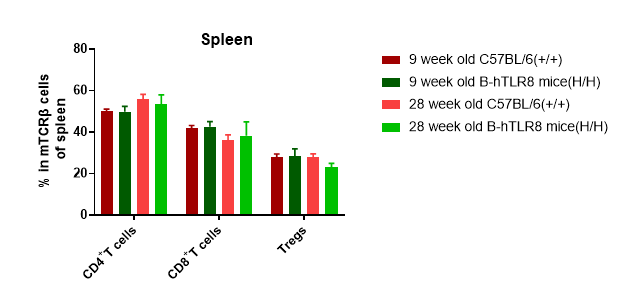
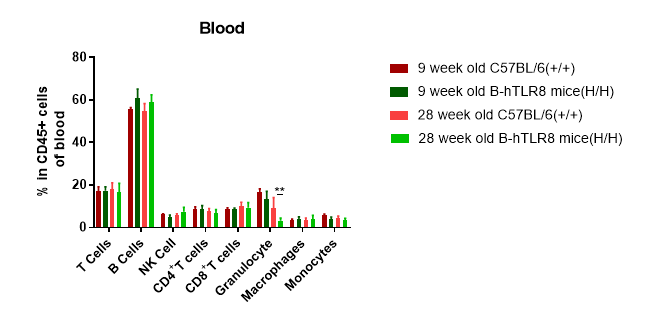
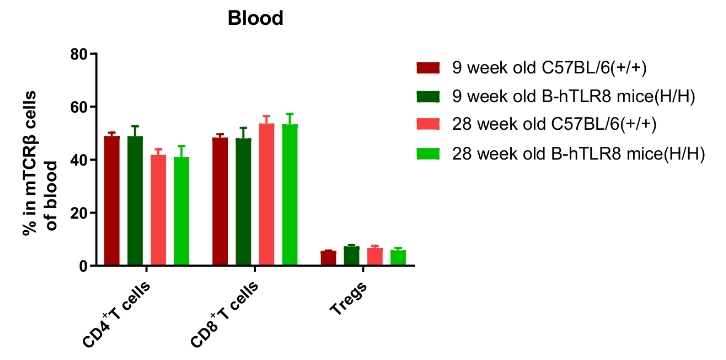
Analysis of blood T cell subpopulations by FACS. Blood were isolated from female C57BL/6 and B-hTLR8 mice (9-week-old(n=3) and 28-week-old (n=5)). Flow cytometry analysis of the blood was performed to assess leukocyte subpopulations. Results of FACS analysis. The percent of CD4+ T cells, CD8+ T cells, and Tregs in homozygous B-hTLR8 mice were similar to those in the C57BL/6 mice, demonstrating that introduction of hTLR8 in place of its mouse counterpart does not change the overall development, differentiation or distribution of these T cell subtypes in blood.
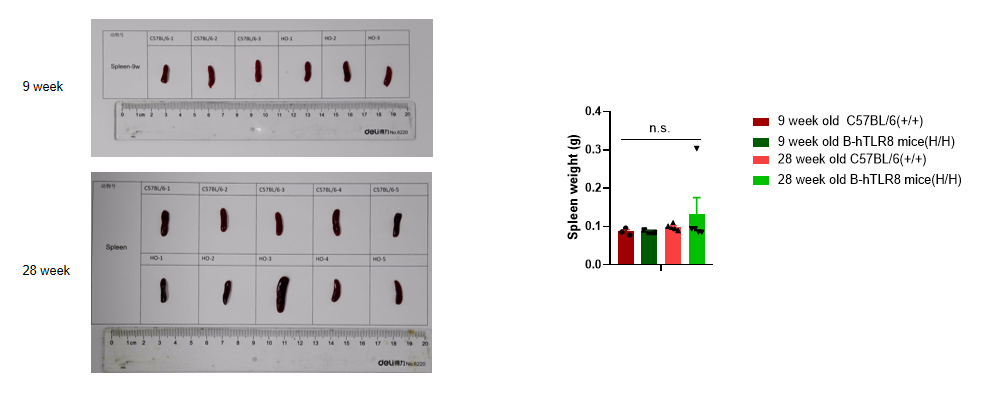
Analysis of spleen weight of B-TLR8 mice in different ages. Compared with age matched C57BL/6 mice, there was no significant change in spleen weight of 9-week-old B-hTLR8 mice. Compared with age matched C57BL/6 mice, the spleen weight of 28 week old B-hTLR8 mice increased, but there was no significant difference.
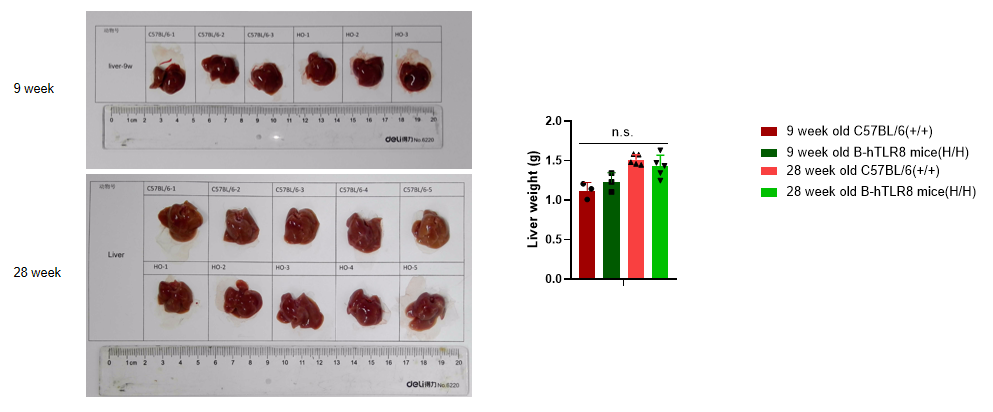
In vivo efficacy of anti-human TROP2 antibody conjugated TLR8 agonistsAntitumor activity of TROP2 antibody conjugated TLR8 agonists in B-hTLR8 mice. (A) Anti-human TROP2 antibody conjugated TLR8 agonists inhibited MC38 tumor growth in B-hTLR8 mice. Murine colon cancer B-hTROP2 MC38 plus cells were subcutaneously implanted into homozygous B-hTLR8 mice (female, 9 week-old, n=8). Mice were grouped according to body weight differences, at which time they were treated antibody conjugates with different doses. (B) Body weight changes during treatment. As shown in panel A, anti-human TROP2 antibody conjugated TLR8 agonists were efficacious in controlling tumor growth in B-hTLR8 mice, demonstrating that B-hTLR8 mouse model is a promising model for preclinical in vivo studies to evaluate antibodies conjugated TLR8 agonists. Values are expressed as mean ± SEM.

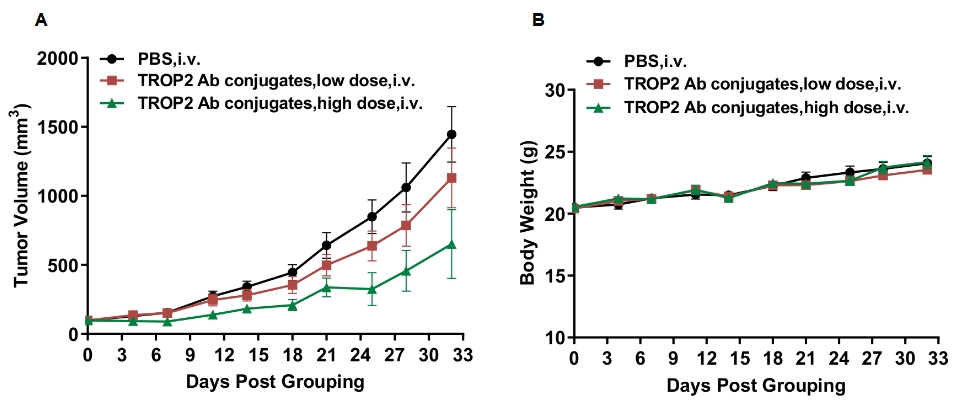
Antitumor activity of TROP2 antibody conjugated TLR8 agonists in B-hTLR8 mice. (A) Anti-human TROP2 antibody conjugated TLR8 agonists inhibited MC38 tumor growth in B-hTLR8 mice. Murine colon cancer B-hTROP2 MC38 plus cells were subcutaneously implanted into homozygous B-hTLR8 mice (female, 9-week-old, n=8). Mice were grouped according to body weight differences, at which time they were treated antibody conjugates with different doses. (B) Body weight changes during treatment. As shown in panel A, anti-human TROP2 antibody conjugated TLR8 agonists were efficacious in controlling tumor growth in B-hTLR8 mice, demonstrating that B-hTLR8 mouse model is a promising model for preclinical in vivo studies to evaluate antibodies conjugated TLR8 agonists. Values are expressed as mean ± SEM.
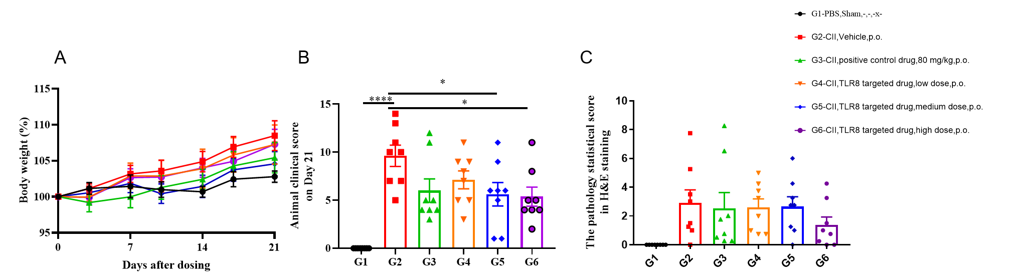
In vivo efficacy of collagen-induced arthritis model in B-hTLR8 mice. 96 animals were randomly divided into 2 groups according to their body weight, 8 animals in group A and 88 animals in Group B. On day 0, PBS was injected subcutaneously in group A. CⅡ emulsion was injected subcutaneously in group B. On day 21, animals in group A were injected with PBS; animals of group B were injected with CⅡ emulsion. When the average clinical score of the animal in group B is more than 0, they were grouped again, and these animals are divided into 5 groups, each with 8 animals, respectively marked as G2~G6. G1 group was group A with the same number of animals, it is a non-CIA control group. The G2 is the vehicle group(model group), G3 is 80 mg/kg positive control drug group, G4 is the low dose TLR8 targeted drug group, G5 is the medium dose TLR8 targeted drug group, G6 is the high dose TLR8 targeted drug group. (A) Weight changes. Percentage of animal weight change per day compared with Day 0. (B) Animal clinical score on Day 21 after dosing. As test article group, it was observed that the score average was lower in G3-G6 compared to that in vehicle-treated group(G2). Especially, G3 and G6 showed significant difference from G2. (C) The pathology statistical score in H&E staining. Microscopically, no lesion was found in G1. Different degrees of subcutaneous mixed inflammatory cell infiltration, joint synovitis and/or pannus formation, ankle and/or phalangeal joint cartilage and bone tissue destruction were observed in G2. G6 had a certain improvement on related lesions of arthritic animal model. Individual data of microscopic findings and photos were presented in Appendix.