Abstract:
Background:
Significant genetic differences between the animal major histocompatibility complex (MHC) and the human leukocyte antigen (HLA) system hinder accurate modeling of human antigen-specific immune responses. HLA-A2.1 humanized mouse models offer an advanced platform to study HLA-A-restricted cytotoxic T lymphocyte (CTL) responses and facilitate the development of vaccines targeting human diseases, including cancer and infectious diseases.
Methods:
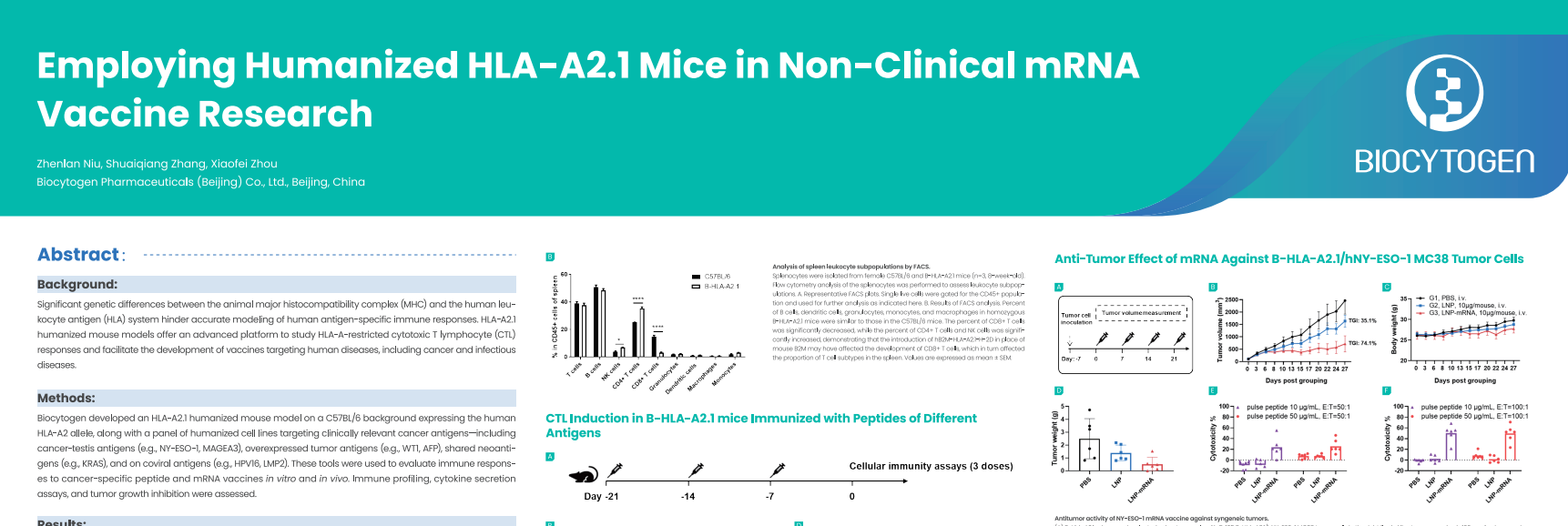
Biocytogen developed an HLA-A2.1 humanized mouse model on a C57BL/6 background expressing the human HLA-A2 allele, along with a panel of humanized cell lines targeting clinically relevant cancer antigens—including cancer-testis antigens (e.g., NY-ESO-1, MAGEA3), overexpressed tumor antigens (e.g., WT1, AFP), shared neoantigens (e.g., KRAS), and oncoviral antigens (e.g., HPV16, LMP2). These tools were used to evaluate immune responses to cancer-specific peptide and mRNA vaccines in vitro and in vivo. Immune profiling, cytokine secretion assays, and tumor growth inhibition were assessed.
Results:
Immunophenotyping revealed that the expression of HLA-A2.1 significantly altered immune cell composition in the humanized mice. Vaccination with cancer-specific epitopes successfully induced HLA-A2.1-restricted, epitope-specific CTL responses. The mRNA vaccination generated robust antigen-specific CD8⁺ effector T cells in the spleen, enhanced T cell infiltration into the tumor, and reduced regulatory T cell (Treg) populations in the tumor microenvironment (TME). Moreover, the mRNA vaccine demonstrated synergistic antitumor effects when combined with other therapeutic agents.
Conclusion:
The HLA-A2.1 humanized mouse model provides a valuable tool for studying HLA-A2.1-restricted immune responses and evaluating peptide or mRNA-based vaccine candidates. This model accelerates the discovery of novel epitopes and the development of effective cancer immunotherapies targeting HLA-A2.1-restricted antigens.