The Obesity Science & Innovation 2025: Developing Humanized APOC3 Mice as a Robust in vivo Model for RNAi Therapy Assessment
November 22, 2025
Share on:
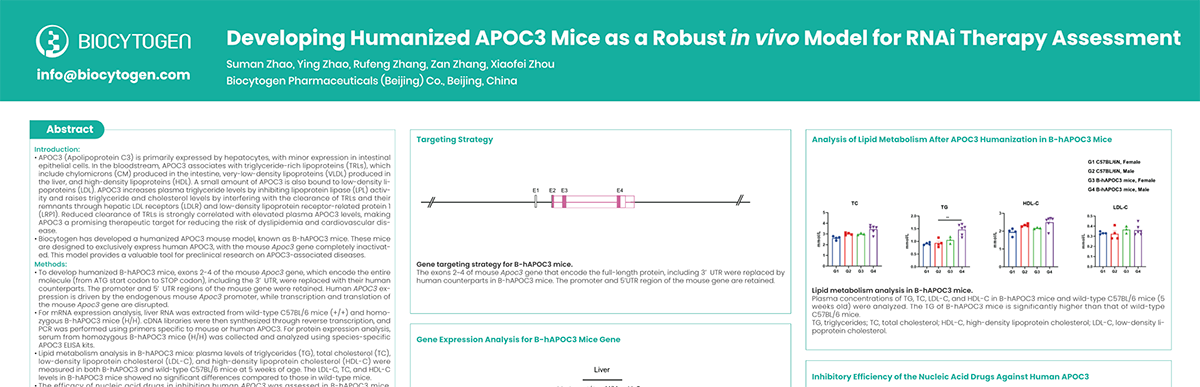
APoC3(Apolipoprotein C3)is primarily expressed by hepatocytes, with minor expression in intestinalepithelial cells. In the bloodstream, APOC3 associates with triglyceride-rich lipoproteins (TRLs), whichinclude chylomicrons (CM) produced in the intestine,very-low-density lipoproteins (VLDL) produced inthe liver, and high-density lipoproteins (HDL). A small amount of APOC3 is also bound to low-density li-poproteins (LDL). APoc3 increases plasma triglyceride levels by inhibiting lipoprotein lipase (LPL) activ-ity and raises triglyceride and cholesterol levels by interfering with the clearance of TRLs and theirremnants through hepatic LDL receptors (LDLR) and low-density lipoprotein receptor-related protein 1(LRP1).Reduced clearance of TRLs is strongly correlated with elevated plasma APOC3 levels, makingAPOC3 a promising therapeutic target for reducing the risk of dyslipidemia and cardiovascular dis-ease.
Biocytogen has developed a humanized APoC3 mouse model,known as B-hAPOC3 mice. These miceare designed to exclusively express human APOC3, with the mouse Apoc3 gene completely inactivat-ed. This model provides a valuable tool for preclinical research on APOC3-associated diseases.