
C57BL/6N-Trem2tm1(TREM2)Bcgen/Bcgen • 111176

TREM2: As a major pathology-induced immune signaling hub.

TREM2

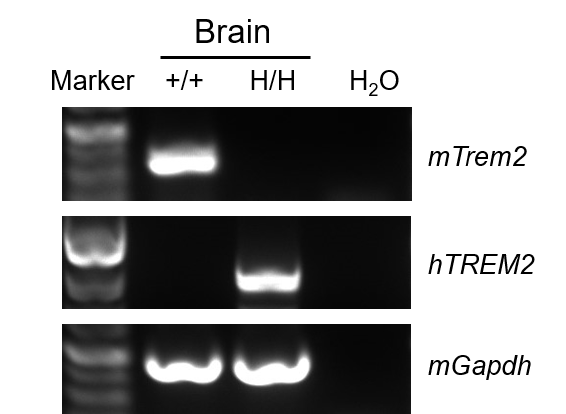
Strain-specific TREM2 expression analysis in wild-type C57BL/6N mice and homozygous B-hTREM2 mice. Brain RNA was isolated from wild-type C57BL/6N mice (+/+) and homozygous B-hTREM2 mice (H/H), then cDNA libraries were synthesized by reverse transcription, followed by PCR with mouse or human TREM2 primers. Human TREM2 mRNA was detectable only in homozygous B-hTREM2 mice but not in wild-type mice.
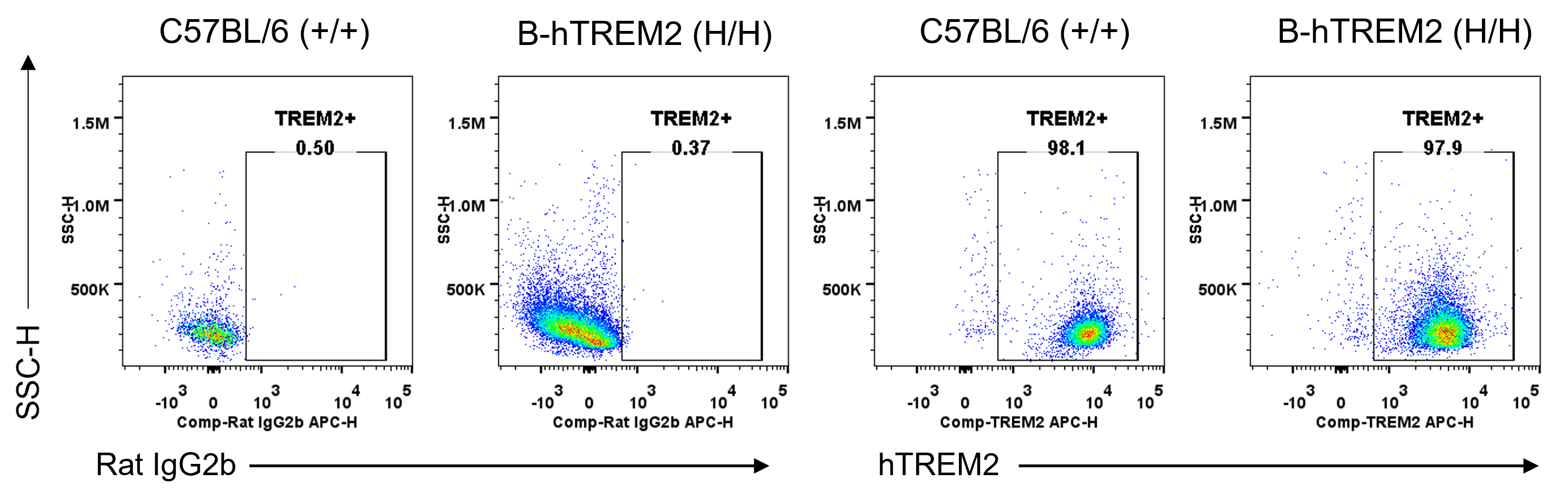
Strain-specific TREM2 expression analysis in wild-type C57BL/6N mice and homozygous B-hTREM2 mice. Microglia cells were collected from wild-type C57BL/6N mice (+/+) and homozygous B-hTREM2 mice (H/H). TREM2 expression on microglia cells was analyzed by flow cytometry using anti-human/mouse TREM2 antibody (RD, FAB17291A). TREM2 protein was detectable in the microglia cells from homozygous B-hTREM2 mice and wild-type C57BL/6N mice, as the antibody was cross-reactive between human and mouse.
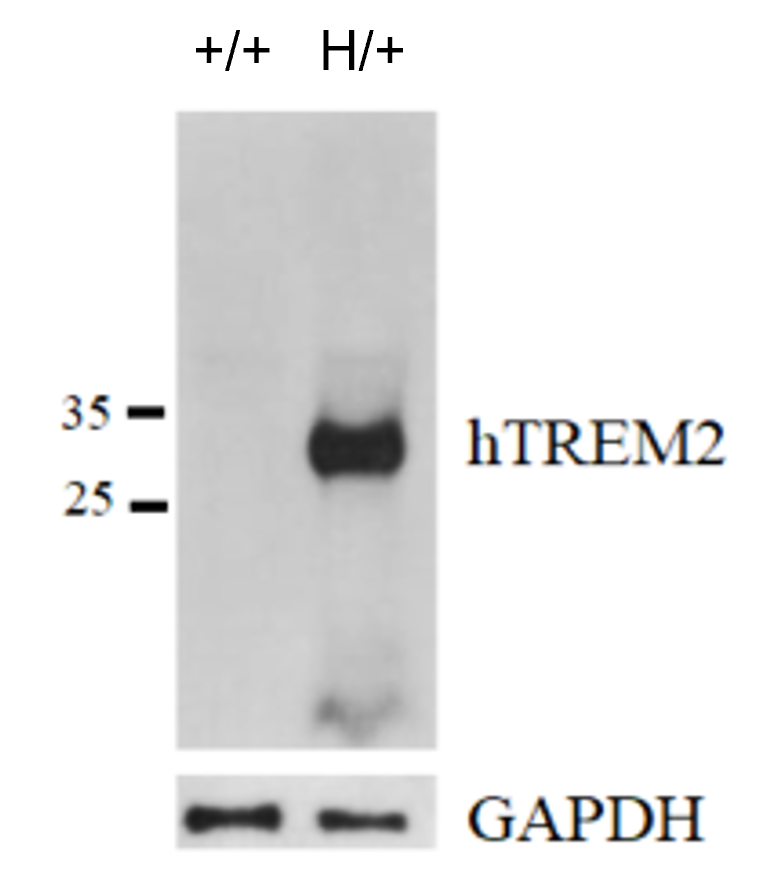
Protein expression analysis of TREM2 in heterozygous B-hTREM2 mice. Brain tissue lysates were collected from wild-type C57BL/6N mice (+/+) and heterozygous B-hTREM2 mice (H/+), and then analyzed by western blot with anti-TREM2 antibody (CST, 91068S). 40 μg total protein was loaded for western blotting analysis. Human TREM2 was exclusively detectable in the brain from heterozygous B-hTREM2 mice but not in wild-type mice.
This experiment was conducted in collaboration with the client using B-hTREM2 mice.

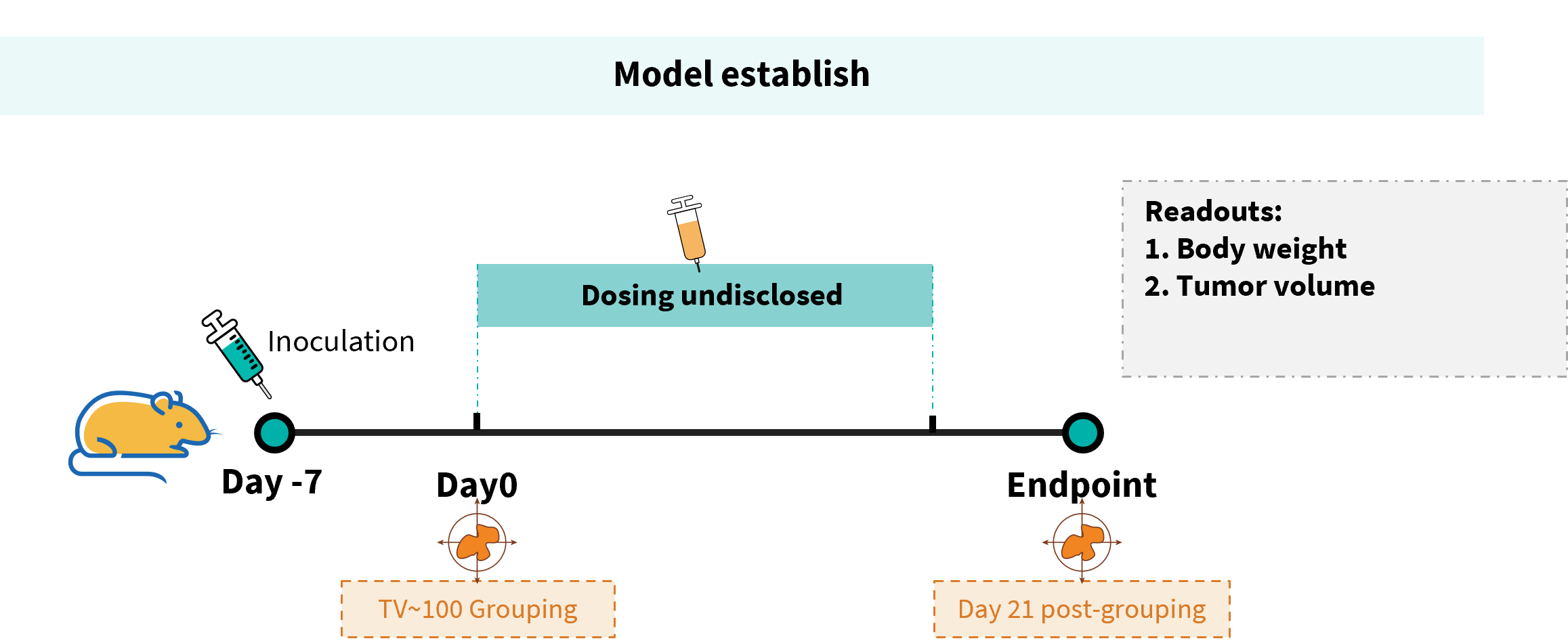
Establishment of an MC38 model and in vivo efficacy study of anti-human TREM2 antibody. Murine colon cancer MC38 cells were subcutaneously implanted into homozygous B-hTREM2 mice (male, 6-week-old, n = 6). Mice were grouped when tumor volume reached approximately 100 mm3, and treated with anti-hTREM2 antibody (in house).

Efficacy of anti-human TREM2 antibody in B-hTREM2 mice. (A) Tumor growth curves. (B) Body weight changes during treatment. As shown in panel A, anti-human TREM2 antibody (in house) was efficacious in controlling tumor growth in B-hTREM2 mice, demonstrating that they provide a powerful preclinical model for in vivo evaluation of anti-human TREM2 antibody. Values are expressed as mean ± SEM.