Description
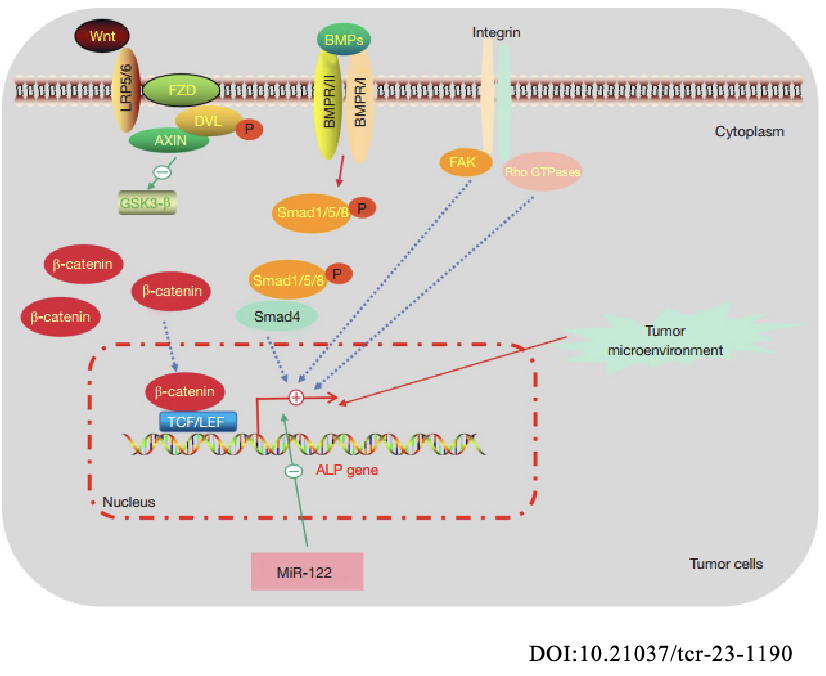
ALPP: A promising oncofetal tumor-associated antigen in solid malignancies and its therapeutic intervention
- Gene Information: ALPP (placental alkaline phosphatase, PLAP) encodes a GPI-anchored, homodimeric metalloenzyme. Located on chromosome 2q37.1, it hydrolyzes extracellular monophosphates and shares >98% sequence homology with ALPPL2.
- Protein Expression: In normal tissues, ALPP expression is strictly restricted to placental syncytiotrophoblasts. In contrast, it is aberrantly overexpressed in ovarian, endometrial, and testicular germ cell cancers, as well as subsets of lung and colorectal carcinomas.
- Signaling Pathway: It drives tumor progression—specifically cell proliferation, migration, invasion, and epithelial-mesenchymal transition (EMT)—by regulating extracellular phosphate metabolism and activating oncogenic cascades such as the Wnt/β-catenin pathway.
- Therapeutic Inhibition: ALPP-targeted agents (mAbs, ADCs, bispecifics) block oncogenic signaling, deliver cytotoxic payloads via receptor internalization, and induce immune-mediated cytotoxicity (ADCC/CDC). ALPP humanized mice enable accurate in vivo efficacy evaluation, TMDD profiling, and on-target toxicity assessment.
Targeting strategy
ALPP
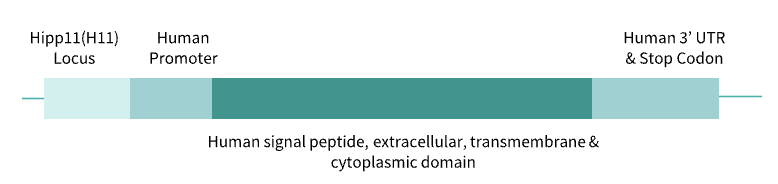
- The entire protein-coding region of the human ALPP gene, including the promoter, 5’UTR and 3’UTR, is inserted into the mouse Hipp11 (H11) locus in B-hALPP mice.
B-hALPP mice: ALPP mRNA Expression Analysis
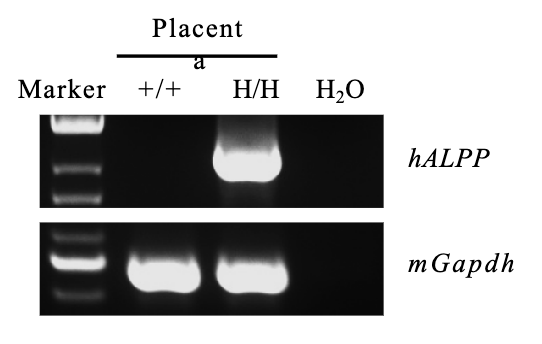
- Human ALPP mRNA was exclusively detectable in the placenta of B-hALPP mice.
Strain-specific analysis of ALPP mRNA expression in wild-type C57BL/6JNifdc mice and B-hALPP mice by RT-PCR. Placenta RNA was isolated from wild-type C57BL/6JNifdc mice (+/+) and homozygous B-hALPP mice (H/H), and then cDNA libraries were synthesized by reverse transcription, followed by PCR with human ALPP primers.
B-hALPP Mice: ALPP Protein Expression
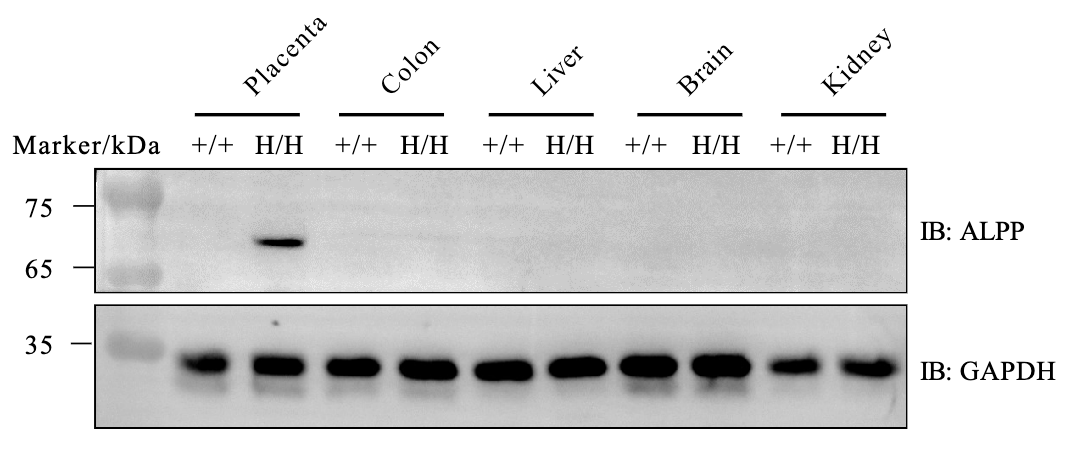
Human ALPP was exclusively detected in placenta of homozygous B-hALPP mice.
Western blot analysis of ALPP protein expression in homozygous B-hALPP mice. Various tissue lysates were collected from wild-type C57BL/6 (+/+) and homozygous B-hALPP mice (H/H) and then analysed by western blot with a species-specific anti-ALPP antibody(CST, 30971). 40 μg total protein was loaded for western blotting analysis.
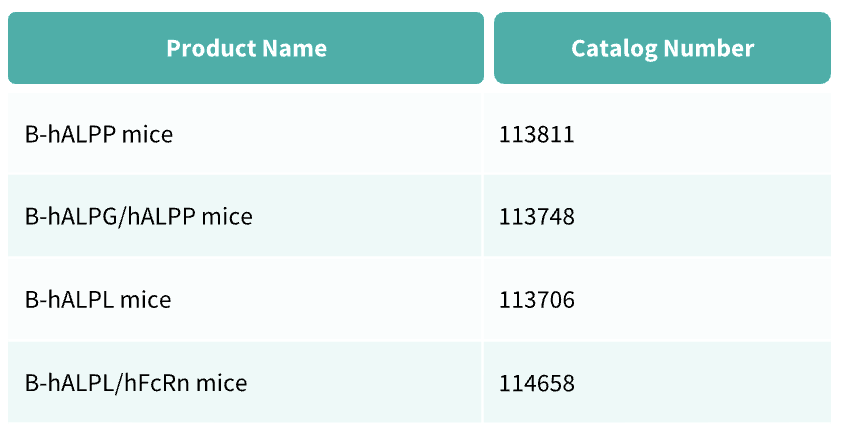
B-hALPP Mice: Related Product List
FAQ
Q: What is the difference in the ALPP mRNA sequences between B-hALPP mice and the reference sequence (NM_001632.5)?
A: Sequencing analysis of the RT-PCR amplification products revealed a single-nucleotide substitution (c.692G>C) in the ALPP gene of B-hALPP humanized mice, resulting in a missense mutation at position 231 (p.R231P). This mutation site is completely identical to the known human single nucleotide polymorphism (SNP) rs1048988. This amino acid substitution may exert potential effects on the three-dimensional spatial conformation and thermal stability of ALPP, potentially affecting its enzymatic activity.
* When publishing results obtained using this animal model, please acknowledge the source as follows: The animal model [B-hALPP mice] (Cat# 113831) was purchased from Biocytogen.