

C57BL/6-Tnfrsf25tm3(TNFRSF25)Bcgen Fcgrttm1(FCGRT)Bcgen/Bcgen • 113925


Gene targeting strategy for B-hDR3/hFcRn mice. The exons 1-10 of mouse Tnfrsf25 gene that encode the whole molecule (ATG to STOP codon), including promoter and 5’UTR were replaced by human counterparts in B-hDR3/hFcRn mice. The 3’UTR region of the mouse gene are retained. The human TNFRSF25 expression is driven by human TNFRSF25 promoter, while mouse Tnfrsf25 gene transcription and translation will be disrupted.
The human full-length FCGRT cDNA was inserted into the Fcgrt exon 2 of wild-type mice.

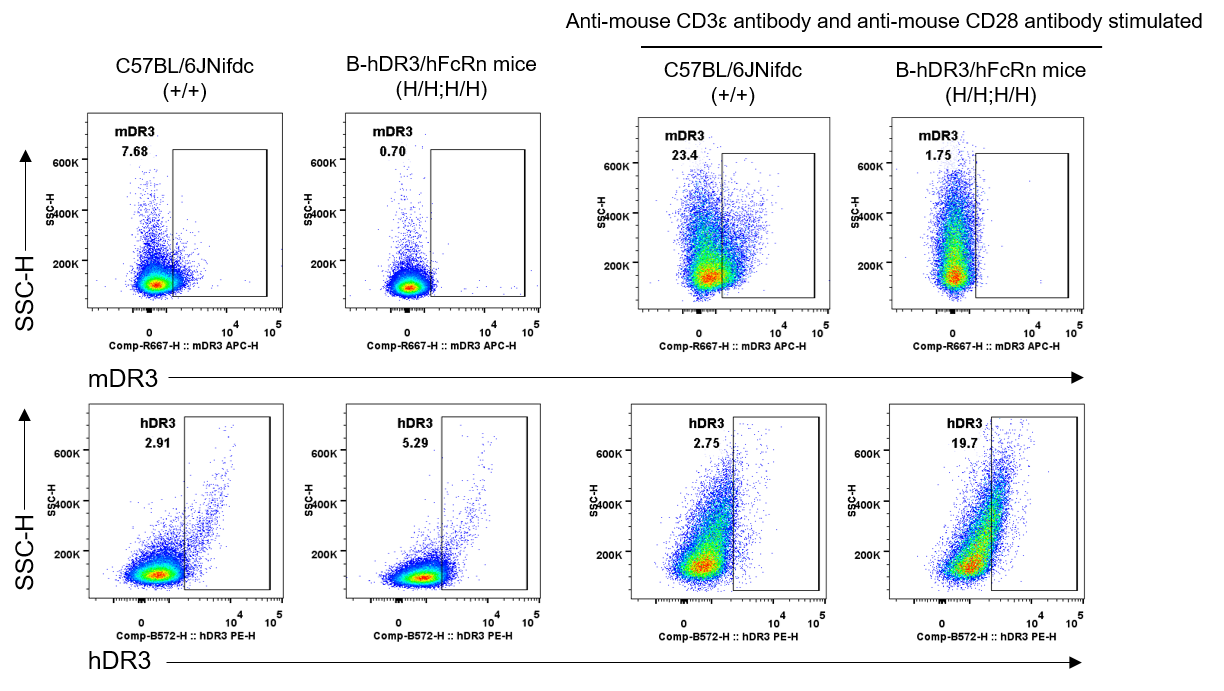
Strain specific TNFRSF25 expression analysis in wild-type C57BL/6JNifdc mice and homozygous B-hDR3/hFcRn mice by flow cytometry. Splenocytes were collected from wild-type C57BL/6JNifdc mice (+/+) and homozygous B-hDR3/hFcRn mice (H/H;H/H) stimulated with anti-mouse CD3ε antibody and anti-mouse CD28 antibody in vivo for 24 h, protein expression was analyzed with anti-mouse DR3 antibody (Biolegend, 144407) and anti-human DR3 antibody (Biolegend, 307105) by flow cytometry. Mouse DR3 was detectable in T cells of wild-type C57BL/6JNifdc mice, human DR3 was detectable in T cells of homozygous B-hDR3/hFcRn mice.
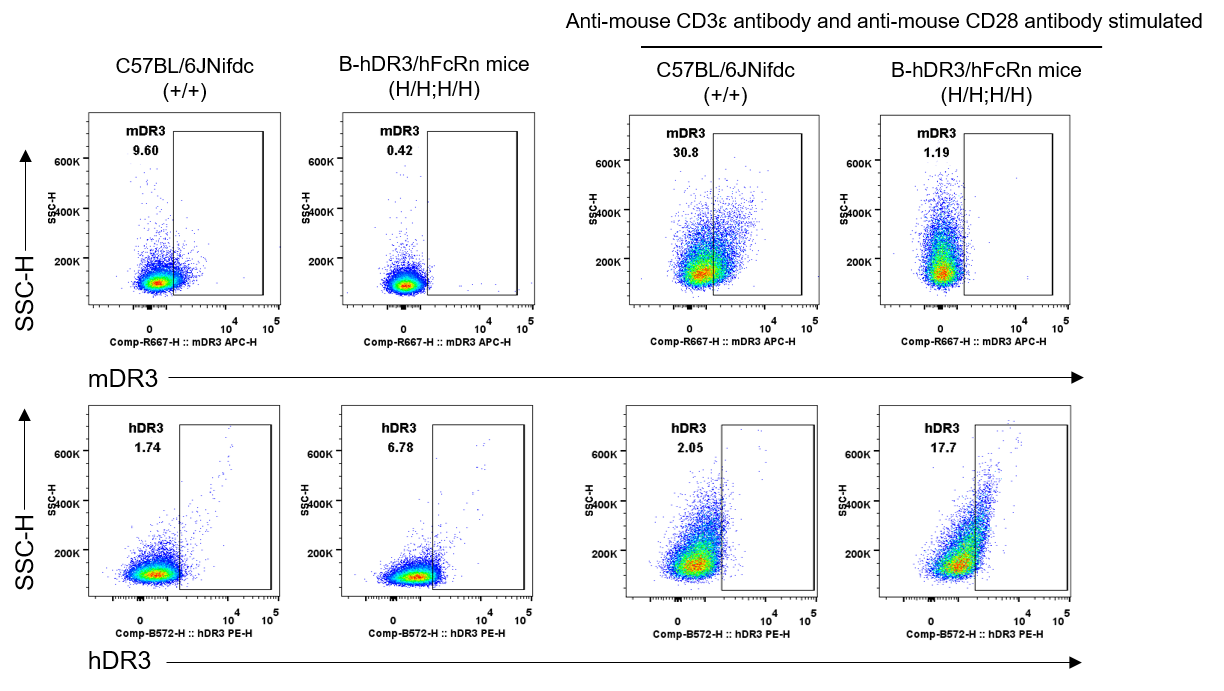
Strain specific TNFRSF25 expression analysis in wild-type C57BL/6JNifdc mice and homozygous B-hDR3/hFcRn mice by flow cytometry. Splenocytes were collected from wild-type C57BL/6JNifdc mice (+/+) and homozygous B-hDR3/hFcRn mice (H/H;H/H) stimulated with anti-mouse CD3ε antibody and anti-mouse CD28 antibody in vivo for 24 h, protein expression was analyzed with anti-mouse DR3 antibody (Biolegend, 144407) and anti-human DR3 antibody (Biolegend, 307105) by flow cytometry. Mouse DR3 was detectable in CD4+ T cells of wild-type C57BL/6JNifdc mice, human DR3 was detectable in CD4+ T cells of homozygous B-hDR3/hFcRn mice.
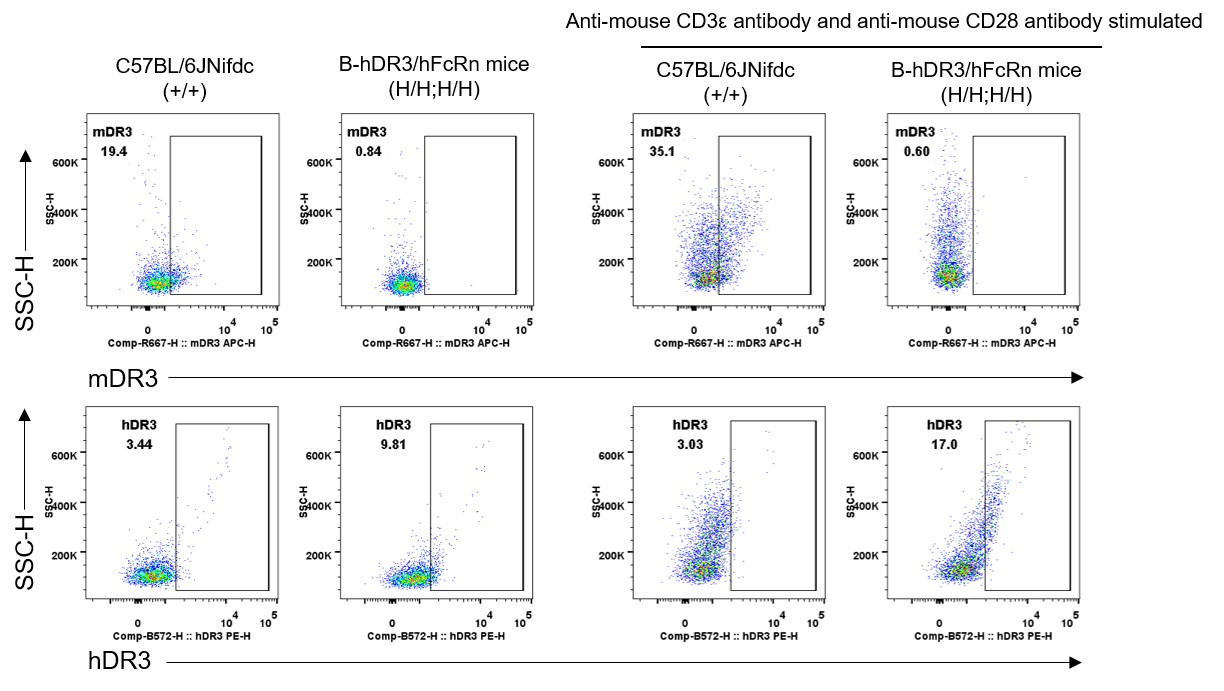
Strain specific TNFRSF25 expression analysis in wild-type C57BL/6JNifdc mice and homozygous B-hDR3/hFcRn mice by flow cytometry. Splenocytes were collected from wild-type C57BL/6JNifdc mice (+/+) and homozygous B-hDR3/hFcRn mice (H/H;H/H) stimulated with anti-mouse CD3ε antibody and anti-mouse CD28 antibody in vivo for 24 h, protein expression was analyzed with anti-mouse DR3 antibody (Biolegend, 144407) and anti-human DR3 antibody (Biolegend, 307105) by flow cytometry. Mouse DR3 was detectable in Treg cells of wild-type C57BL/6JNifdc mice, human DR3 was detectable in Treg cells of homozygous B-hDR3/hFcRn mice.
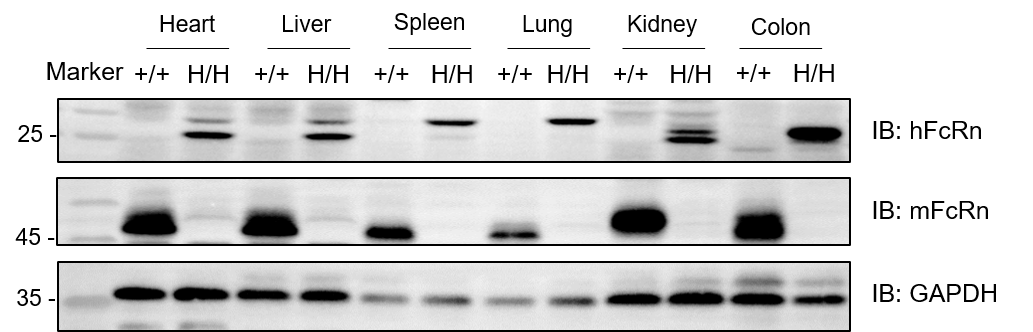
Western blot analysis of FcRn protein expression in homozygous B-hDR3/hFcRn mice. Various tissue lysates were collected from wild-type C57BL/6JNifdc mice (+/+) and homozygous B-hDR3/hFcRn mice (H/H;H/H), and then analyzed by western blot with species-specific anti-mouse FcRn antibody (R&D, AF6775) and anti-human FcRn antibody (Novus Biologicals, NBP1-89128). 40 μg total proteins were loaded for western blotting analysis. Mouse FcRn was detectable in wild-type C57BL/6JNifdc mice. Human FcRn was only detectable in homozygous B-hDR3/hFcRn mice but not in wild-type C57BL/6JNifdc mice.