
在此页面上

BCG056 is being evaluated as an IL-4Rα × TSLPR bispecific antibody asset for asthma, with a focus on severe asthma where incomplete responses to available biologics and overlapping inflammatory pathways create a need for additional therapeutic approaches.

The preclinical data package for BCG056 covers binding affinity; blocking activity across TSLPR and IL-4Rα signaling pathways; epitope mapping; developability analysis, including physicochemical properties and stability; and in vivo efficacy across initial and repeat asthma studies. Together, these data support the continued advancement of BCG056 as a dual-pathway bispecific antibody for airway inflammation.
(Representative data shown; full data package available upon request.)
BCG056 demonstrated nanomolar binding affinity to human IL-4Rα (KD = 2.36 nM) and TSLPR (KD = 4.20 nM). Binding to cynomolgus TSLPR was also retained (KD = 4.81 nM), supporting cross-species recognition by the TSLPR-binding component.
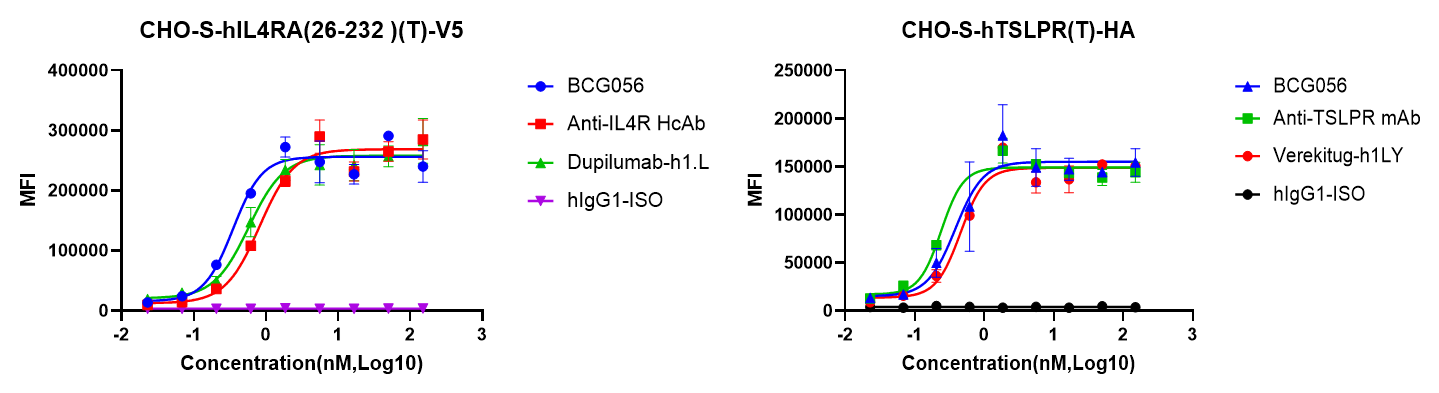
Figure 1. Strong binding of BCG056 to human IL-4Rα and TSLPR. BCG056 showed concentration-dependent binding to each target in the binding assays, supporting retained target-binding activity of both arms within the bispecific format.
(Additional functional data, including TSLPR blockade, inhibition of IL-4- and IL-13-mediated IL-4Rα signaling, parental antibody and benchmark comparisons, and receptor agonism assessments, are available in the full data package upon request.)
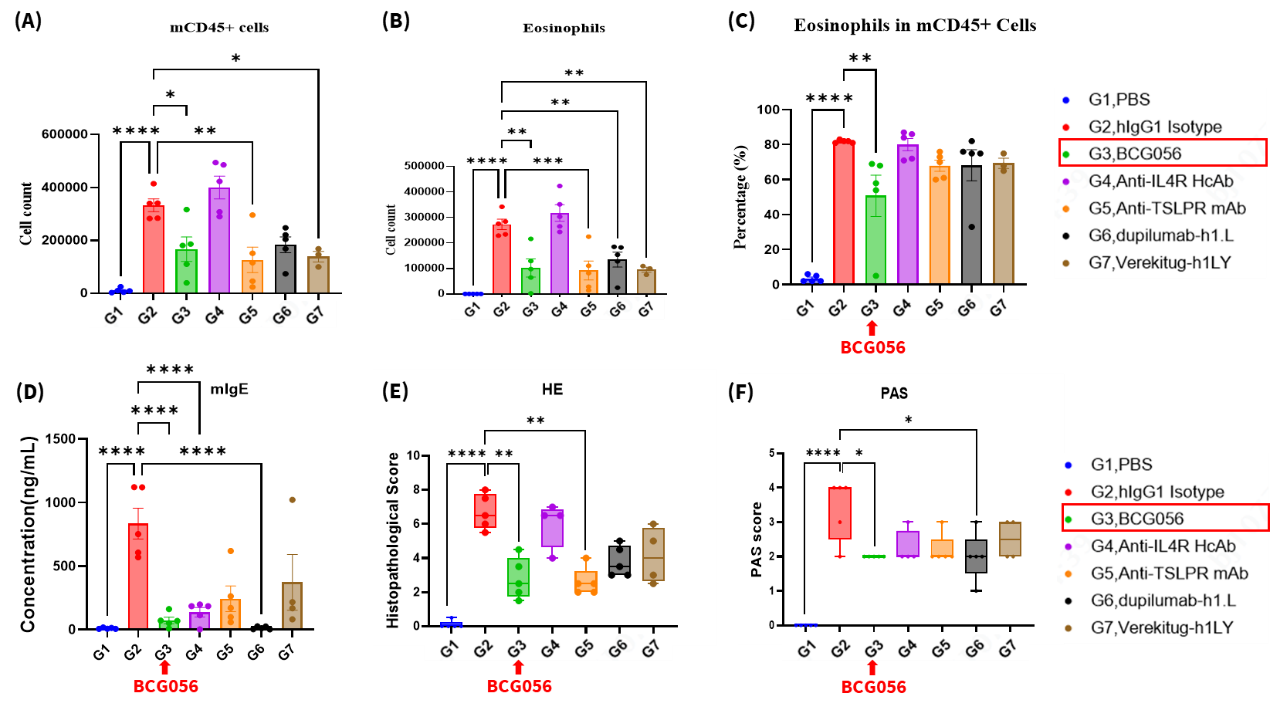
Figure 2. Anti-inflammatory efficacy of BCG056 in an OVA-induced asthma model using IL4/IL4RA/TSLP/TSLPR humanized mice (B-hIL4/hIL4RA/hTSLP/hTSLPR plus). (A) Number of CD45⁺ cells in bronchoalveolar lavage fluid (BALF). (B) Number of eosinophils in BALF. (C) Proportion of eosinophils among CD45⁺ cells. (D) Total mIgE levels. (E) H&E staining score in the lungs of asthmatic mice. (F) PAS staining score in the lungs of asthmatic mice. Under equimolar comparison conditions, BCG056 reduced BALF inflammatory-cell infiltration and eosinophilia, lowered mIgE levels, and improved H&E and PAS pathological scores, supporting broad anti-inflammatory activity through combined IL-4Rα and TSLPR blockade.
In addition, a repeat study showed consistent efficacy across readouts. The 30 mg/kg dose produced greater reductions in inflammatory-cell endpoints and PAS scores than the 12 mg/kg dose, further supporting the reproducibility and dose-related activity of BCG056.
(Additional repeat-study and developability data, including PEG solubility, physicochemical characterization, and stability, are available in the full data package upon request.)

Biocytogen welcomes partnership discussions to further evaluate this IL-4Rα × TSLPR bispecific antibody asset for asthma.

BCG056 is a potential first-in-class bispecific antibody that combines upstream TSLPR blockade with downstream IL-4Rα inhibition in a single molecule. By targeting two complementary levels of type 2 inflammation, BCG056 is designed to provide broader inflammatory control than single-target approaches. Preclinical studies showed reductions in airway eosinophilia and serum IgE in humanized mice with OVA-induced asthma.
TSLP acts upstream through the TSLPR/IL-7Rα receptor complex to initiate and amplify airway inflammation, while IL-4 and IL-13 signal through IL-4Rα to drive downstream effects including IgE production, eosinophilic inflammation, and airway pathology. Co-targeting TSLPR and IL-4Rα therefore provides a complementary strategy to intervene at both upstream and downstream stages of the type 2 inflammatory cascade.
BCG056 uses a symmetric 2+2 IgG–VHH architecture, with two RenNano®-derived anti-IL-4Rα VHHs fused to an anti-TSLPR monoclonal antibody scaffold. The compact VHH format is well suited for bispecific assembly without introducing additional light-chain pairing complexity, supporting downstream manufacturing development. LALA Fc mutations silence FcγR engagement, while YTE substitutions enhance FcRn-mediated recycling and support prolonged systemic exposure.
The biologics landscape in severe asthma is rapidly evolving, with approved therapies validating targets including IgE, IL-5/IL-5Rα, IL-4Rα, and TSLP. However, variable and incomplete responses across patients highlight the need for broader therapeutic coverage. To address these unmet needs, Biocytogen developed BCG056—an IL-4Rα × TSLPR bispecific antibody that builds on clinically validated pathways and aims to address therapeutic white space in the current treatment landscape.
This preclinical asset is available for licensing and co-development. The full data package includes binding affinity, dual-target engagement, TSLPR and IL-4Rα functional blockade, epitope mapping, receptor agonism assessments, developability analysis, and efficacy across initial and repeat studies. Ongoing studies are evaluating the efficacy in an ALT model, development of stable cell lines, pharmacokinetic studies, and toxicology studies. Contact Biocytogen to request the complete data package or discuss potential licensing and co-development opportunities.