
B-hCD5 mice

C57BL/6N-Cd5tm1(CD5)Bcgen/Bcgen • 111125

B-hCD5 mice

Catalog Number: 111125
Strain Name: C57BL/6N-Cd5tm1(CD5)Bcgen/Bcgen
Strain Background: C57BL/6N
NCBI gene ID: 921 (Human)
Aliases: T1; LEU1
---
可提供授权方案
B-hCD5 mice

在此页面上

  • Description
  • Targeting strategy
  • Phenotypic analysis

海报

查看全部

    发表文章

      Description

      CD5: A pivotal co-receptor target for modulating T cells and in vivo CAR-T engineering.

      • Gene Information: CD5 is a transmembrane glycoprotein belonging to the scavenger receptor cysteine-rich family. It functions as a critical inhibitory co-receptor for the T cell receptor, essential for fine-tuning antigen recognition and regulating immune activation.
      • Protein Expression: CD5 is predominantly and stably expressed on the surface of mature T lymphocytes and a small subset of B cells. This highly specific expression makes it an ideal cellular marker and therapeutic anchor for directing immune responses.
      • Signaling Pathway: Upon interacting with the TCR complex, CD5 recruits inhibitory molecules like SHP-1. This attenuates essential downstream phosphorylation cascades, ultimately regulating T cell activation, controlling clonal expansion, and preventing immune hyperresponsiveness.
      • Therapeutic Targeting: CD5 is widely used in T-cell engagers to redirect cytotoxicity. Crucially, it has emerged as a premier target for cutting-edge in vivo CAR-T therapies, where CD5-targeted vectors (like LNPs or viral vectors) are utilized for direct in vivo delivery of CAR genes to specifically engineer patient T cells internally.
      Targeting strategy

      CD5A

      • The exons 2-7 of mouse CD5 gene that encode signal peptide and extracellular domain are replaced by human counterparts in B-hCD5 mice.
      • The genomic region of mouse CD5 gene that encodes transmembrane domain and cytoplasmic portion is retained. The promoter, 5’UTR and 3’UTR region of the mouse gene are also retained. The chimeric CD5 expression is driven by endogenous mouse CD5 promoter, while mouse CD5 gene transcription and translation will be disrupted.
      CD5 mRNA Expression
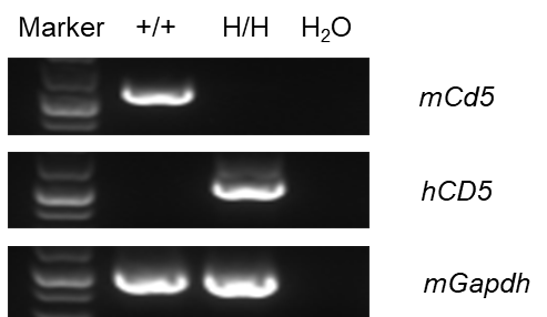
      • Mouse CD5 mRNA was detectable in wild-type C57BL/6N mice.
      • Human CD5 mRNA was detectable only in homozygous B-hCD5 mice but not in wild-type mice.

      Strain specific analysis of CD5 mRNA expression in wild-type C57BL/6N mice and homozygous B-hCD5 mice by RT-PCR. Thymus RNA was isolated from wild-type C57BL/6N mice (+/+) and homozygous B-hCD5 mice (H/H), then cDNA libraries were synthesized by reverse transcription, followed by PCR with mouse or human CD5 primers.
      Protein Expression Analysis
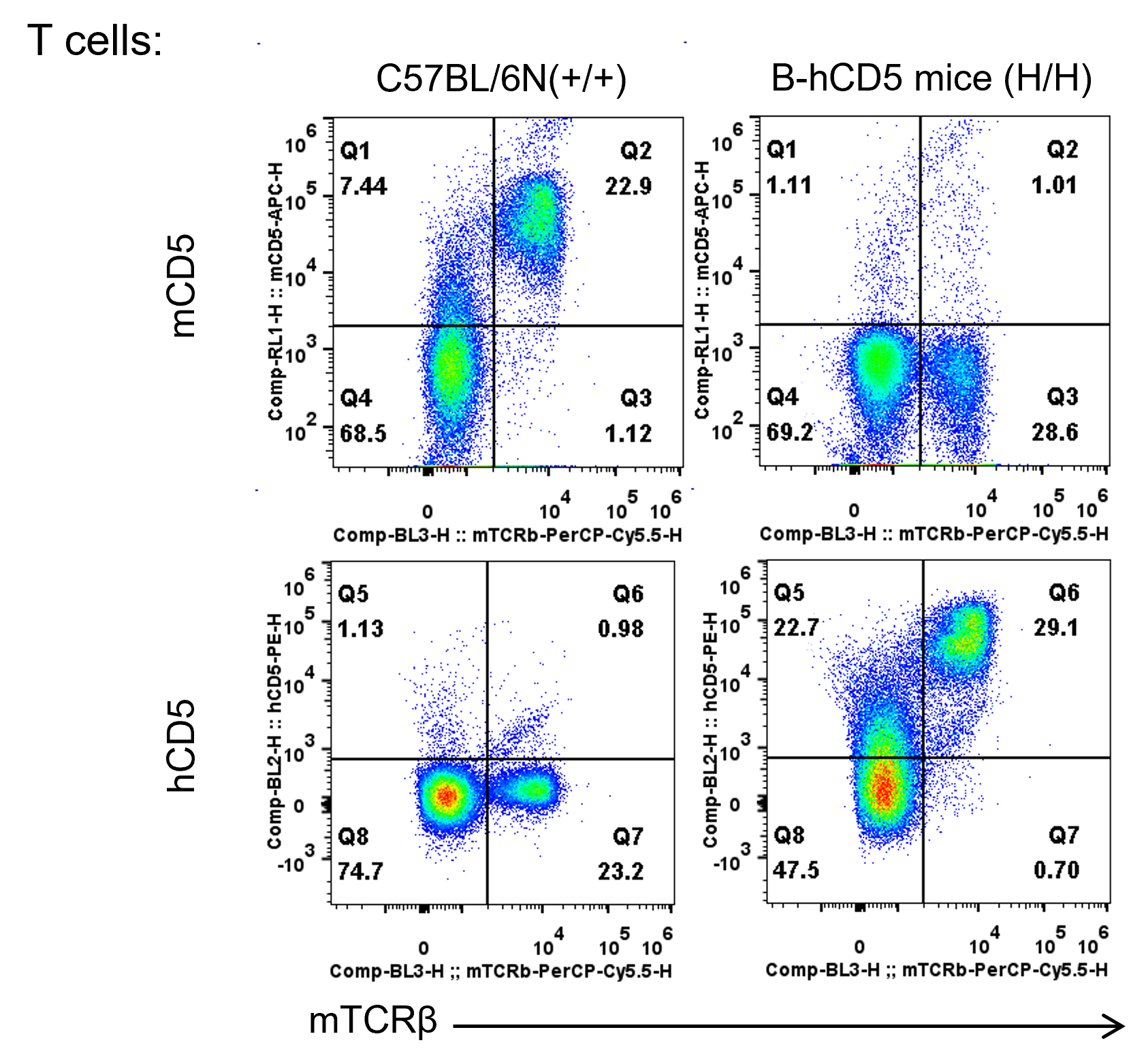
      • Mouse CD5 was detectable in wild-type  mice.
      • Human CD5 was exclusively detectable in homozygous B-hCD5 mice but not in wild-type mice.

      Strain specific CD5 expression analysis in homozygous B-hCD5 mice by flow cytometry. Splenocytes were collected from wild-type C57BL/6N mice (+/+) and homozygous B-hCD5 mice (H/H), and analyzed by flow cytometry with species-specific anti-CD5 antibody (anti-human CD5, Biolegend, 300607; anti-mouse CD5, Biolegend, 100625).
      CD5 Protein Expression Analysis
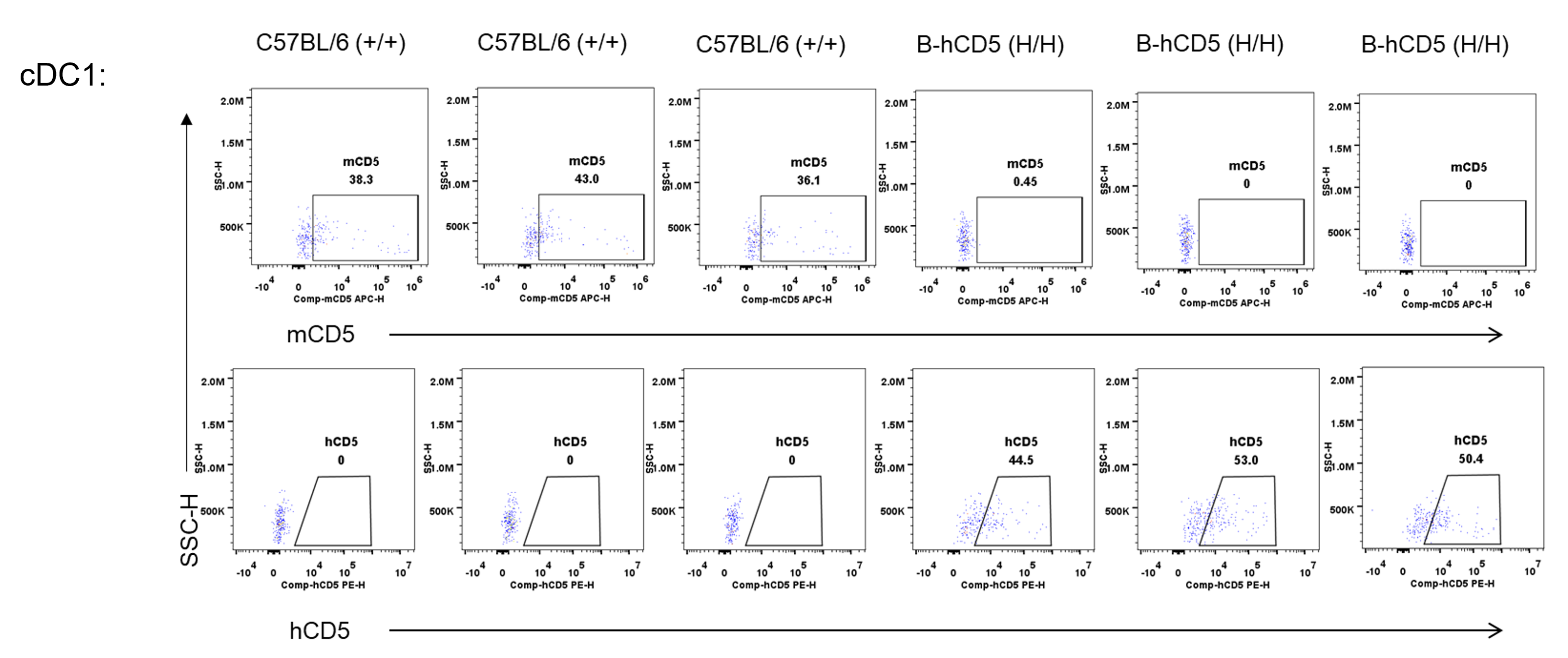
      • Mouse CD5 was detectable in cDC1 cells from  wild-type  mice.
      • Human CD5 was exclusively detectable in cDC1 cells from homozygous B-hCD5 mice but not in wild-type mice.

      Strain specific CD5 expression analysis in homozygous B-hCD5 mice by flow cytometry. Spleen was collected from wild-type C57BL/6 mice (+/+) and homozygous B-hCD5 mice (H/H), and analyzed by flow cytometry with species-specific anti-CD5 antibody. mCD5 was detectable in wild-type, hCD5 was only detectable in homozygous B-hCD5 mice.
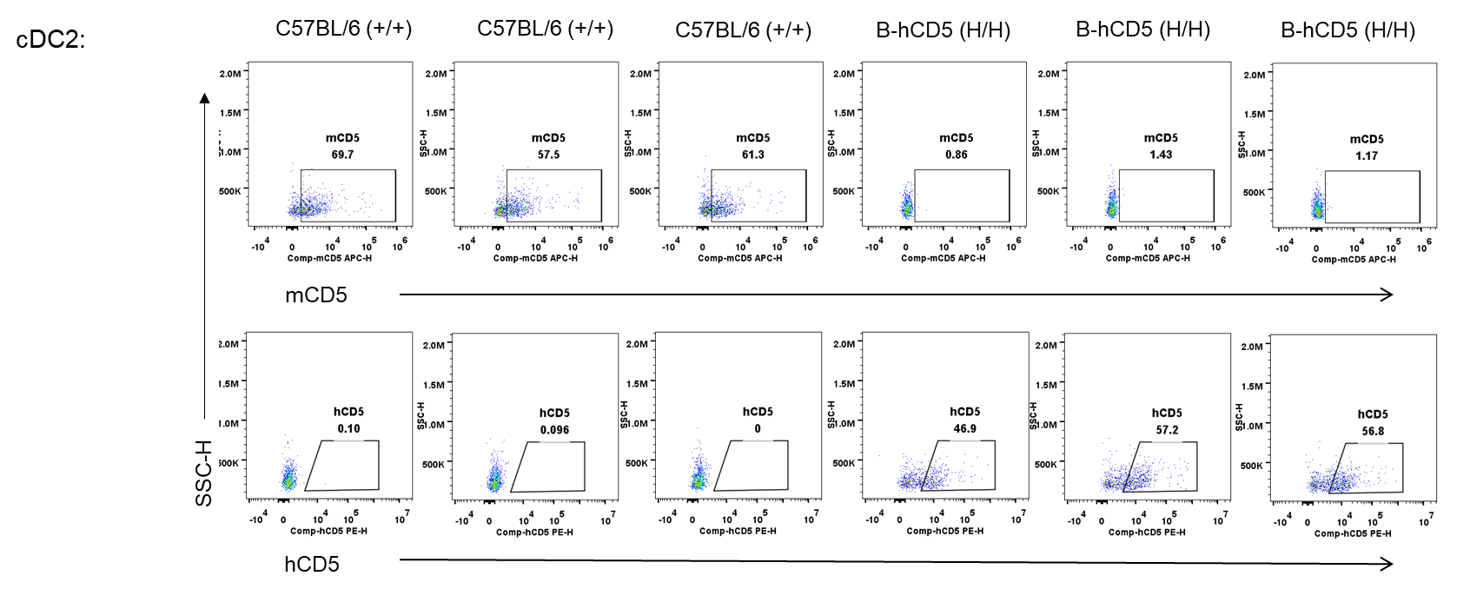
      • Mouse CD5 was detectable in cDC2 cells from  wild-type  mice.
      • Human CD5 was exclusively detectable in cDC2 cells from homozygous B-hCD5 mice but not in wild-type mice.

      Strain specific CD5 expression analysis in homozygous B-hCD5 mice by flow cytometry. Spleen was collected from wild-type C57BL/6 mice (+/+) and homozygous B-hCD5 mice (H/H), and analyzed by flow cytometry with species-specific anti-CD5 antibody.

      Analysis of Leukocyte Subpopulations
      • The percentages of T cells, B cells, NK cells, DCs, neutrophils, monocytes, and macrophages in homozygous B-hCD5 mice are similar to those in C57BL/6mice.
      • Humanization of CD5 does not affect normal immune cell development or distribution.

      Analysis of leukocyte subpopulations by flow cytometry in immune organs and blood. Splenocytes, peripheral blood, and lymph nodes were isolated from female C57BL/6 and B-hCD5 mice (female, 8-week-old, n = 3). Single live cells were gated on the CD45⁺ population and analyzed by flow cytometry as indicated. Values are expressed as mean ± SEM.

      Analysis of T Cell Subpopulations
      • The proportions of CD4⁺ T cells, CD8⁺ T cells, and Tregs in homozygous B-hCD5 mice are comparable to those in C57BL/6 mice.
      • Humanization of CD5 does not affect normal T cell development, differentiation, or distribution.

      Analysis of T-cell subpopulations by flow cytometry in immune organs and blood. Splenocytes, peripheral blood, and lymph nodes were isolated from female C57BL/6 and B-hCD5 mice (female, 8-week-old, n=3). Single live cells were gated on the T-cell population and analyzed by flow cytometry as indicated. Values are expressed as mean ± SEM.
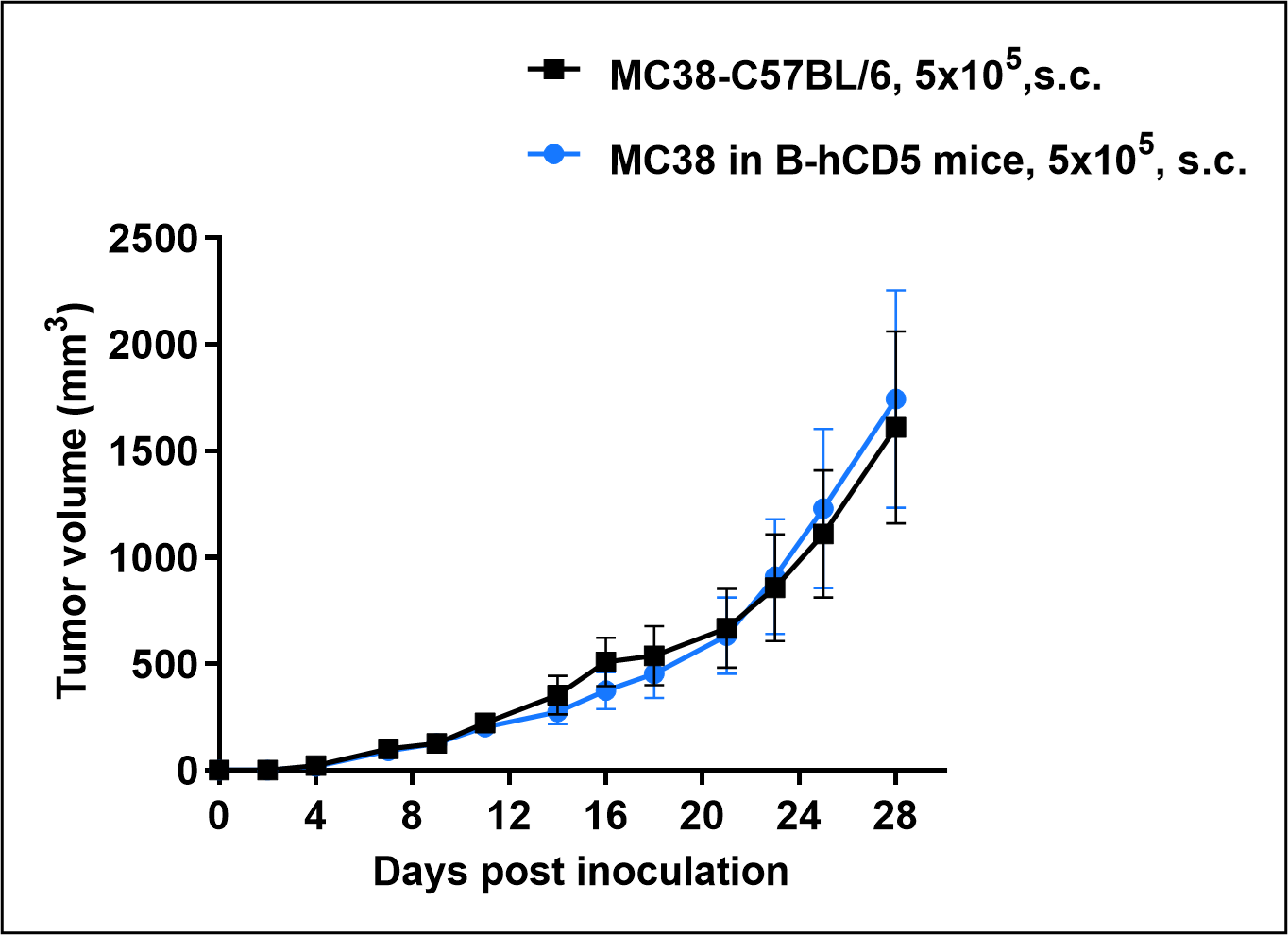
      Functional Validation
      • There is no significant difference in tumor growth between B-hCD5 mice and wild-type mice, indicating that the hCD5 in B-hCD5 mice is functional.

      Subcutaneous homograft tumor growth of MC38 in B-hCD5 mice. MC38 cells (5x10⁵) were subcutaneously implanted into C57BL/6 mice and B-hCD5 mice (female, 11-week-old, n=6). Tumor volume was measured twice a week. Average tumor volume ± SEM. Volume was expressed in mm3 using the formula: V=0.5 X long diameter X short diameter2. As shown, MC38 cells were able to establish tumors in B-hCD5 mice in vivo and can be used for efficacy studies.

      * When publishing results obtained using this animal model, please acknowledge the source as follows: The animal model [B-hCD5 mice] (Cat# 111125) was purchased from Biocytogen.