


TAU humanized mice are genetically engineered mice in which the murine Mapt gene exons encoding the full-length protein and the 3′ UTR are replaced with human MAPT exons under the control of the endogenous mouse promoter, resulting in physiological expression of human Tau. TAU is a microtubule-associated protein predominantly expressed in neurons of the central nervous system, and abnormal TAU aggregation is a core pathological feature of many neurodegenerative diseases, including Alzheimer’s disease (AD).
In this model, human TAU mRNA is detectable only in homozygous TAU humanized mice, and protein expression is confirmed in brain tissue. TAU humanized mice also support in vivo evaluation of human MAPT–targeted nucleic acid drugs, demonstrating a significant reduction in human TAU mRNA and protein levels after treatment.
Key Advantages
Application

TAU

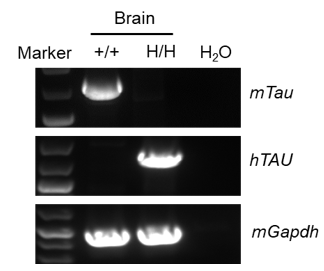
Strain-specific MAPT expression analysis in wild-type C57BL/6 mice and homozygous TAU humanized mice. Brain RNA was isolated from wild-type C57BL/6 mice (+/+) and homozygous TAU humanized mice (H/H), then cDNA libraries were synthesized by reverse transcription, followed by PCR with mouse or human MAPT primers. Human TAU mRNA was detectable only in homozygous TAU humanized mice but not in wild-type mice.
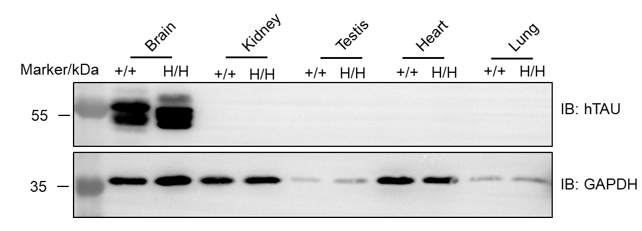
Protein expression analysis of TAU in homozygous TAU humanized mice. Various tissue lysates were collected from wild-type C57BL/6 mice (+/+) and homozygous TAU humanized mice (H/H), and then analyzed by western blot with anti-TAU antibody (CST, 46687S). 40 μg total protein was loaded for western blotting analysis. TAU was detected in brain from both wild-type C57BL/6 mice and homozygous TAU humanized mice., as the antibody was cross-reactive between human and mouse.

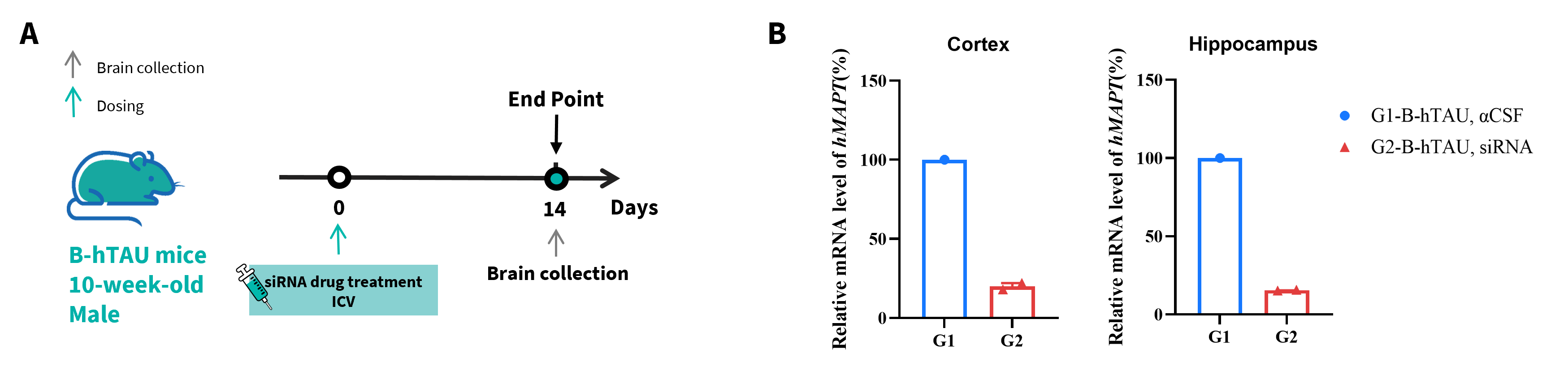
The inhibitory efficiency of the nucleic acid drugs against human MAPT in TAU humanized mice. TAU humanized mice were randomly divided into two groups (G1: n=1, 10 weeks old, male; G2: n=2, 10 weeks old, male). The human TAU targeted nucleic acid drugs (AD-1637701) and αCSF were administered to the mice individually by intra-cerebroventricular injection (ICV). The mice were sacrificed on day 14, and the brains were collected to detect the human MAPT mRNA expression by qRT-PCR. (A) The schematic diagram of experimental processing. (B) The expression of human MAPT mRNA in cortex and hippocampus. The human MAPT in the treatment group (G2) was significantly reduced compared to the control group (G1), demonstrating that TAU humanized mice provide a powerful preclinical model for in vivo evaluation of human MAPT targeted nucleic acid drugs. Values are expressed as mean ± SEM.
This experiment was conducted in collaboration with the client using TAU humanized mice.
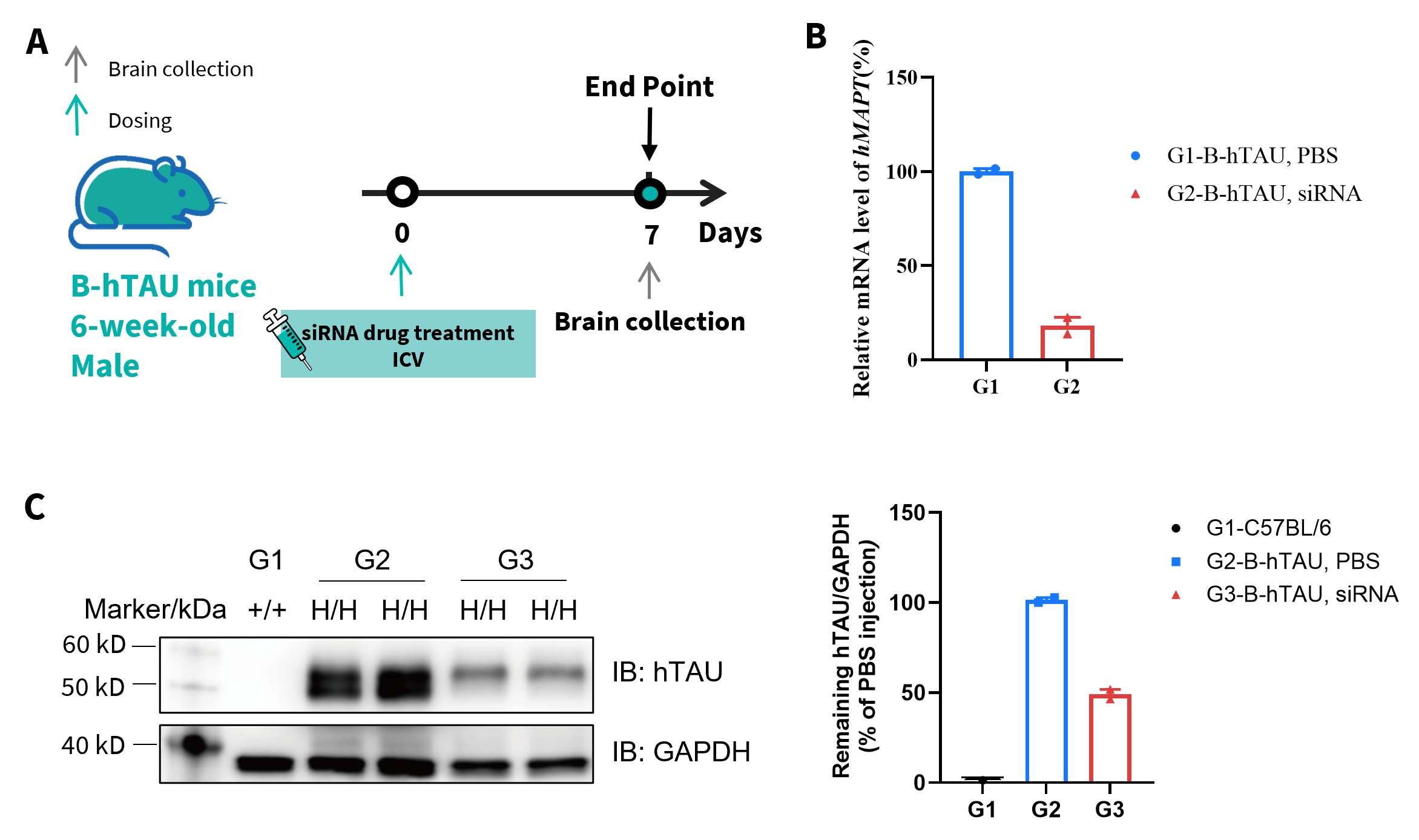
The inhibitory efficiency of the nucleic acid drugs against human TAU in TAU humanized mice. TAU humanized mice were randomly divided into two groups (n=2/group, 6 weeks old, male). The human MAPT targeted nucleic acid drugs (from client) and PBS were administered to the mice individually. The mice were sacrificed on day 7, and the brains were collected to detect the human TAU mRNA and protein expression by qRT-PCR and western blot, respectively. (A) The schematic diagram of experimental processing. (B) The expression of human TAU mRNA in brain. The human TAU in the treatment group (G2) was significantly reduced compared to the control group (G1). (C) The expression of human TAU protein in brain. Values are expressed as mean ± SEM.

Q1: What are TAU humanized mice?
A: TAU humanized mice express the human MAPT gene under the control of the endogenous mouse promoter, replacing the murine Mapt sequence to allow physiological expression of human TAU in brain tissue.
Q2: Why use TAU humanized mice in research?
A: These mice are used to model human TAU expression, investigate mechanisms related to tauopathies such as Alzheimer's disease, and evaluate MAPT-targeted therapeutics in a humanized in vivo context.
Q3: How is human TAU expression validated in this model?
A: Human TAU mRNA is detected only in homozygous TAU humanized mice, and western blot analysis confirms TAU protein expression in brain lysates, demonstrating successful humanization.
Q4: Can TAU humanized mice be used to test therapeutic efficacy?
A: Yes. Treatment with MAPT-targeted nucleic acid drugs in TAU humanized mice reduces human TAU mRNA and protein levels, supporting their use for in vivo therapeutic assessment.