The Obesity Science & Innovation 2025: Humanized INHBE Mice Provide a Robust in vivo Platform for Evaluating RNAi Therapies
November 22, 2025
Share on:
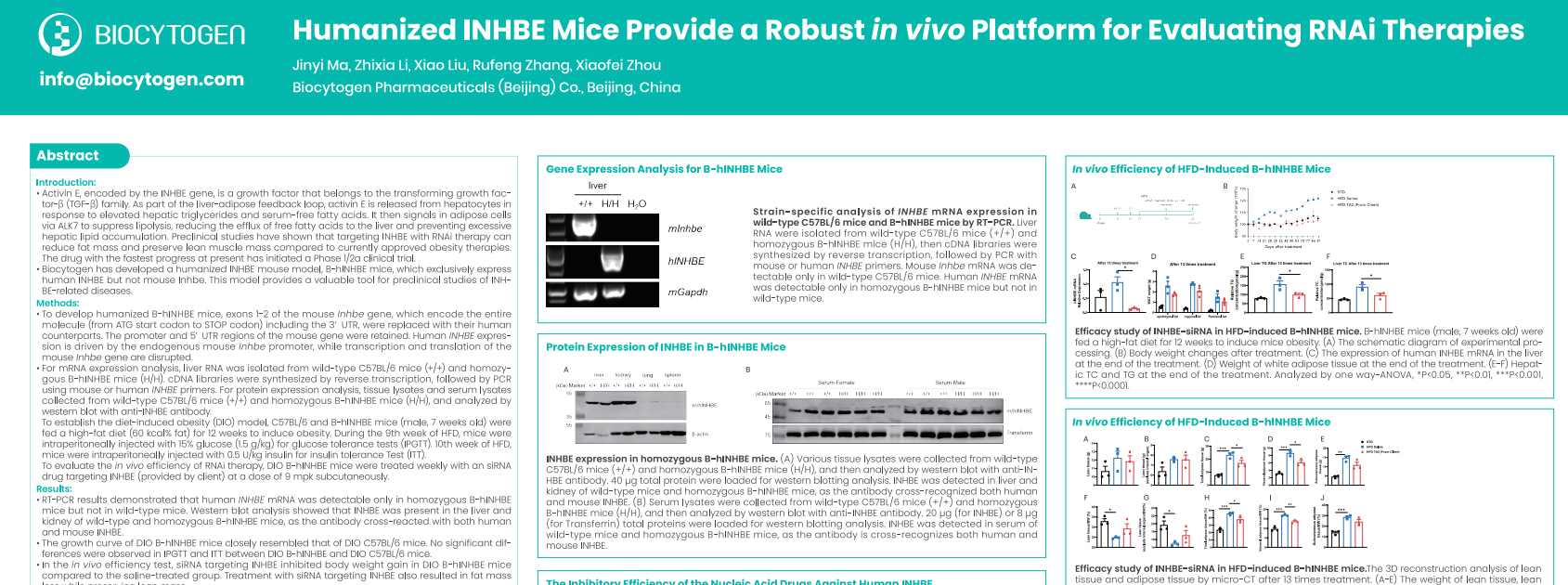
Activin E, encoded by the INHBE gene,is a growth factor that belongs to the transforming growth fac-tor-B(TGF-B) family. As part of the liver-adipose feedback loop, activin E is released from hepatocytes inresponse to elevated hepatic triglvcerides and serum-free fatty acids. It then signals in adipose cellsvia AlK7 to suppress lipolysis, reducing the eflux of free fatty acids to the liver and preventing excessivehepatic lipid accumulation. Preclinical studies have shown that targeting INHBE with RNAi therapy canreduce fat mass and preserve lean muscle mass compared to currently approved obesity therapies.The drug with the fastest progress at present has initiated a Phase 1/2a clinical trial.
Biocytogen has developed a humanized INHBE mouse model, B-hiNHBE mice,which exclusively expresshuman INHBE but not mouse Inhbe. This model provides a valuable tool for preclinical studies of INH-BE-related diseases.