B-hTREM2 mice

C57BL/6N-Trem2tm1(TREM2)Bcgen/Bcgen • 111176

B-hTREM2 mice

Catalog Number: 111176
Strain Name: C57BL/6N-Trem2tm1(TREM2)Bcgen/Bcgen
Strain Background: C57BL/6N
NCBI gene ID: 54209 (Human)
Aliases: AD17; PLOSL2; TREM-2; Trem2a; Trem2b; Trem2c
---
可提供授权方案
B-hTREM2 mice

在此页面上

  • Description
  • Targeting strategy
  • Phenotypic analysis
  • Efficacy

海报

查看全部

    发表文章

      Description

      TREM2: As a major pathology-induced immune signaling hub.

      • Gene Information: Triggering receptor expressed on myeloid cells-2 (TREM2) gene encodes a transmembrane receptor of the immunoglobulin superfamily. Recent studies have identified TREM2 as a risk factor for Alzheimer’s disease (AD).
      • Protein Expression: TREM2 is a single-pass transmembrane immune receptor that is mainly expressed on microglia in the brain and macrophages in the periphery. Increasing evidence has shown that TREM2 can affect lipid metabolism both in the central nervous system (CNS) and in the periphery.
      • Signaling Pathway: In physiology, TREM2 activity is restricted to specific niches: the brain, bones, and the hair follicle stem cell niche. In various pathologies, TREM2 becomes a central tissue damage signaling hub, including neurodegeneration, obesity, fatty liver and atherosclerosis, and in tumors. Activation of TREM2 signaling in these different cases results in pathology-specific outcomes.
      • Therapeutic Inhibition: In the therapeutic intervention of Alzheimer’s disease, TREM2 activation mediated by agonistic monoclonal antibodies or small molecules amplifies downstream signaling to boost immune cell phagocytosis and anti-inflammatory responses.
      Targeting strategy

      TREM2

      • The exons 1~5 of mouse Trem2 gene that encode the full-length protein was replaced by human counterparts in B-hTREM2 mice. The promoter and 5’UTR of mouse Trem2 gene were retained, and the 3’UTR region of the mouse gene are replaced by human counterparts.
      • The TREM2 expression is driven by endogenous mouse Trem2 promoter, while mouse Trem2 gene transcription and translation will be disrupted.
      mRNA Expression Analysis
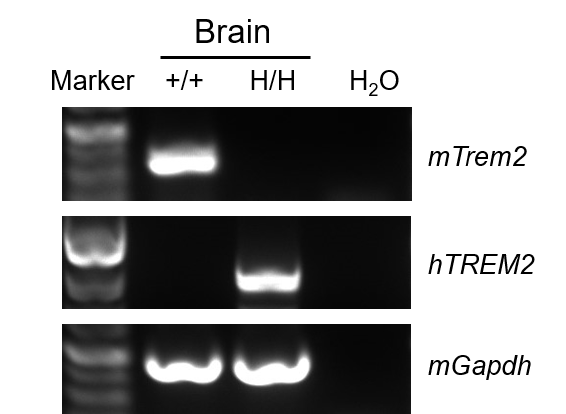
      • Human TREM2 mRNA is exclusively detectable in brain of homozygous B-hTREM2 mice, but not in wild-type C57BL/6 mice.

      Strain-specific TREM2 expression analysis in wild-type C57BL/6N mice and homozygous B-hTREM2 mice. Brain RNA was isolated from wild-type C57BL/6N mice (+/+) and homozygous B-hTREM2 mice (H/H), then cDNA libraries were synthesized by reverse transcription, followed by PCR with mouse or human TREM2 primers. Human TREM2 mRNA was detectable only in homozygous B-hTREM2 mice but not in wild-type mice.
      Protein Expression Analysis
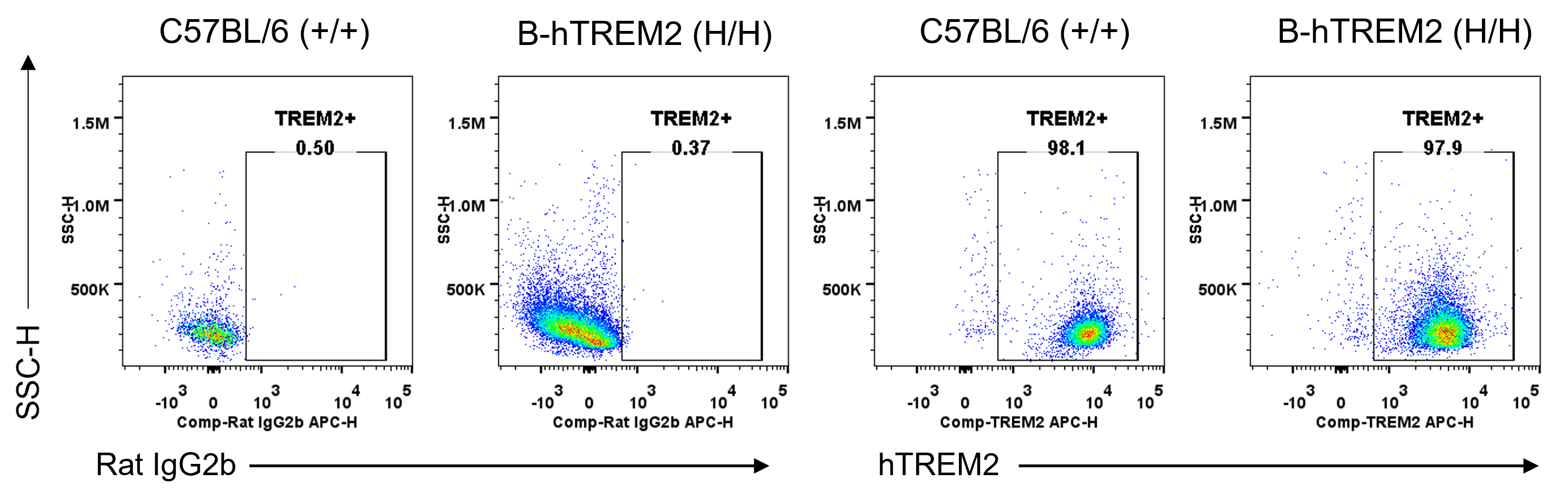
      • TREM2 protein was detectable in the microglia cells from homozygous B-hTREM2 mice and wild-type C57BL/6N mice, as the antibody was cross-reactive between human and mouse.
      Strain-specific TREM2 expression analysis in wild-type C57BL/6N mice and homozygous B-hTREM2 mice. Microglia cells were collected from wild-type  C57BL/6N mice (+/+) and homozygous B-hTREM2 mice (H/H). TREM2 expression on microglia cells was analyzed by flow cytometry using anti-human/mouse TREM2 antibody (RD, FAB17291A). TREM2 protein was detectable in the microglia cells from homozygous B-hTREM2 mice and wild-type C57BL/6N mice, as the antibody was cross-reactive between human and mouse.

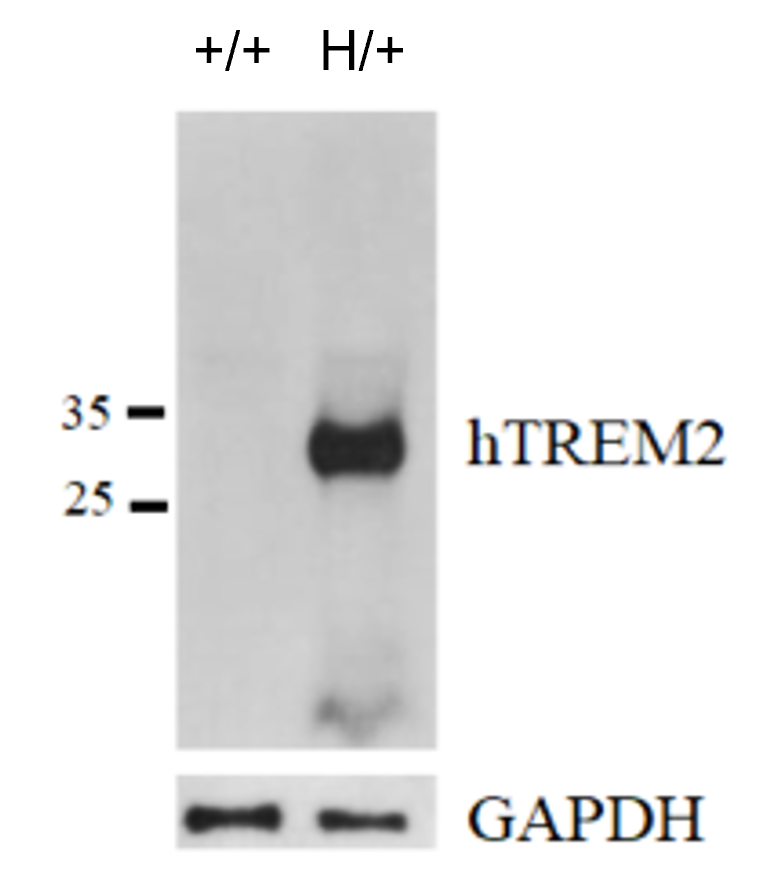
      • Human TREM2 was exclusively detectable in the brain from heterozygous B-hTREM2 mice but not in wild-type mice.

      Protein expression analysis of TREM2 in heterozygous B-hTREM2 mice. Brain tissue lysates were collected from wild-type C57BL/6N mice (+/+) and heterozygous B-hTREM2 mice (H/+), and then analyzed by western blot with anti-TREM2 antibody (CST, 91068S). 40 μg total protein was loaded for western blotting analysis. Human TREM2 was exclusively detectable in the brain from heterozygous B-hTREM2 mice but not in wild-type mice.

      This experiment was conducted in collaboration with the client using B-hTREM2 mice.

      Efficacy Evaluation of anti-human TREM2 antibody in the Treatment of the Subcutaneous MC38 Model in B-hTREM2 Mice

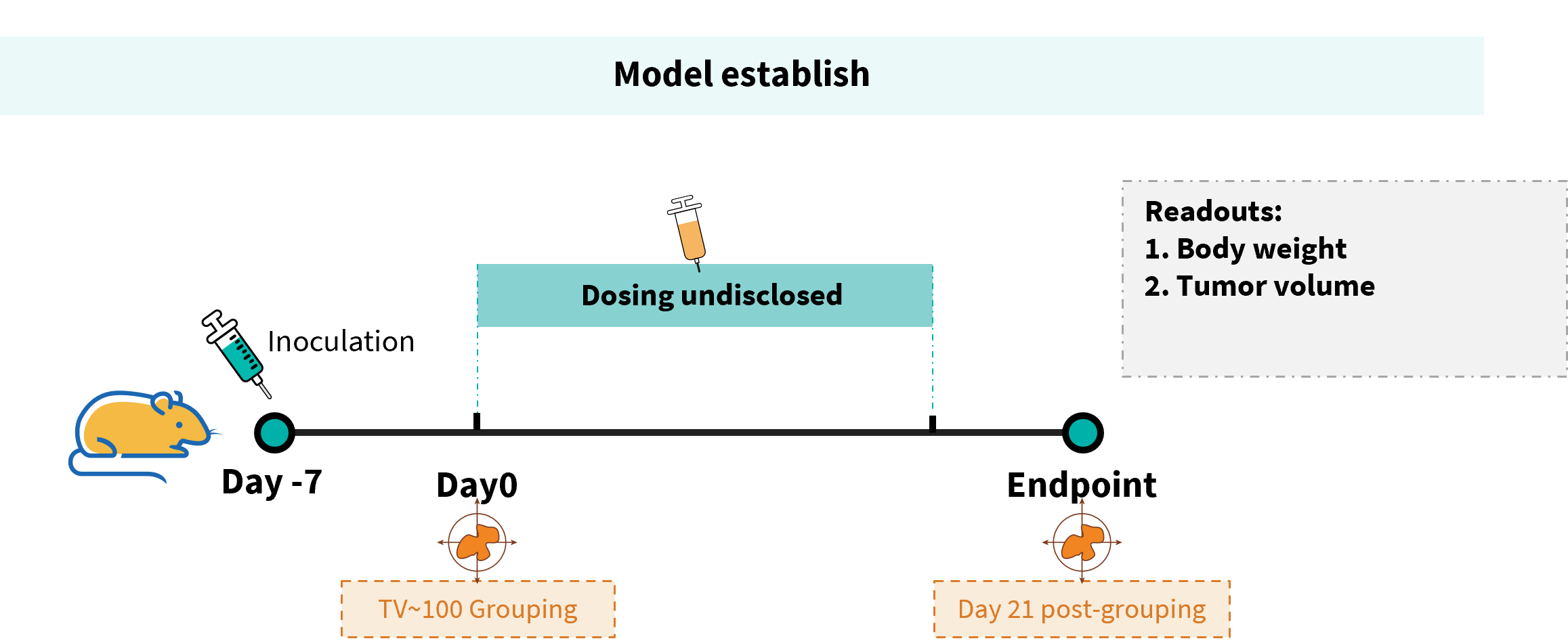
      Establishment of an MC38 model and in vivo efficacy study of anti-human TREM2 antibody. Murine colon cancer MC38 cells were subcutaneously implanted into homozygous B-hTREM2 mice (male, 6-week-old, n = 6). Mice were grouped when tumor volume reached approximately 100 mm3, and treated with anti-hTREM2 antibody (in house).

      Efficacy of anti-human TREM2 antibody in B-hTREM2 mice. (A) Tumor growth curves. (B) Body weight changes during treatment. As shown in panel A, anti-human TREM2 antibody (in house) was efficacious in controlling tumor growth in B-hTREM2 mice, demonstrating that they provide a powerful preclinical model for in vivo evaluation of anti-human TREM2 antibody. Values are expressed as mean ± SEM.

      * When publishing results obtained using this animal model, please acknowledge the source as follows: The animal model [B-hTREM2 mice] (Cat# 111176) was purchased from Biocytogen.